Green Curry Noodle Stir Fry
(prep five groups, cook in ten minutes, eat like a champion)
This is what happens when Thai green curry decides to skip the soup phase and go straight at a wok. A bright, coconut-cilantro-basil sauce blitzed in a measuring cup, then a high-heat stir fry on raw chicken, vegetables, and noodles that comes together in about ten minutes once you start cooking. The whole game here is prep: five small bowls, everything ready to go, no chopping mid-fry. The technique is what makes it taste like a restaurant dish instead of soggy noodles in green liquid.
Prep
25
min
Cook
10
min
Serves
2-3
portions
Level
Beginner
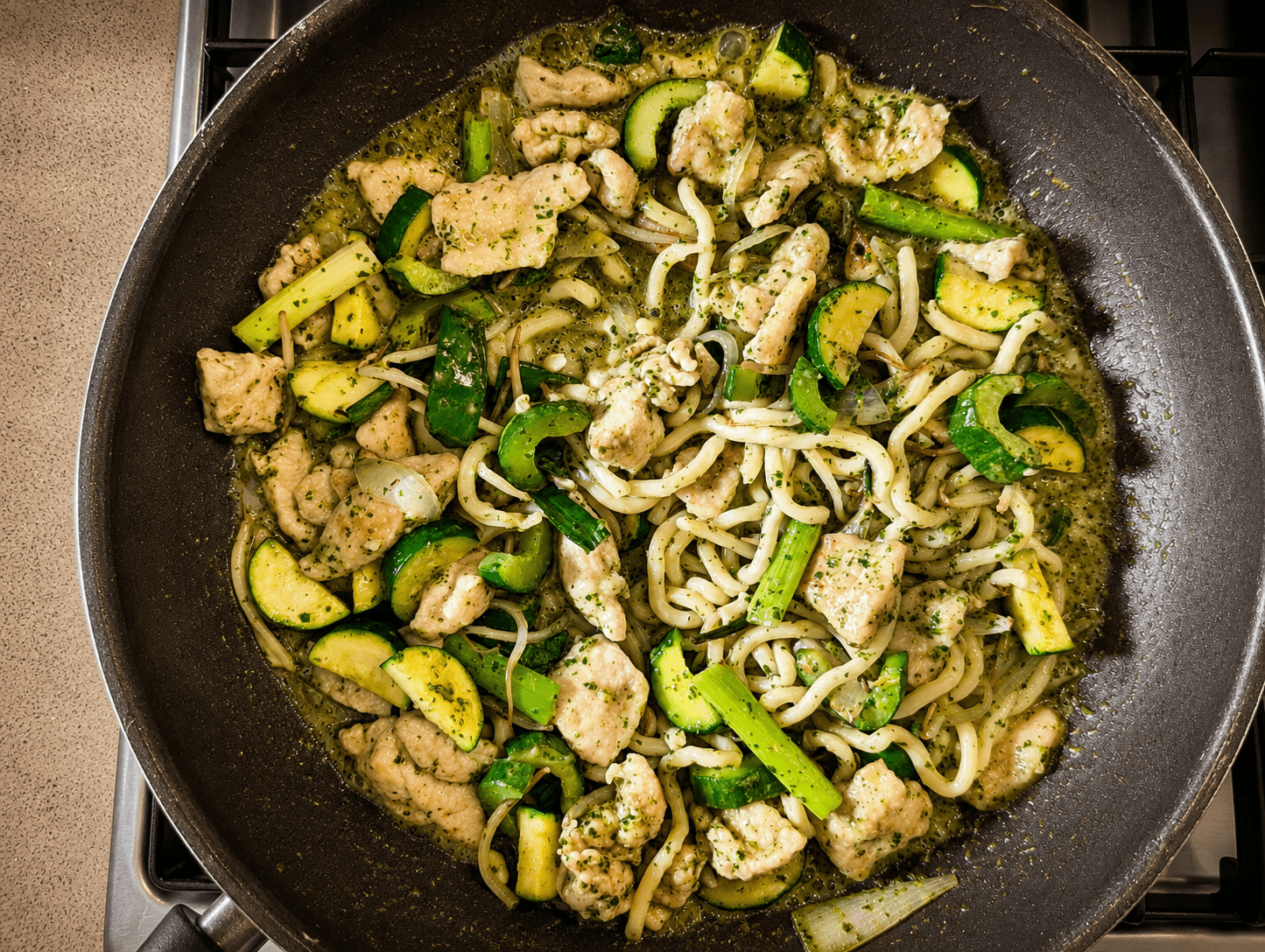
Bright, herby, coconut-rich sauce coating every strand of noodle
Why This Green Curry Noodle Stir Fry Works
Green curry usually shows up as a saucy bowl with rice. This one takes the same flavour foundation (coconut milk, green herbs, garlic, ginger, fish-sauce vibes via salt and MSG) and uses it as a stir-fry sauce instead. You get the same craveable taste, but with charred wok edges on the chicken and vegetables and noodles that actually have texture. The whole thing is a love letter to proper wok technique, which is to say: high heat, fast movement, everything ready before you start. The sauce is blitzed raw in a measuring cup. No simmering, no reduction. Cilantro, basil, green onions, garlic, ginger, coconut milk, salt and MSG go in, hand blender goes down, ten seconds later you have a vivid green sauce that smells like a Thai market. It cooks in the pan for two minutes at the end and that’s the whole sauce process. The other thing that makes this work is the corn flour on the chicken. Don’t be cheap with it. You want 2-3 generous tablespoons coating thinly sliced chicken so the pieces look dry when you put them in the wok. The starch does two things: it seals the chicken so it stays juicy on high heat, and it thickens the sauce when the noodles and sauce hit the pan at the end. No corn flour means watery sauce and dry chicken. Both are tragedies.This is a prep recipe
Once the wok is hot, you have ten minutes from raw chicken to plated dish. There is no time to chop, no time to measure, no time to think. Five bowls go on the counter before the wok touches the burner. If you skip the prep, the cooking falls apart.
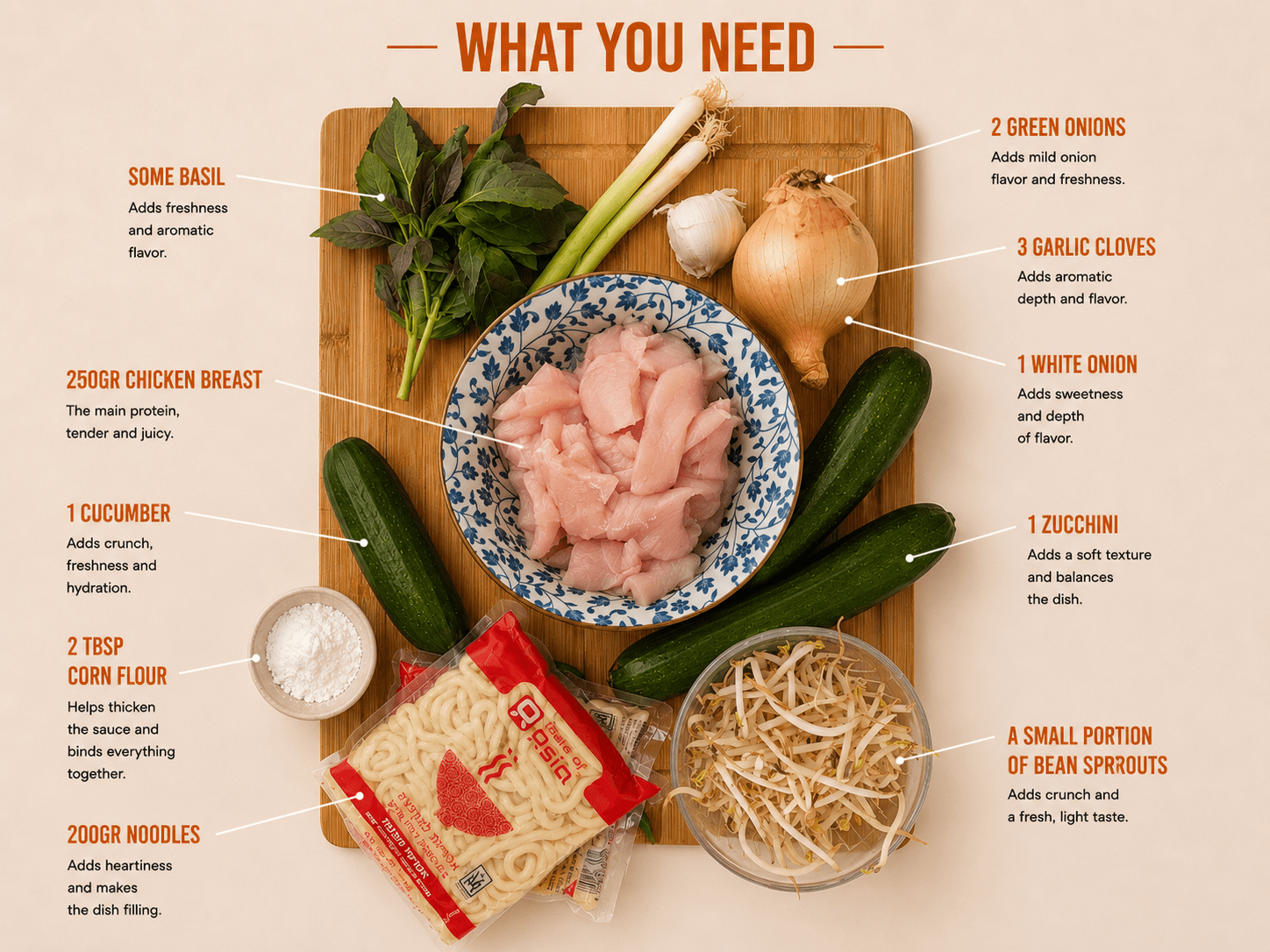
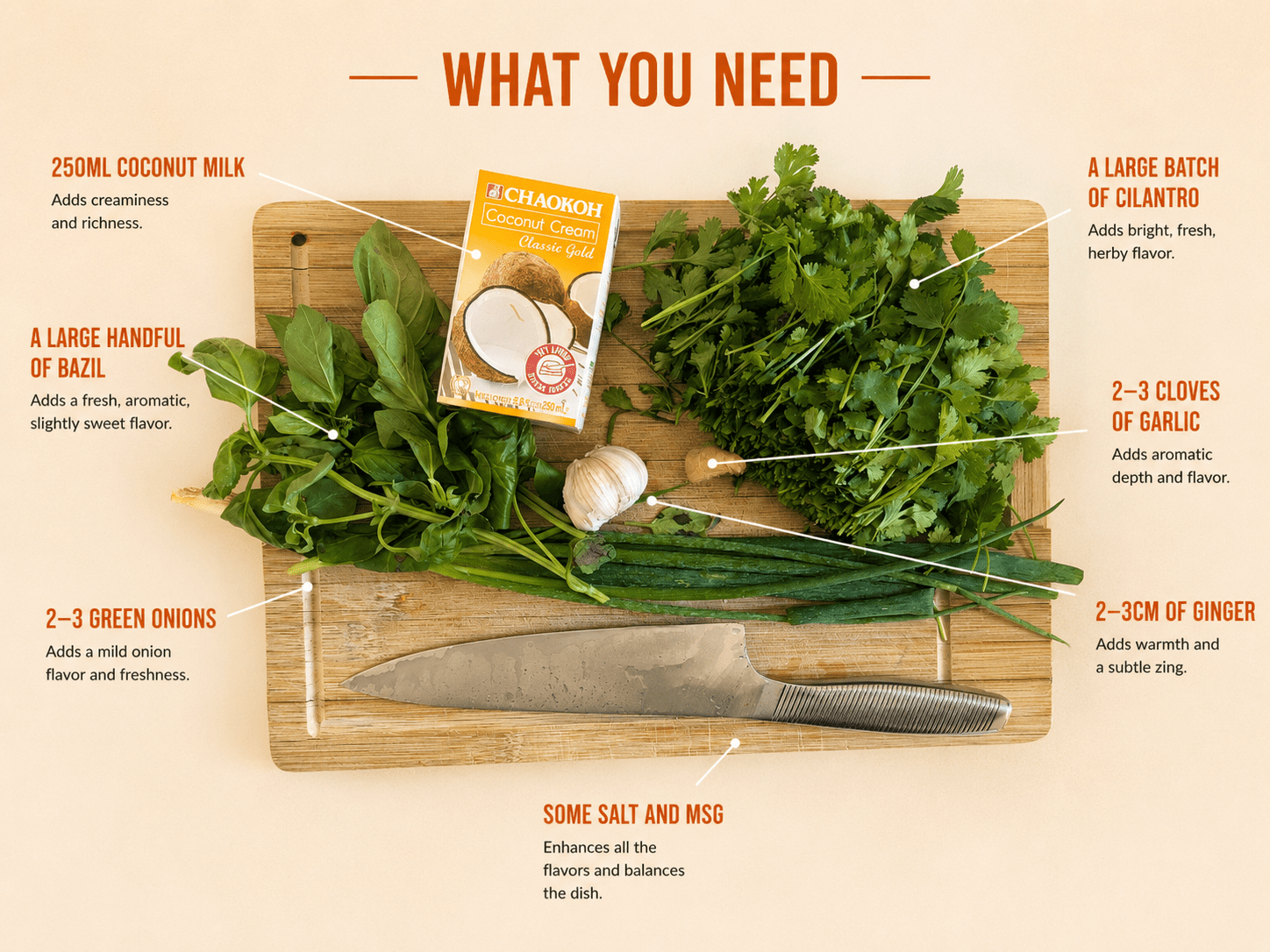
The Five Prep Groups
This is the most important part of the whole post. Get these five bowls ready, lined up next to the wok, and the cooking will feel effortless. Skip this and it will feel like an emergency.1. The Sauce
Everything in a large measuring cup. Cilantro, basil, coconut milk, green onions, garlic, ginger, salt, MSG, and the curry paste if you’re using it. Hand blender straight in, blitz until you have a smooth bright green sauce. Set aside.
2. Chicken with Corn Flour
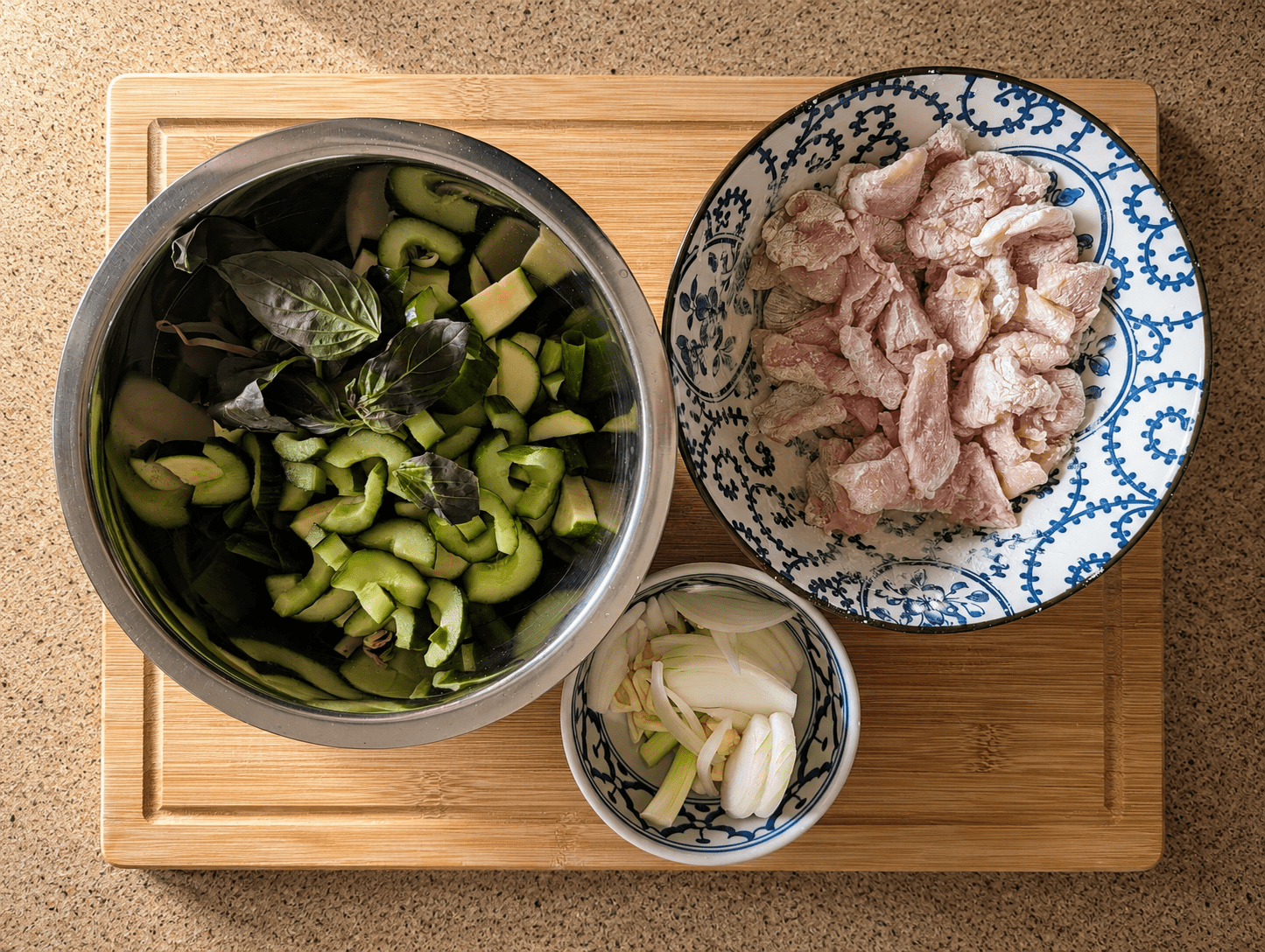
Thinly slice the chicken. In a bowl, toss with the corn flour and a generous pinch of salt. The chicken should look dry, almost dusty. The starch absorbs surface moisture and that’s exactly what you want.
3. Aromatics Bowl
Thinly sliced white onion, the white parts of the green onions, chopped garlic, chopped ginger. All in one small bowl, ready to fly into the wok in seconds.
4. Vegetable Bowl
Cucumber, zucchini, basil leaves, the green parts of the green onions, and the bean sprouts. Cucumber and zucchini sliced into half-moons. Everything in one large bowl.
5. Pre-Cooked Noodles
Cook the noodles per the package, drain, and rinse with cold water to stop the cooking. Toss with a touch of oil so they don’t stick. They go in last, so they can sit on the counter.
How to Cook It
Now the easy part. Crank the heat as high as it goes, add oil to the wok, and follow the order below. The cook times below assume a real high-heat stove. If your burner is on the weaker side, give each step an extra minute and don’t crowd the wok.1
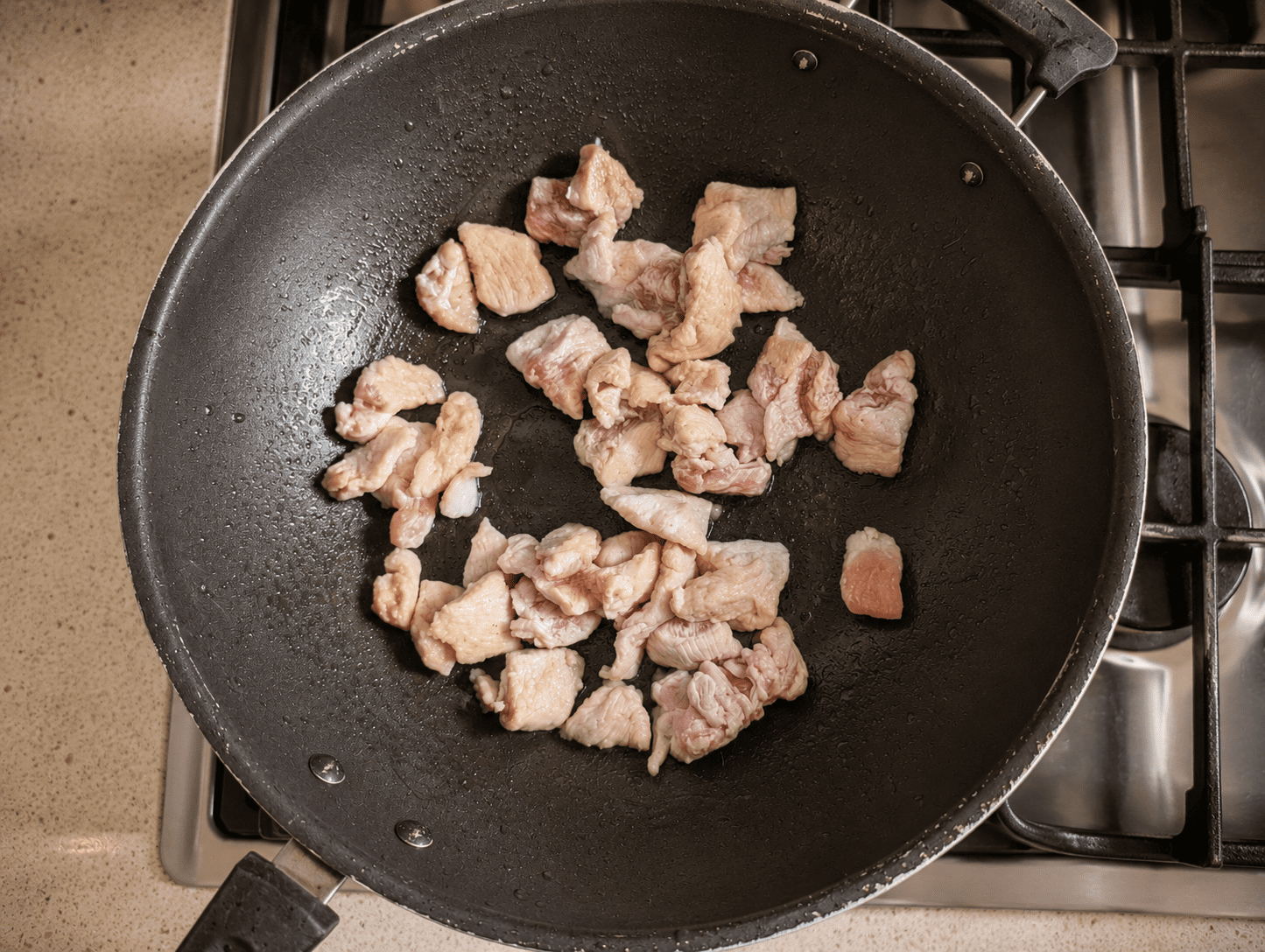
Sear the chicken
- Heat the wok until it’s smoking, then add a good glug of oil.
- Drop in the chicken and spread it out so the pieces aren’t piled on each other.
- Let it sit for about 30 seconds without moving, then stir-fry for another minute or so until the outside is just turning golden.
- Do not overcook. It will finish cooking later when it comes back into the pan.
2
Add the aromatics
- Tip the aromatics bowl (white onion, green onion whites, garlic, ginger) straight into the wok with the chicken.
- Stir-fry on high heat for about a minute. You’re after softened onions and toasted garlic, not raw and not burnt.
- The pan should smell incredible at this point.
3
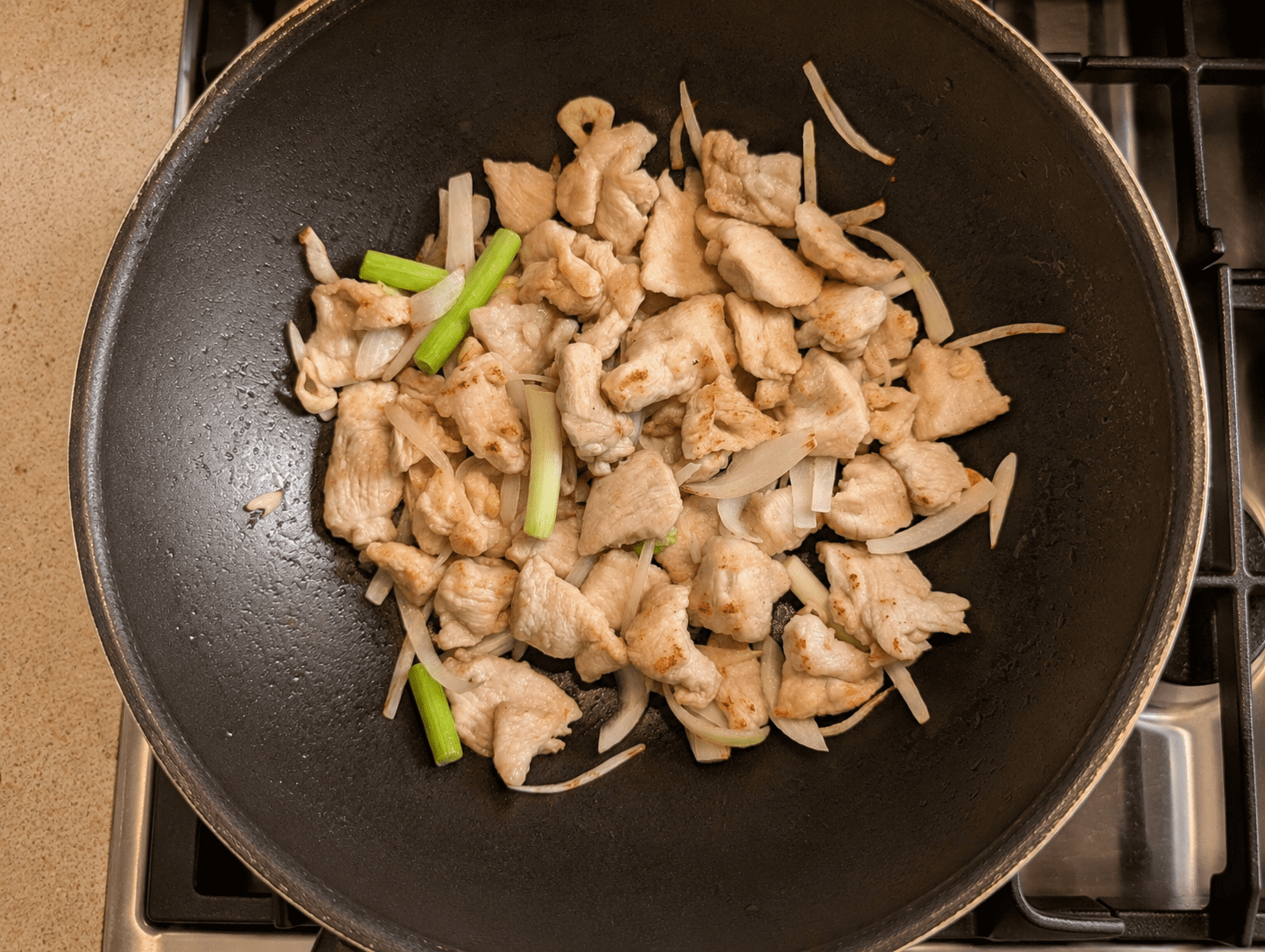
Set aside, hit the vegetables
- Tip the chicken and aromatics out of the wok onto a plate.
- Add another splash of oil to the empty wok and let it get screaming hot again.
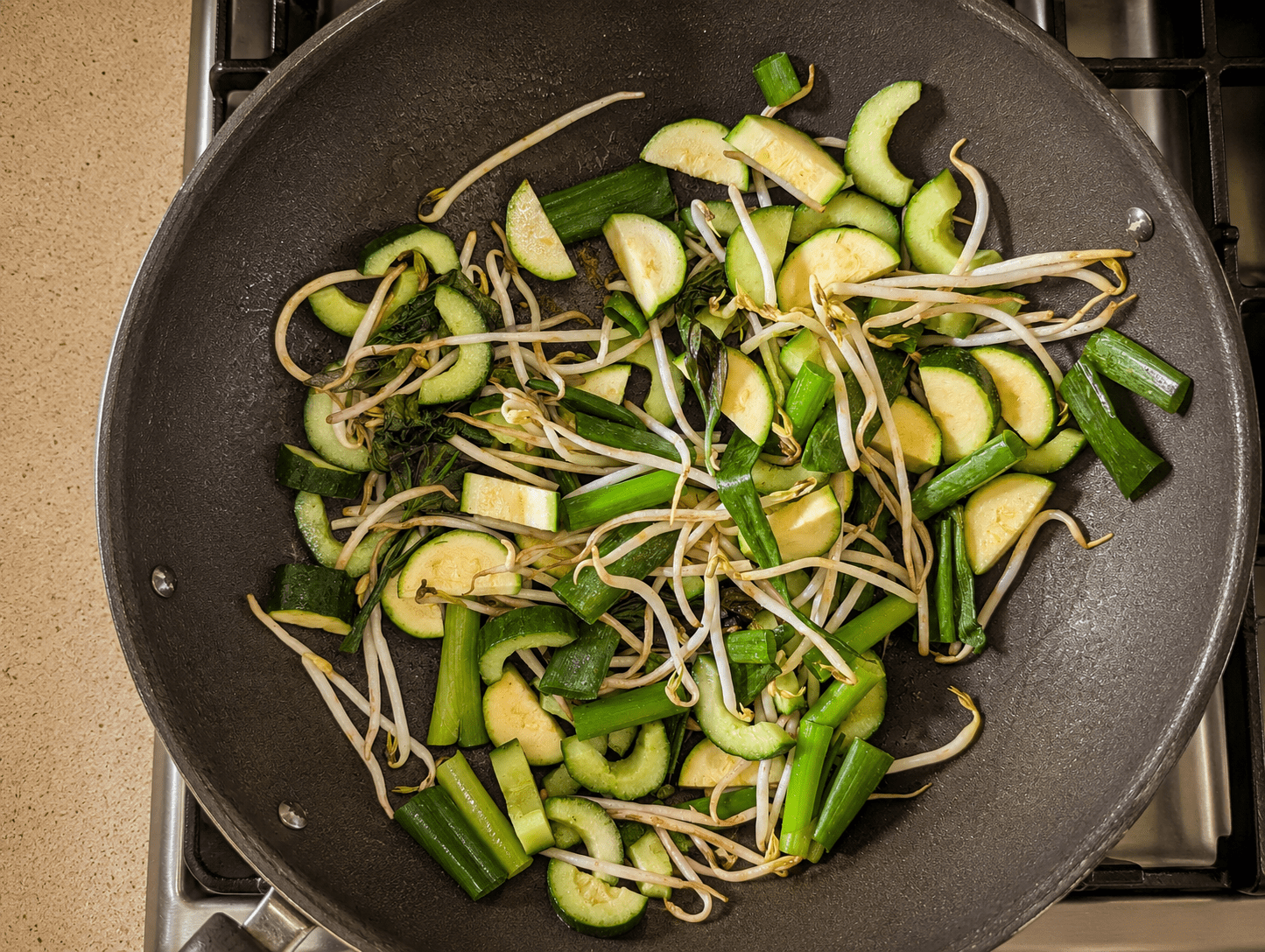
- Tip in the vegetable bowl: cucumber, zucchini, basil, green onion greens, sprouts.
- Stir-fry for about two minutes. You want the zucchini to take on some colour and the sprouts to barely soften. Crunchy is good.
Yes, cucumber in a stir fry
It sounds weird the first time you hear it. Stir-fried cucumber is a thing in plenty of Asian dishes. It softens slightly, holds its shape, and adds a clean cooling crunch that plays beautifully against the rich coconut sauce. Don’t skip it because it feels unfamiliar.
4
Bring everything back together
- Tip the chicken and aromatics back into the wok with the vegetables.
- Stir-fry for about two minutes so everything heats through and the flavours start to combine.
5
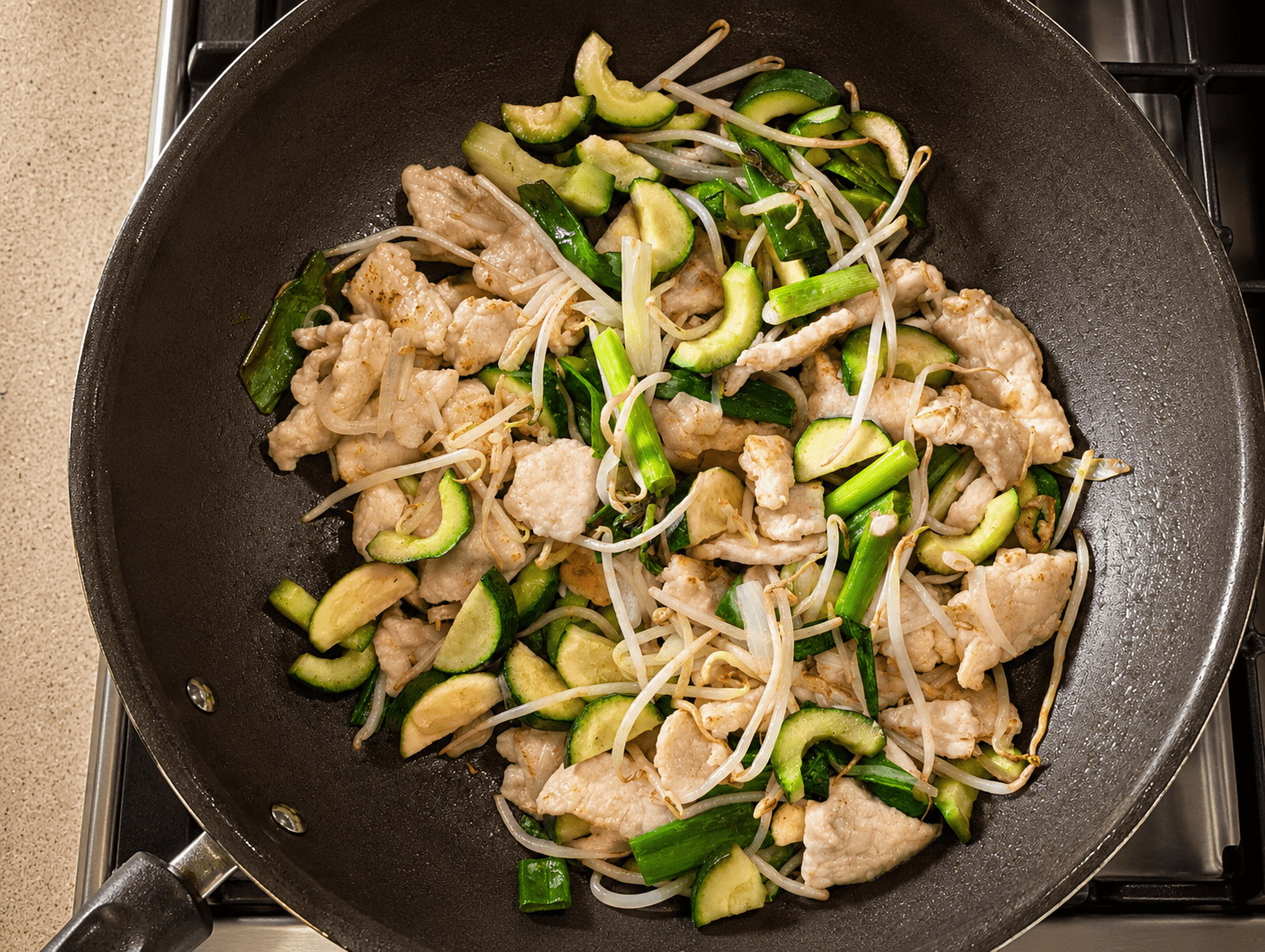
Add the noodles and sauce
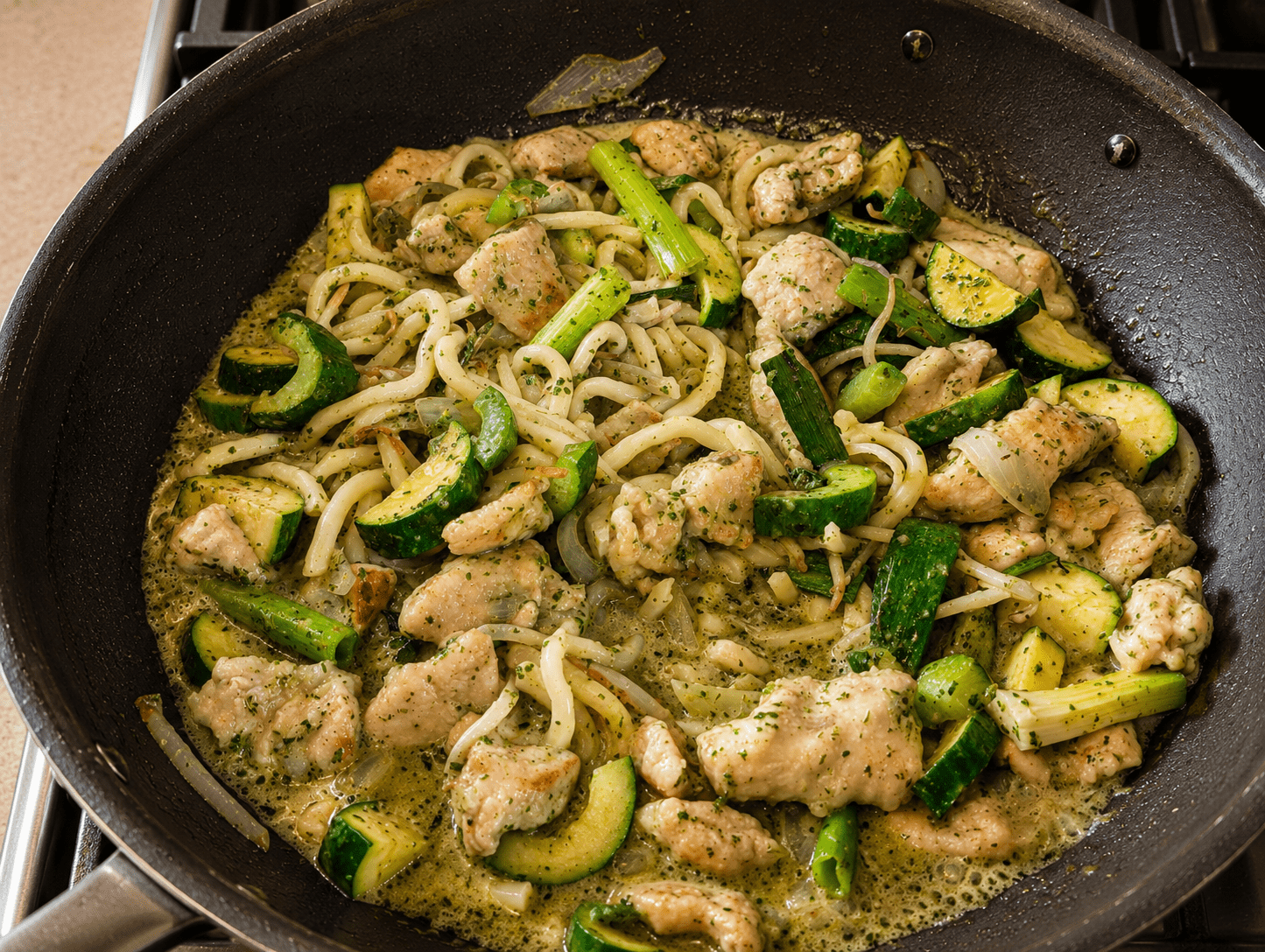
- Tip in the pre-cooked noodles and pour the green sauce over everything.
- Toss thoroughly so every noodle is coated. The corn flour from the chicken will thicken the sauce into a clingy, glossy coat as it boils.
- Let the whole thing bubble for two to three minutes until the sauce has reduced slightly and clings to the noodles.
- Taste. Adjust salt or MSG. Turn off the heat.
Make It Vegan
Swap the chicken for firm tofu. Cube it, press it for a few minutes to get rid of the surface water, then toss with the corn flour exactly the same way. Sear hard on all sides until the corners are deep golden. Everything else in the recipe stays identical. The sauce is already plant-based.Tips for the Best Stir Fry
- 🔥 High heat is non-negotiable. If your stove can’t push the wok to smoking, work in smaller batches so the temperature doesn’t crash. Crowded wok = steamed not seared = sad stir fry.
- 🥢 Slice the chicken thin. Thin pieces cook in seconds. Thick pieces overcook on the outside before the inside is done. Slice across the grain for the most tender texture.
- 💨 The corn flour is the secret. Don’t be precious about the amount. Two to three generous tablespoons on 250 gr of chicken. The chicken should look dry. This is what gives the sauce body at the end.
- 🌿 Use fresh herbs only. Dried basil and dried cilantro do not work here. The sauce gets its character from raw fresh herbs blitzed into the coconut milk. Don’t compromise on this one.
- 🧂 MSG is not optional in spirit. If you genuinely don’t have any, use a splash of fish sauce instead for that umami depth. Salt alone won’t get you the same flavour layer.
- 🍜 Rinse the noodles after cooking. Cold water stops them from overcooking and washes off the surface starch that would otherwise make them gummy. Toss with a touch of oil to keep them loose.
Frequently Asked Questions
You can, and the recipe does call for it as an optional addition for heat. But a paste alone won’t taste like this. The whole point of the fresh blitzed sauce is the bright cilantro and basil flavour up top, which paste flattens out. If you want the easy lazy version, sure, swap in 2-3 tbsp of green curry paste mixed into the coconut milk. It will be good. It won’t be great.
Yes. Udon is what’s pictured because the thick chewy strands hold the sauce beautifully, but rice noodles, egg noodles, or even spaghetti will all work. The technique is the same: pre-cook, rinse cold, toss with oil, add at the end.
Yes, with adjustments. Cook in smaller batches so you don’t crash the pan temperature. Give each stage about 30-50% more time than the recipe says. And make sure the wok is fully preheated before anything touches it. The danger on a weak burner is the chicken weeping water and steaming instead of searing, so smaller batches solve that.
Cooking destroys delicate herbs. Cilantro and basil lose 80% of their fragrance once they’ve been heated for more than a few minutes, which is why most “green curry” sauces that simmer end up tasting muddy and brown. Blitzing raw, dropping in at the end, and giving it just 2-3 minutes to thicken keeps the green flavour alive. The sauce is meant to taste fresh.
Without the curry paste, it’s not spicy at all. It’s herbaceous, fragrant, and rich, but no chilli heat. Adding 1 tsp of green curry paste gives it a gentle warm hum. Add 2 tsp and you’ll feel it. The recipe is built to be customised to your tolerance.
A few hours ahead, yes. Overnight, not really. The fresh cilantro and basil oxidise and the bright green colour starts to dull within 12 hours. If you have to prep ahead, blitz the sauce as close to dinner as possible. Or chop everything and blitz it in 10 seconds right before you start cooking. It’s quick.