Oyster Sauce Chicken Stir Fry
(with bok choy and crunchy vegetables, ten minutes in the wok)
This oyster sauce chicken stir fry is the restaurant-style dish you order at a Chinese place and then wonder why you ever try to cook it at home. The trick, it turns out, is the same as every good stir fry: high heat, a glossy oyster-sauce-based gravy, and every single thing prepped before the wok gets hot. Four small bowls go on the counter, the cooking takes about ten minutes from start to finish, and the result is tender chicken and crunchy bok choy in a deep savoury sauce that begs for a bowl of steamed white rice underneath.
Prep
20
min
Cook
10
min
Serves
2
portions
Level
Beginner
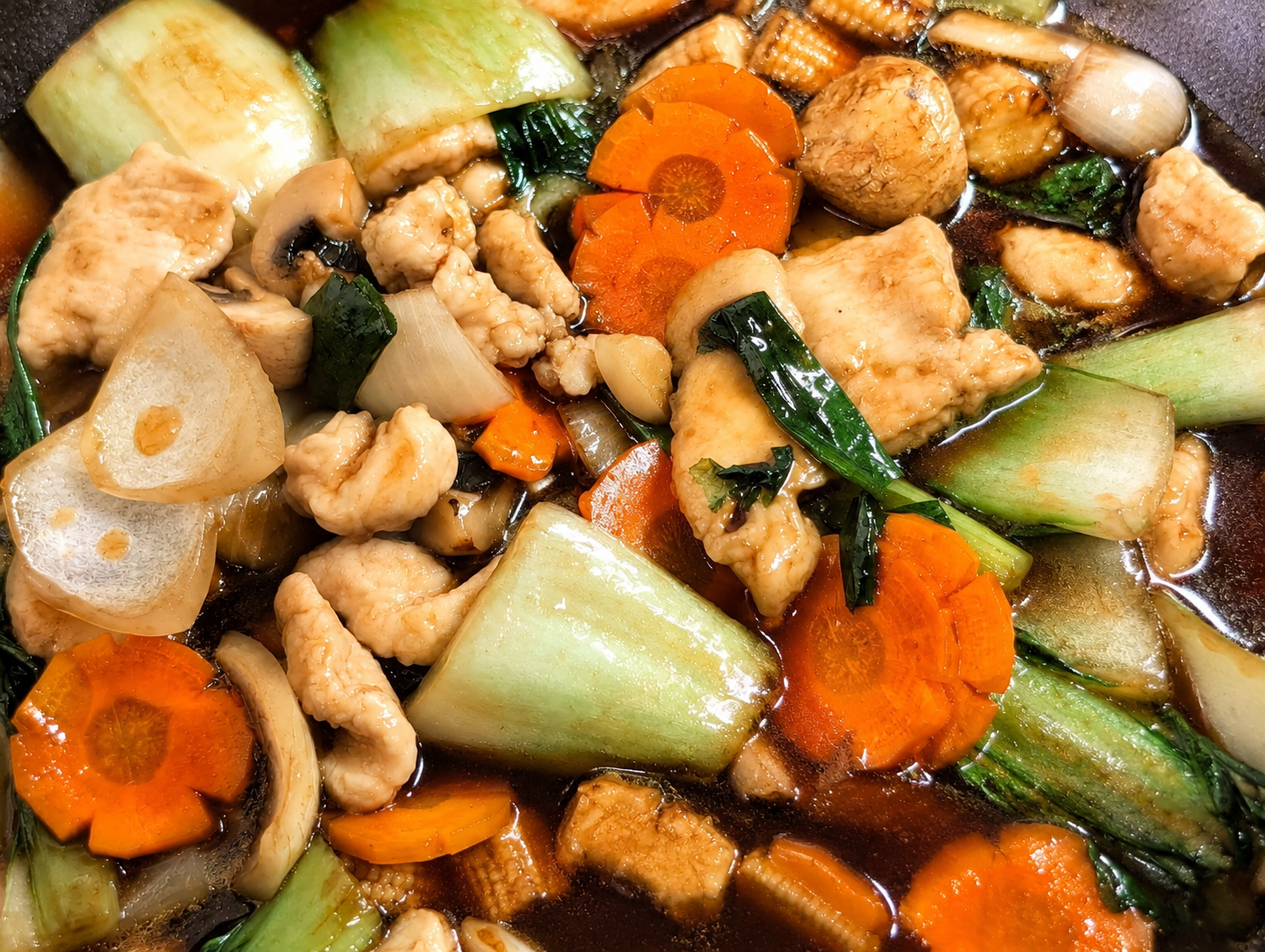
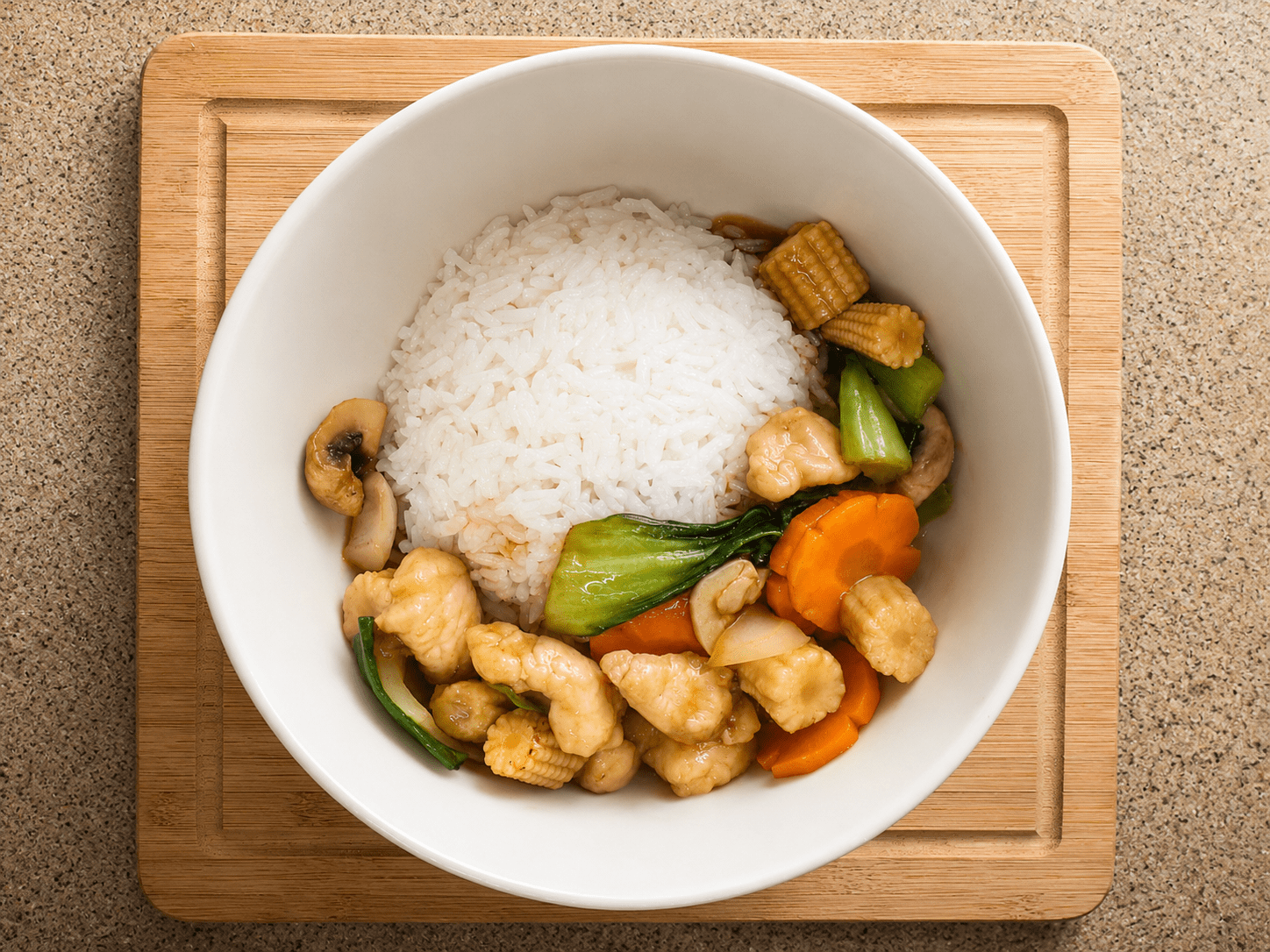
Tender chicken and crunchy vegetables coated in a glossy oyster-sauce gravy
Why This Oyster Sauce Chicken Stir Fry Works
Oyster sauce is the engine here. It is a thick, glossy, deeply savoury concentrate that brings sweetness, salt, and a meaty umami all at once. Pair it with a splash of soy sauce, a spoon of sugar, and a corn flour slurry to bring it all together into a clingy gravy, and you have the foundation that powers most of the chicken and vegetable plates you have ever ordered at a Cantonese restaurant. The technique is simple. The flavour is anything but. The other thing that makes this work is the corn flour on the chicken. Be generous with it. You want two heaping tablespoons coating thinly sliced chicken so the pieces look dry, almost powdery, when they go into the wok. The starch does two jobs: it seals the chicken so it stays tender on high heat (a Chinese technique called velveting), and the residue helps the final sauce thicken into a glossy coat at the end. And the cooking is fast. Once the wok is hot, the whole dish lives or dies in about ten minutes. There is no time to chop, no time to measure, no time to think. Which is why everything you see below happens before the burner ever gets turned on.This is a prep recipe
Just like my green curry noodle stir fry, once the wok hits high heat you have about ten minutes from start to plate. Four bowls go on the counter before the wok touches the burner. Skip the prep and the cook falls apart.
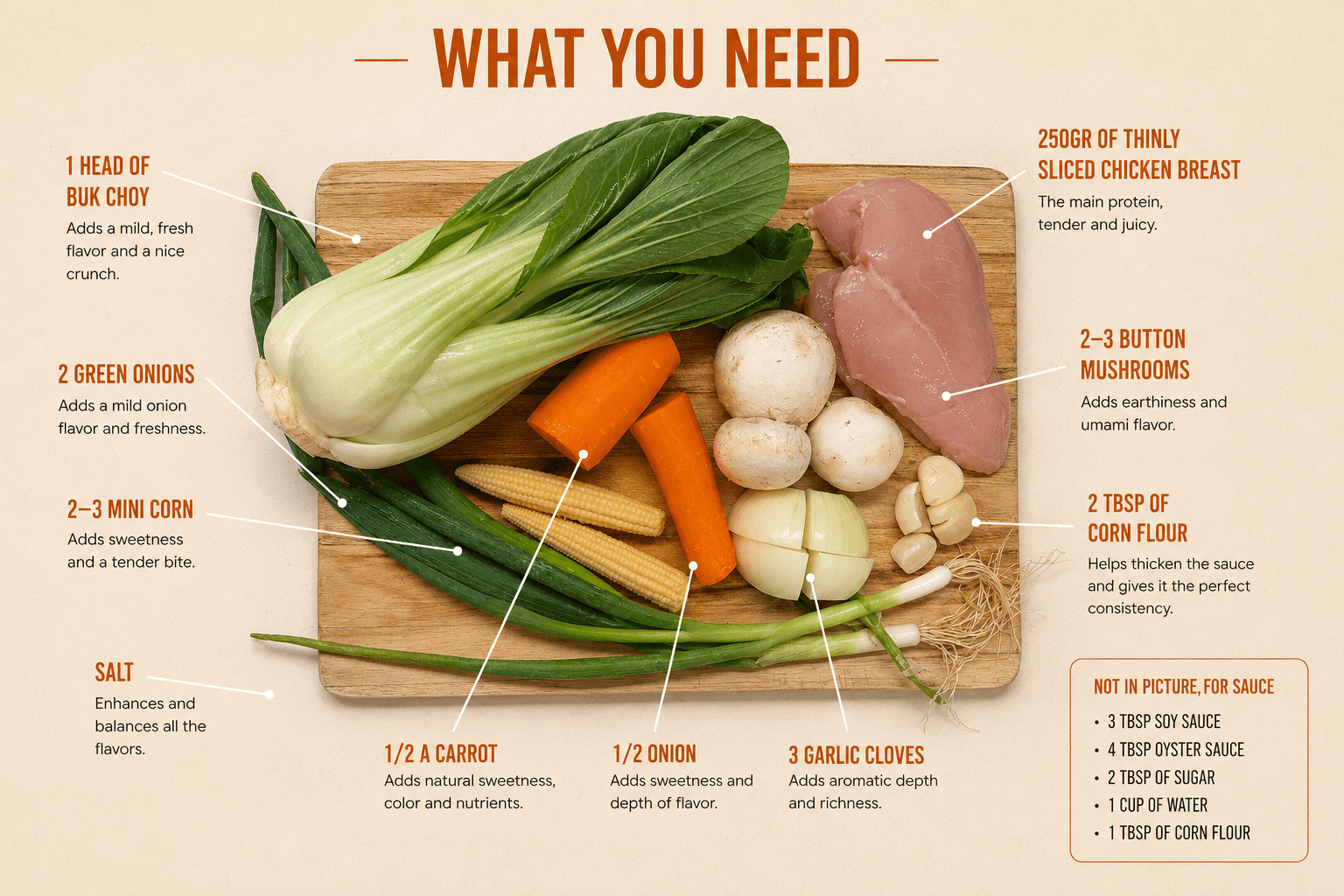
The Four Prep Groups
This is the most important part of the whole post. Get these four bowls ready, lined up next to the wok, and the cooking will feel effortless. Skip this and it will feel like an emergency.1. The Sauce
In a bowl or measuring cup, whisk together the soy sauce, oyster sauce, sugar, water, and corn flour until completely smooth with no lumps. Set aside. The corn flour will settle to the bottom, so give it a quick stir again right before pouring.
2. Chicken with Corn Flour
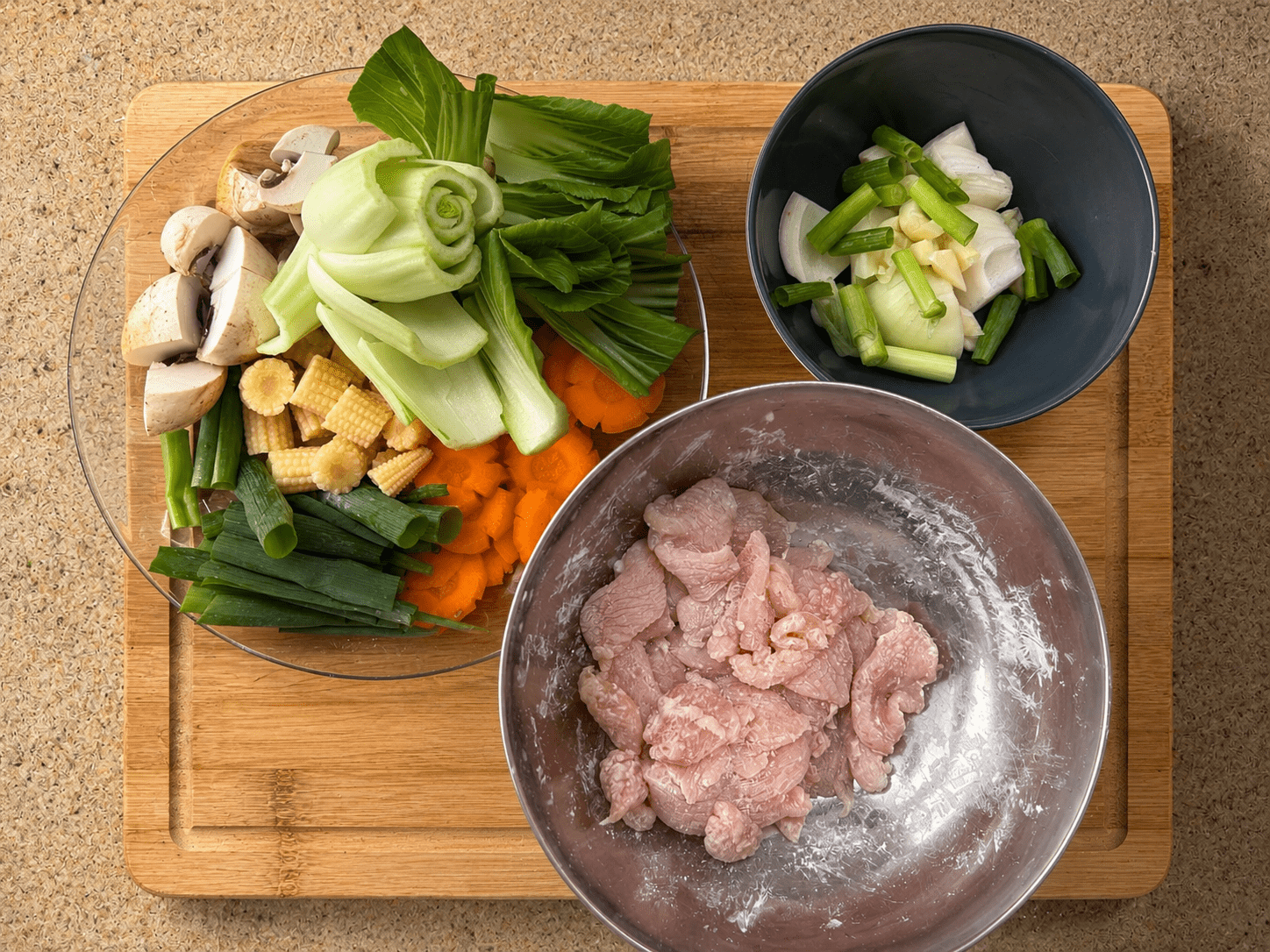
Slice the chicken thinly across the grain. Toss in a bowl with the corn flour and a generous pinch of salt. The chicken should look dry, almost dusty. The starch absorbs surface moisture and that is exactly what you want.
3. Aromatics Bowl
Thinly sliced white onion, the white parts of the green onions, chopped garlic, and chopped ginger (if using). All in one small bowl, ready to fly into the wok in seconds.
4. Vegetable Bowl
Carrot in thin coins, bok choy in 3 cm pieces, mini corn halved, mushrooms quartered, and the green parts of the green onions in 3 cm batons. All in one bowl. Use whatever crunchy veg you have on hand: cabbage, green beans, snow peas all work.
How to Cook It
Now the easy part. Crank the heat as high as it goes, add oil to the wok, and follow the order below. The cook times below assume a real high-heat stove. If your burner is on the weaker side, give each step an extra minute and don’t crowd the wok.1
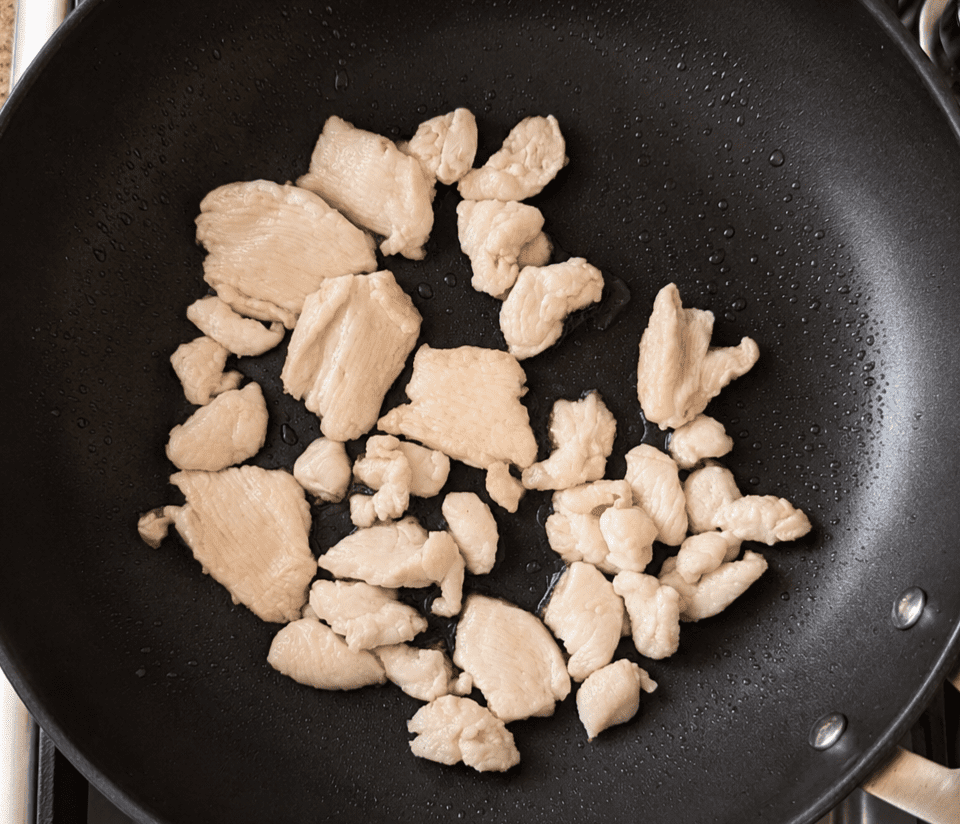
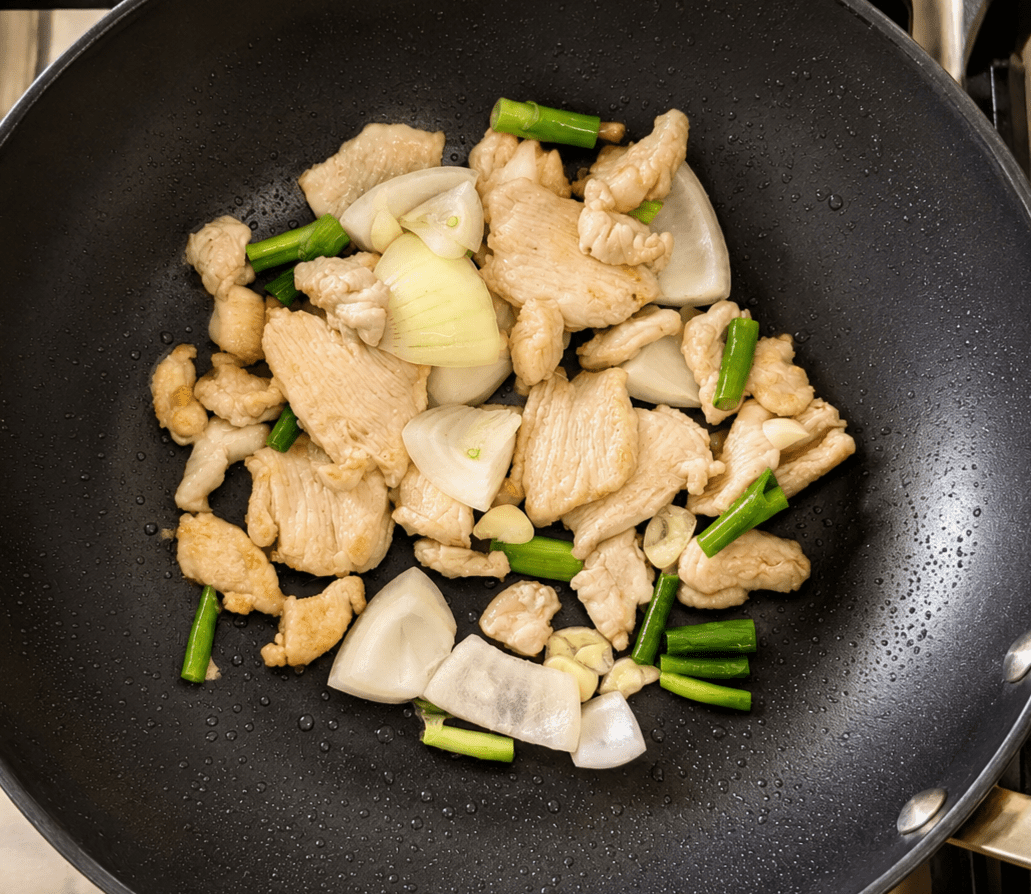
Sear the chicken
- Heat the wok until it’s smoking, then add a good glug of oil.
- Drop in the chicken and spread it out so the pieces aren’t piled on each other.
- Let it sit for about 30 seconds without moving, then stir-fry for another minute or so until the outside is just turning golden. About two minutes total.
- Do not overcook. It will finish cooking later when it comes back into the pan.
2
Add the aromatics
- Tip the aromatics bowl (white onion, green onion whites, garlic, ginger) straight into the wok with the chicken.
- Stir-fry on high heat for about a minute. You’re after softened onions and toasted garlic, not raw and not burnt.
- The pan should smell incredible at this point.
3
Set aside, hit the vegetables
- Tip the chicken and aromatics out of the wok onto a plate. Yes, all of it. We want a clean hot wok for the veg.
- Add another splash of oil to the empty wok and let it get screaming hot again.
- Tip in the vegetable bowl: carrot, bok choy, mini corn, mushrooms, green onion greens.
- Stir-fry for about two minutes. You want the carrots to start softening but everything else to keep a crunch. Bok choy stems should still snap when you bite them.
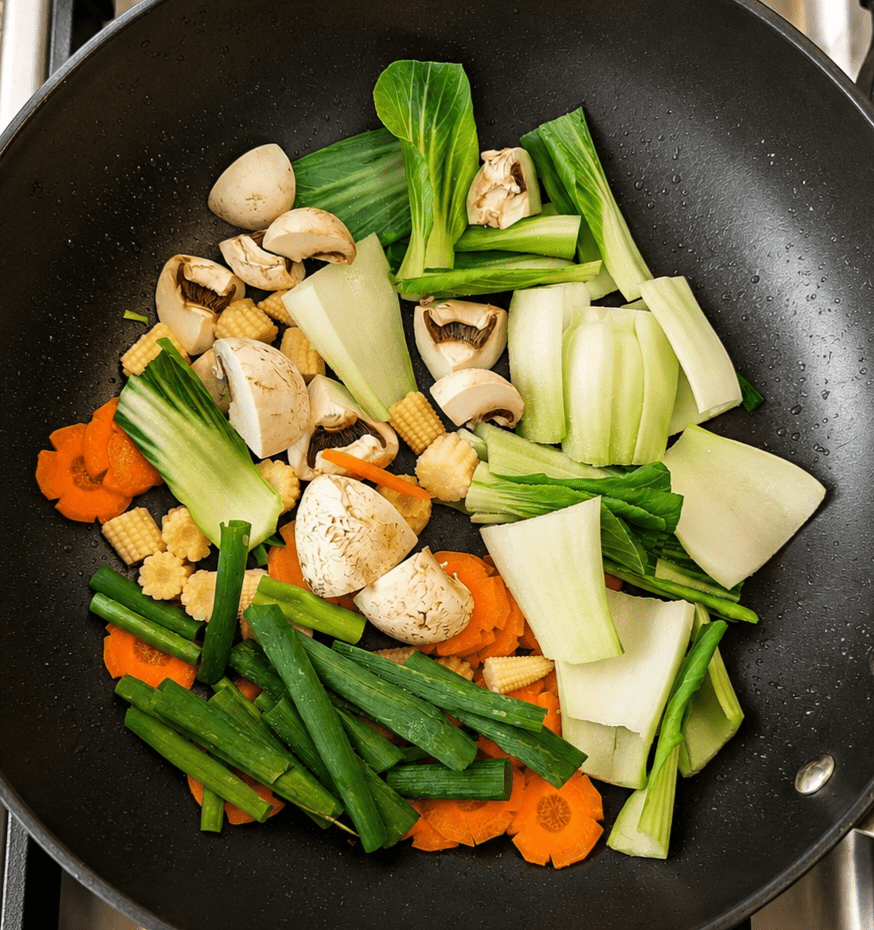
Bok choy is the star
Cut the white stems and the green leaves separately if you want to be fancy. Stems go in earlier because they need a bit more time, leaves go in 30 seconds before the chicken comes back. For a faster weeknight version, just chop everything together. It still works.
4
Bring everything back together
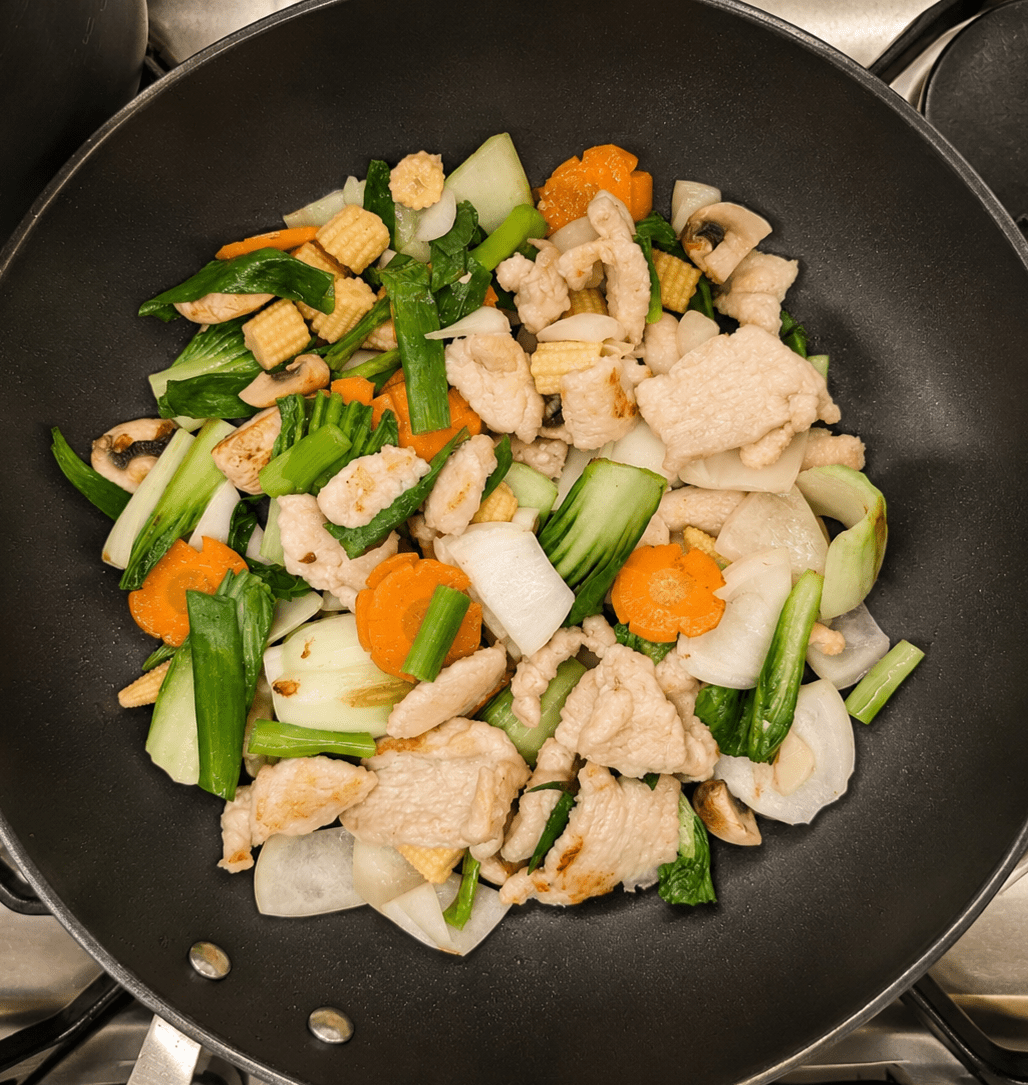
- Tip the chicken and aromatics back into the wok with the vegetables.
- Stir-fry for about two minutes so everything heats through and the flavours start to combine.
5
Add the sauce
- Give the sauce another quick whisk to re-suspend the corn flour, then pour it all into the wok.
- Stir constantly. The sauce will start out watery, then thicken into a glossy gravy in about two to three minutes as it boils.
- Taste. Oyster sauce and soy sauce vary wildly by brand, so the balance might lean too sweet, too salty, or too flat. Adjust with a pinch more salt, a touch more sugar, or even a tiny splash of rice vinegar for acidity if it needs lifting.
- Finish with a pinch of MSG if you have it. This is what tips it from “home cooking” to “why does this taste like the restaurant.”
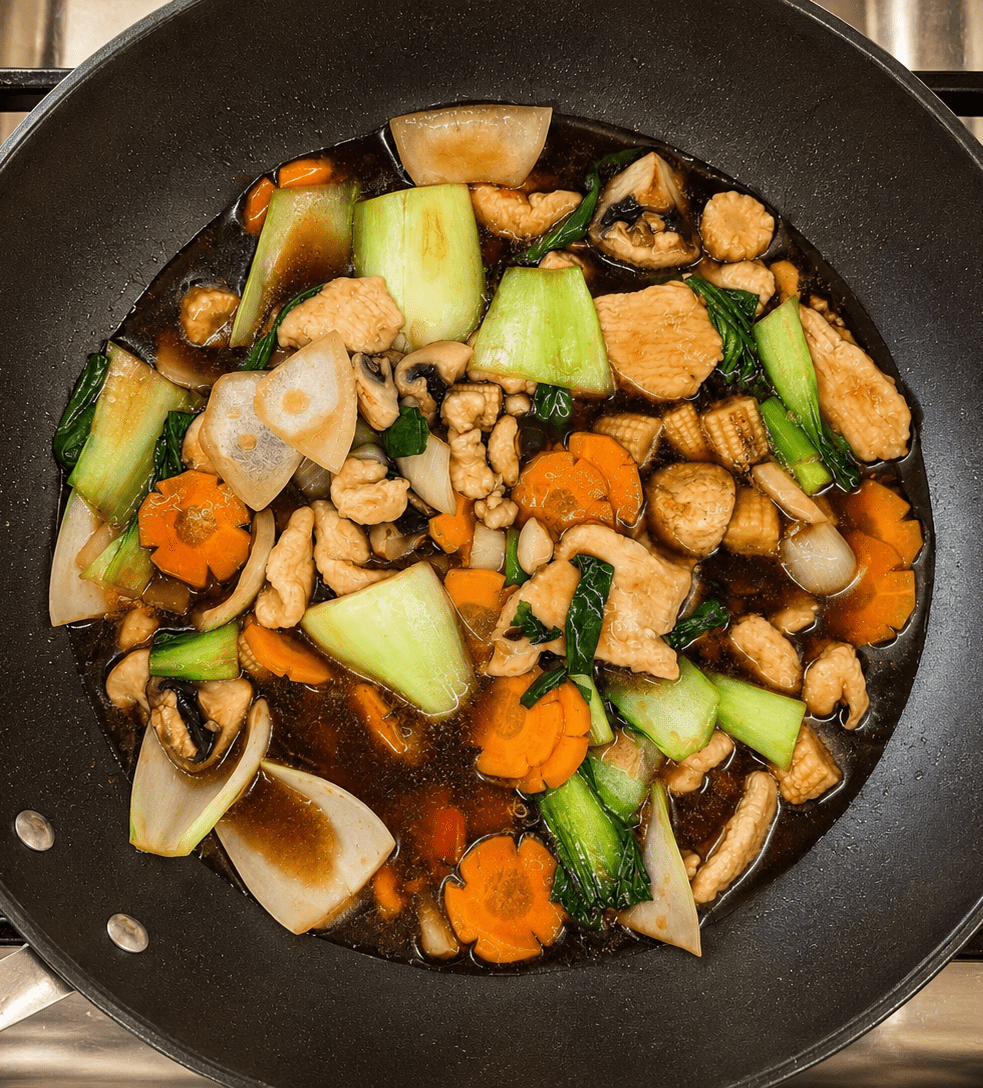
Taste before you serve
Two bottles of oyster sauce from two different brands can taste completely different, one closer to fish-sauce funk, another closer to caramelized soy. Always taste at the end and decide what the dish needs. More salt, more sugar, a tiny squeeze of vinegar to lift it. Trust your tongue over the recipe.
Make It Vegan
Swap the chicken for firm tofu. Press it for a few minutes to push out the surface water, cube it, then toss with the corn flour exactly the same way. Sear hard on all sides until the corners are deep golden. The only other change you need is the sauce: oyster sauce is made from oysters and is not vegan. Look for a “vegan oyster sauce” or “mushroom-flavoured stir-fry sauce” at any Asian grocery, used 1:1. The rest of the recipe stays identical.Tips for the Best Stir Fry
- 🔥 High heat is non-negotiable. If your stove can’t push the wok to smoking, work in smaller batches so the temperature doesn’t crash. Crowded wok equals steamed not seared, which equals sad stir fry.
- 🥢 Slice the chicken thin and across the grain. Thin pieces cook in seconds. Thick pieces overcook on the outside before the inside is done. Across the grain gives you the most tender bite.
- 💨 The corn flour is the secret to velveting. Don’t be precious about the amount. Two heaping tablespoons on 250 gr of chicken. The chicken should look dry. This is what gives the chicken its tender bite and the sauce its body.
- 🥬 Keep the vegetables crunchy. The biggest mistake home cooks make with stir fry is overcooking the veg. Two minutes on screaming heat is enough. They should still snap when you bite them.
- 🍚 Have the rice ready before you start. The stir fry takes ten minutes and waits for no one. Rice takes 20 minutes. Start the rice first, prep while it cooks, then cook the stir fry when the rice is resting under the lid.
- 🧪 Taste and adjust at the end. Oyster sauce and soy sauce vary by brand. The recipe is a starting point, not a law. A pinch more salt or sugar at the end is often what makes the difference between a good dish and a great one.
Frequently Asked Questions
Oyster sauce is a thick, glossy, dark-brown sauce made from caramelized oyster extract, sugar, and salt. It tastes deeply savoury and a little sweet, like a more umami-rich version of soy sauce. You can find it in any Asian grocery store and in most large supermarkets in the international aisle. Lee Kum Kee is the classic, widely-available brand. Once you have a bottle it lasts months in the fridge and shows up in a hundred different stir fries.
Yes, and many would say thighs are better. Boneless skinless thighs stay juicier on high heat and are more forgiving if you overcook them slightly. Slice them the same way: thin and across the grain. The corn flour velveting works just as well on thighs.
Absolutely. This recipe is more of a template than a strict list. Anything crunchy works: white cabbage, broccoli florets, snow peas, green beans, bell peppers, baby corn, water chestnuts, snap peas. Just keep the total volume of veg about the same as what’s listed, and add the harder vegetables (carrot, broccoli) a minute earlier than the softer ones (bok choy leaves, snow peas).
Two likely culprits. First, the corn flour settled to the bottom of the bowl and didn’t get into the wok. Always whisk it again right before pouring. Second, the heat wasn’t high enough for the sauce to actually boil and thicken. Crank it up, keep stirring, and let it bubble hard for two or three minutes. If you’ve done both and it’s still thin, mix another teaspoon of corn flour with two tablespoons of cold water and stir it in. It will thicken in seconds.
MSG is safe. The bad reputation it has is the result of a debunked myth from the 1960s that has been thoroughly disproved by modern food science. It’s just the sodium salt of glutamic acid, which is the same amino acid that gives tomatoes, mushrooms, parmesan and seaweed their savoury flavour. A small pinch at the end of a stir fry adds a depth of umami that’s hard to get any other way. If you genuinely don’t have any, a splash of fish sauce or a touch more oyster sauce will get you partway there.
Yes, with adjustments. Cook in smaller batches so you don’t crash the pan temperature. Give each stage about 30-50% more time than the recipe says. And make sure the wok is fully preheated before anything touches it. The danger on a weak burner is the chicken weeping water and steaming instead of searing, so smaller batches solve that.
A few hours ahead, yes. Chop all the vegetables and store them in the fridge in covered bowls. The chicken should be coated with corn flour right before cooking, not hours in advance, because the moisture from the chicken will turn the dry coating into a paste over time. The sauce can be mixed and held in the fridge for up to a day. Overnight chopped bok choy will be sad and wet by morning, so try not to push it more than 4-6 hours.