Easy Congee with Leftover Rice
(savory rice porridge, two ingredients and half an hour)
I met congee on a hotel breakfast spread in Thailand and was deeply suspicious of it. Rice porridge, for breakfast, next to the eggs? I tried it anyway and fell for it immediately. It has been a fixture at home ever since. The whole thing is leftover rice simmered in stock until it collapses into something soft and savory, and then the toppings do the talking: chili oil, crispy garlic, green onions, a sprinkle of soy. Two real ingredients, thirty minutes of low heat, and almost no work.
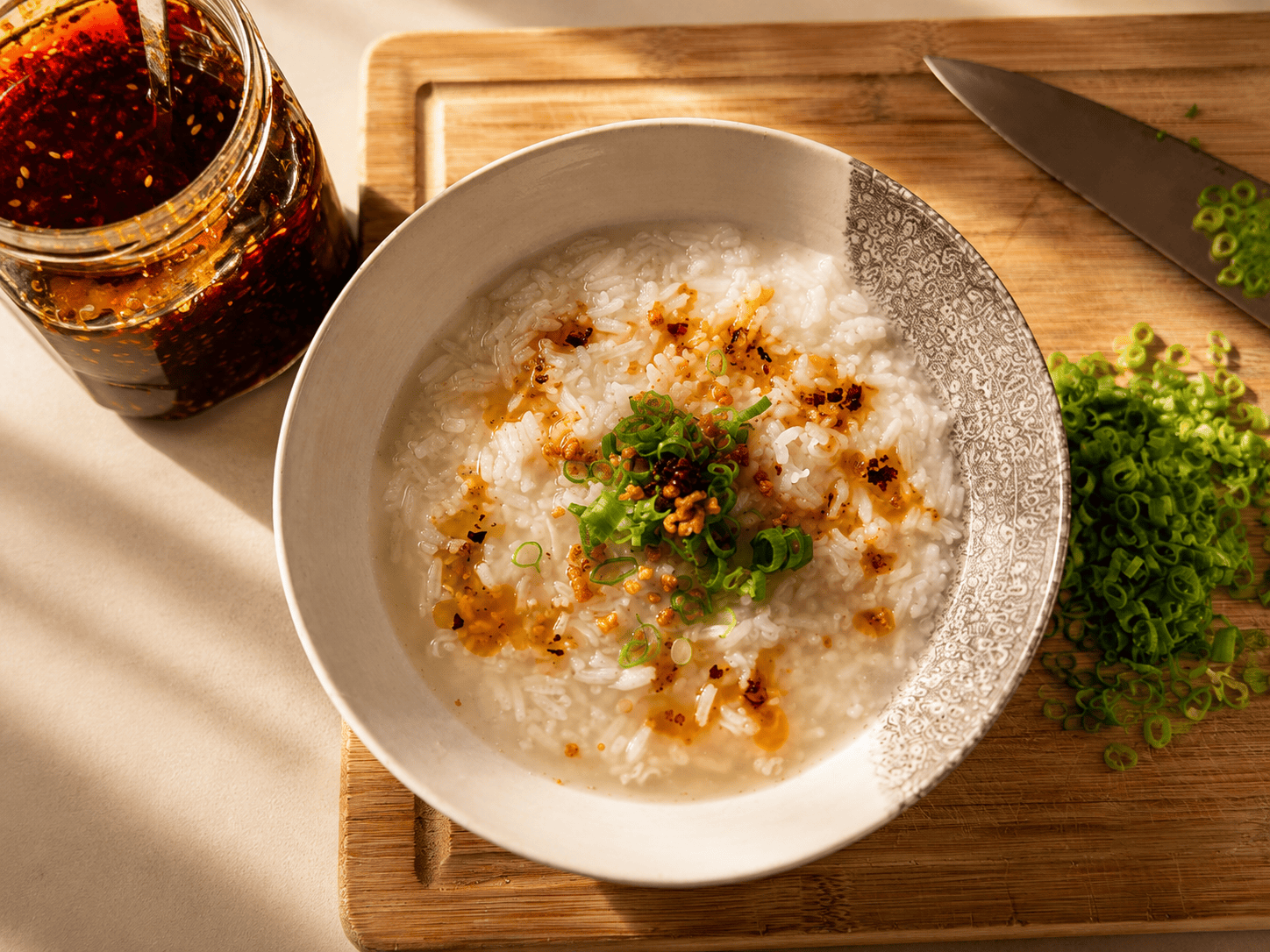
Congee with chili oil, crispy garlic and green onions, the toppings are the whole point
Why This Congee Works
Congee is a leftovers dish pretending to be a recipe. If you have rice sitting in the fridge and stock in the freezer, which I almost always do, you are already most of the way there. Everything else is heat and time. The rice slowly gives up its starch into the stock, the liquid reduces, and somewhere around the thirty minute mark it stops being rice in soup and becomes one soft, creamy thing.
Because the base is so plain, the stock is not a background detail, it is the flavor. Water will give you something edible and forgettable. A good stock gives you a bowl worth waking up for. That is the whole trade in this recipe: almost no effort, but the two things you put in have to be decent.
Then there are the toppings, which is where congee actually gets exciting. The porridge is a soft, mild canvas, and everything you spoon on top hits hard against it: the heat and crunch of chili oil, the sweet crackle of fried garlic, the sharp green bite of onion, the salt of soy. That contrast is the reason people love this dish.
How to Make Congee, Step by Step
- Add the cooked rice to a small pot. Day old rice straight from the fridge is ideal, the grains have dried out and firmed up, so they drink the stock properly instead of turning to mush right away.
- Use only the clean white rice. Leave out any crusty or burnt bits from the bottom of the pot, they will muddy the color and the flavor.
- Pour the chicken stock over the rice. It will look far too thin at this stage. That is correct, most of it cooks away.
- Cut the white parts of the green onions into big pieces and drop them in. They are there to perfume the pot and get fished out at the end, so keep them large enough to find.
- Set the heat very low and let it go for around 30 minutes. Stir now and then so the bottom does not catch.
- The rice will absorb the stock and the liquid will reduce. It is ready when it has the consistency of porridge, thick, soft, and creamy, with the grains broken down into the liquid.
- Fish out the onion whites and discard them.
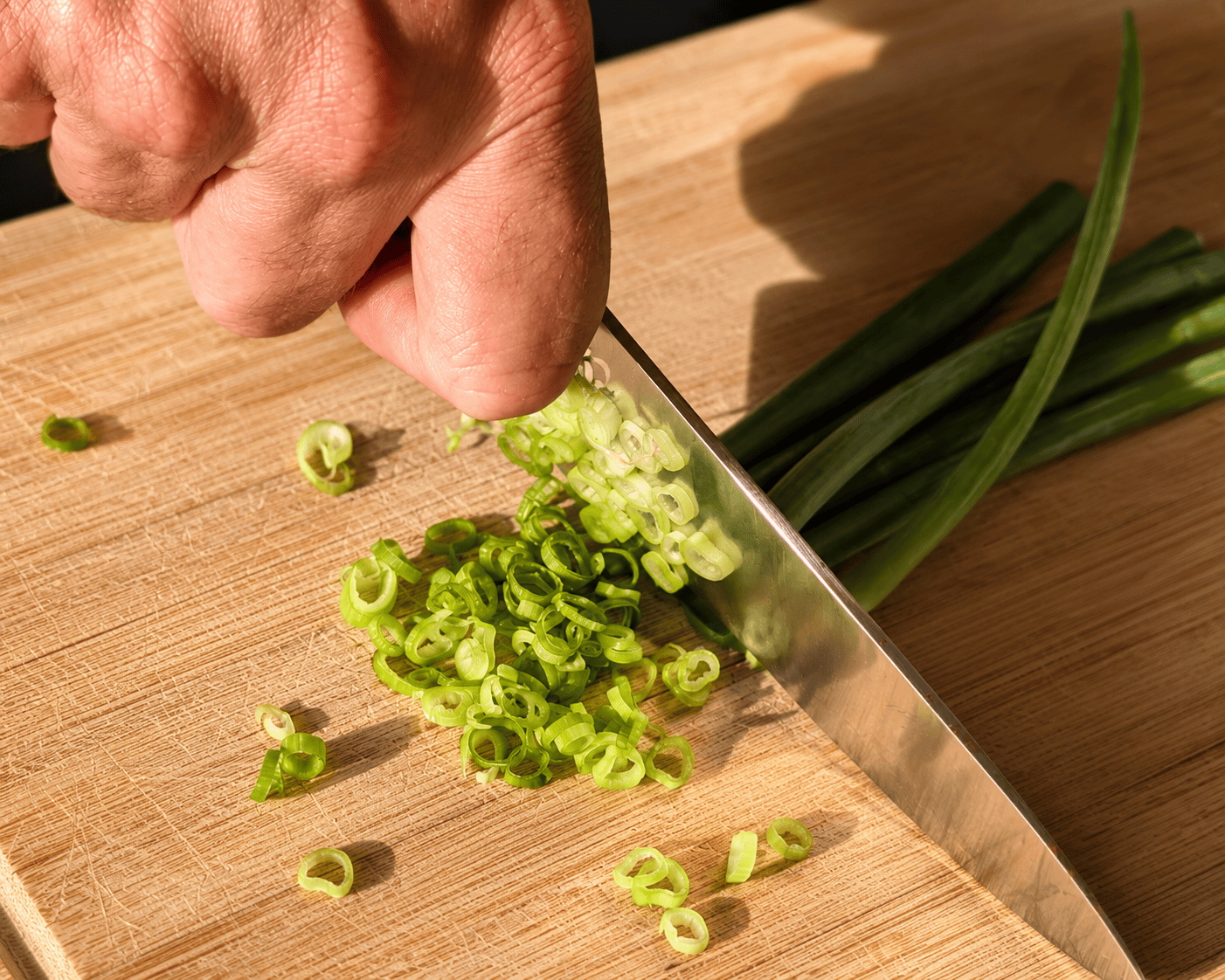
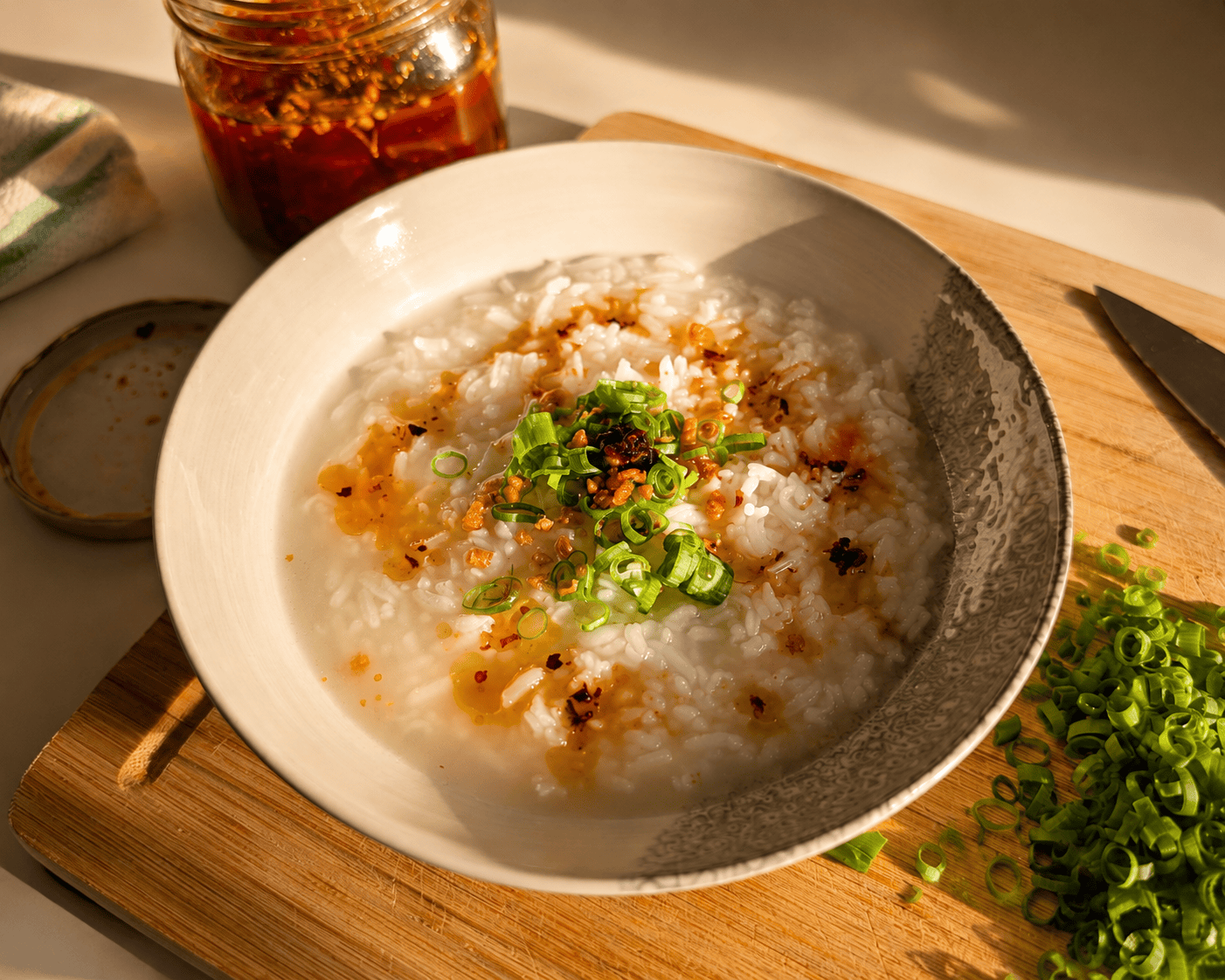
- Spoon the congee into a bowl. Drizzle over the chili oil, letting it pool on the surface.
- Add the finely chopped green onion greens and a spoon of fried crispy garlic. If you want a sharper, more pungent hit, use fresh garlic instead.
- Finish with a sprinkle of soy sauce and eat it hot.
- 🍚 Day old rice is better: Cold, dried out rice from the fridge holds its shape long enough to absorb the stock properly. Fresh hot rice turns soft too fast and can go gluey.
- 🥬 Skip the burnt bits: Only the clean white rice goes in. Crusty scrapings from the bottom of the rice pot will discolor the whole bowl.
- 🔥 Keep the heat very low: This is a slow collapse, not a boil. High heat scorches the bottom and the starch sticks before the grains break down.
- 🥗 Save the onion whites: Big pieces go in to flavor the pot and come out at the end. The greens are a topping, not an ingredient, so keep them separate.
- 🥣 Toppings are the dish: The porridge is the canvas. Chili oil, crispy garlic, green onion and soy are the baseline. A soft boiled egg, shredded chicken or a spoon of pickles all work.
- ❄️ It thickens overnight: Leftover congee sets almost solid in the fridge. Reheat it gently with a good splash of stock or water and stir it back to life.
Frequently Asked Questions
This is my favorite kind of recipe: it costs almost nothing, uses up what is already in the fridge, and still feels like a treat. If you keep homemade stock in the freezer and a jar of chili oil in the cupboard, you are always about thirty minutes from a good bowl. Leave a comment and tell me what you topped yours with.