Thai Green Curry with Fish
(spicy, coconut rich, on the table in 30 minutes)
This is a Thai green curry built around soft chunks of white fish, and it is far quicker than it looks. There is one technique that makes the whole thing, and almost everyone skips it: you fry the curry paste into the coconut cream until the fat splits out into little bubbles. That single step is the difference between a curry that tastes flat and coconut-y and one that tastes deep, fragrant and properly Thai. Everything after that is just adding liquid and letting the fish poach gently. Serve it over white rice and it is a full dinner in about half an hour.
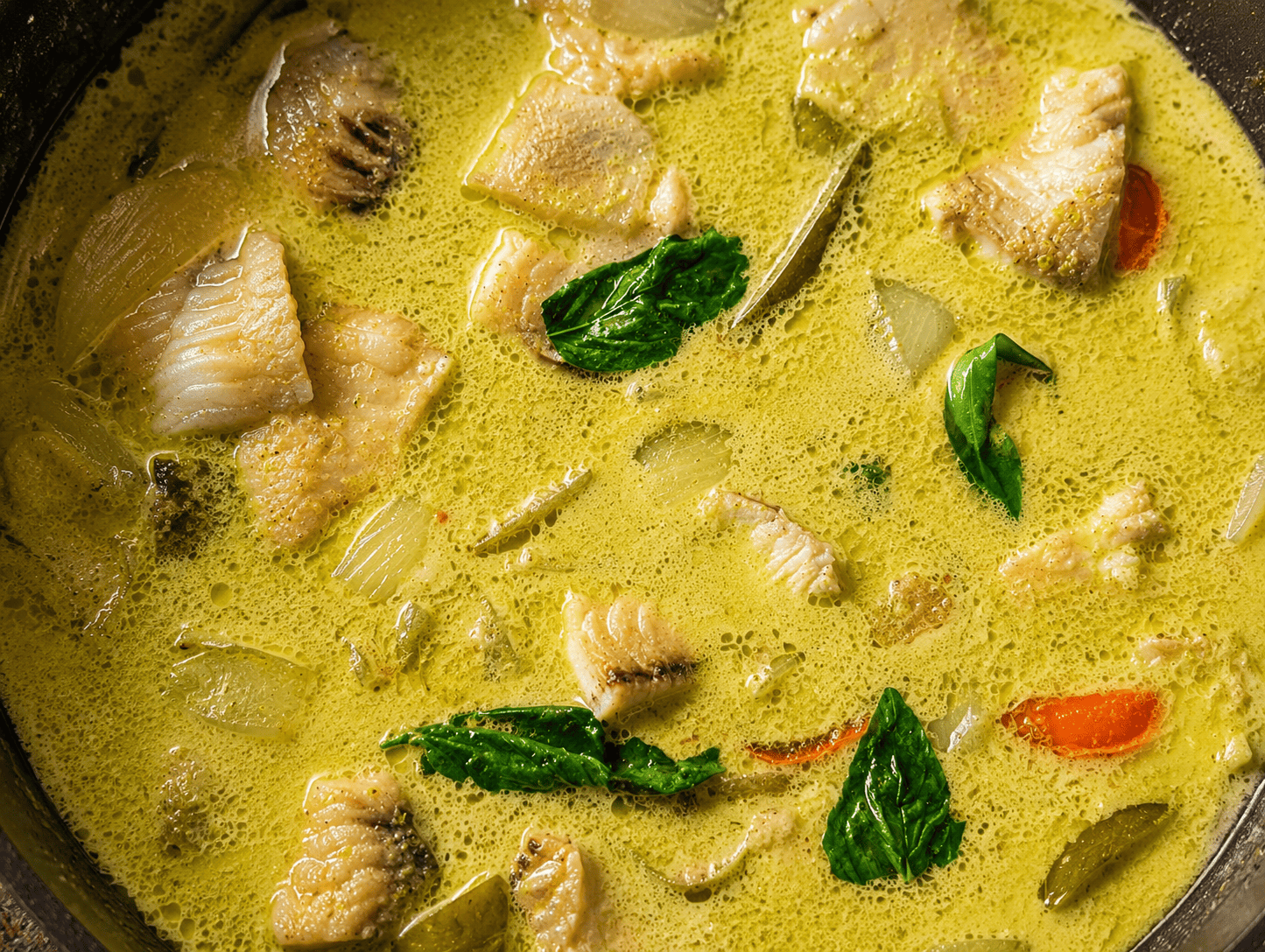
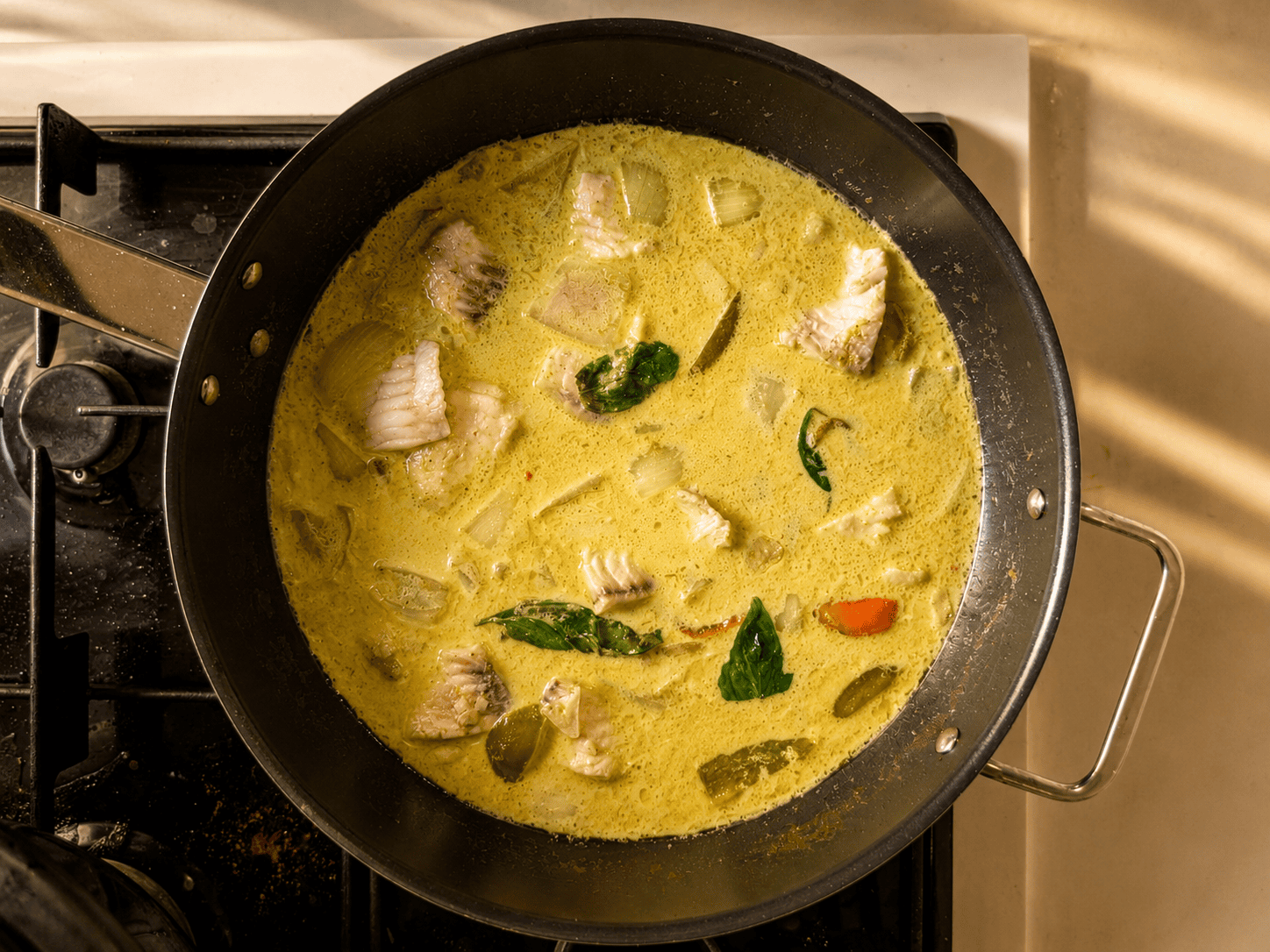
Soft white fish poached in a spicy coconut curry, with basil thrown in at the end
Why This Green Curry Works
Most home green curries go wrong in the same way: the paste gets stirred into a pot of liquid, and the result tastes thin and vaguely coconutty with the spice sitting on top rather than running through it. The fix is to treat the coconut cream as a frying medium, not a liquid. You cook the paste into it until the fat separates out, which blooms the spices and aromatics in hot fat and pushes their flavour into everything that follows.
The vegetables get similar treatment. They hit a very hot pan first and are meant to blister, not soften. Because the curry then simmers for a while, vegetables that were already cooked would collapse into nothing. Blistering gives them colour and a little char while leaving them enough structure to survive the pot.
Fish is the ideal protein here precisely because it needs so little time. It goes in near the end and poaches gently in the finished curry for about fifteen minutes, which is enough to cook it through while it soaks up the sauce. There is no browning, no marinating, and nothing to dry out.
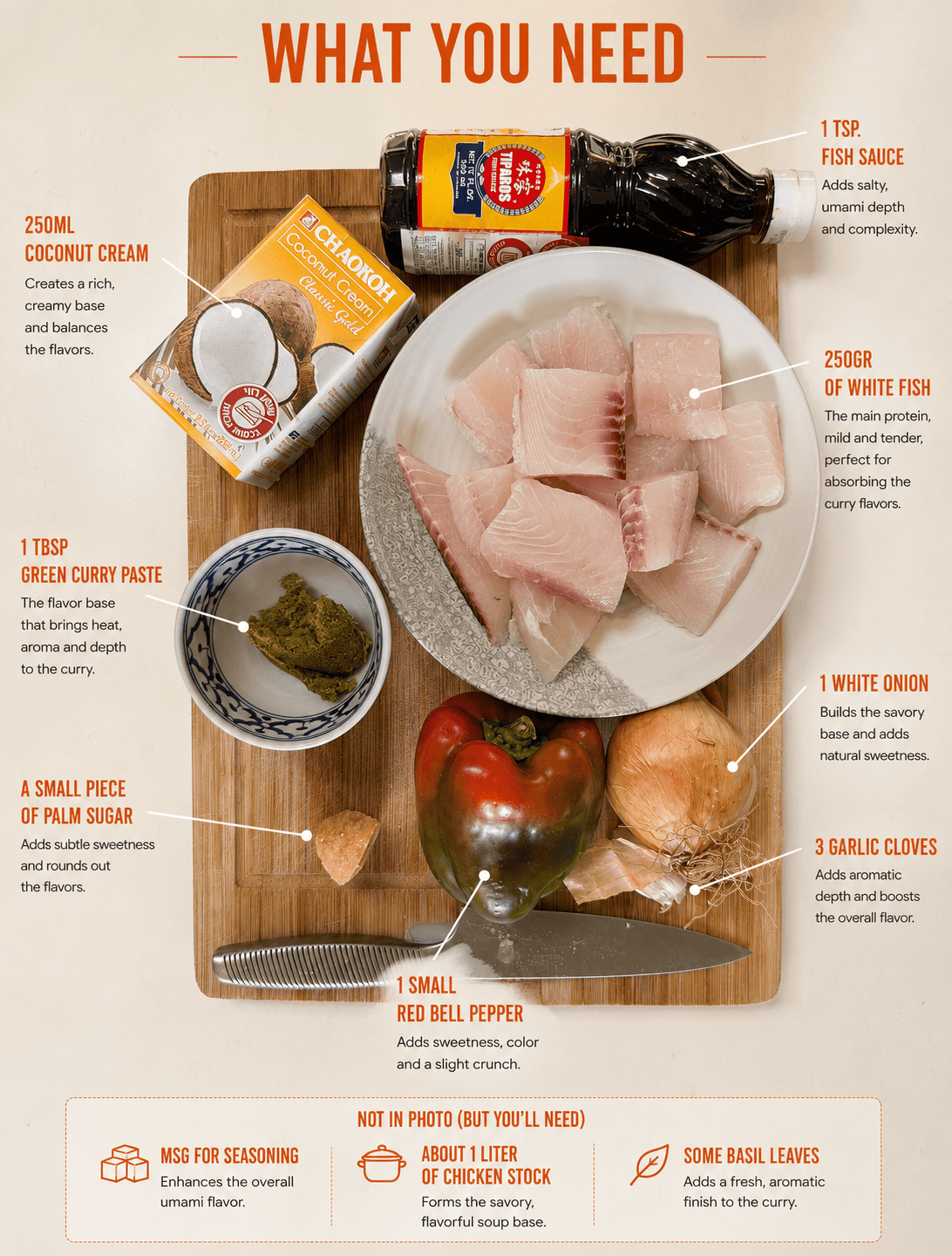
How to Make Thai Green Curry with Fish, Step by Step
- Roughly chop the onion, garlic and red bell pepper. Keep the pieces big and uneven, they are meant to stay chunky.
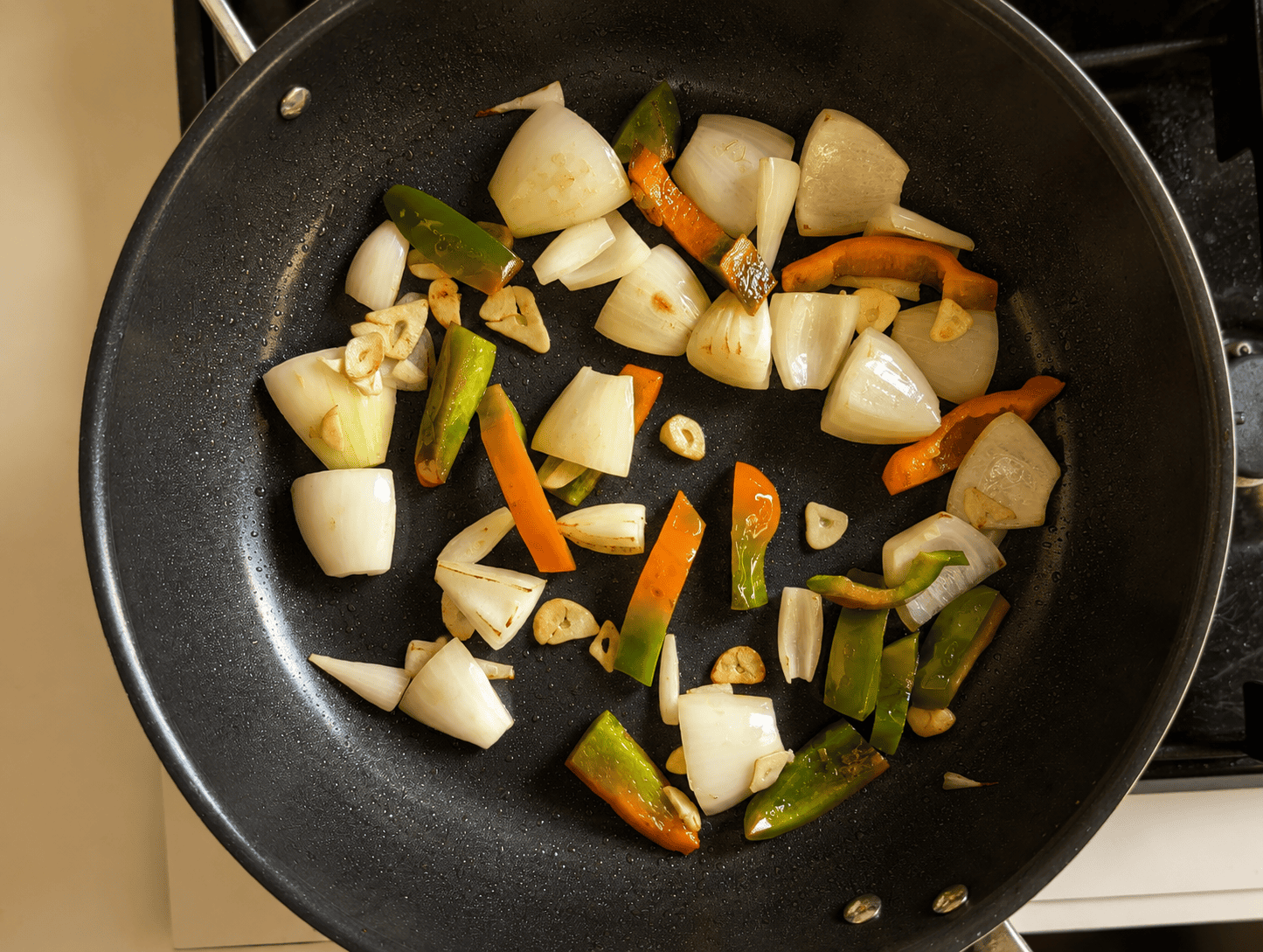
- Get a pan very hot with a little oil and add the vegetables. You are not trying to cook them through, just to catch some colour and a few blisters on the edges. A couple of minutes is plenty.
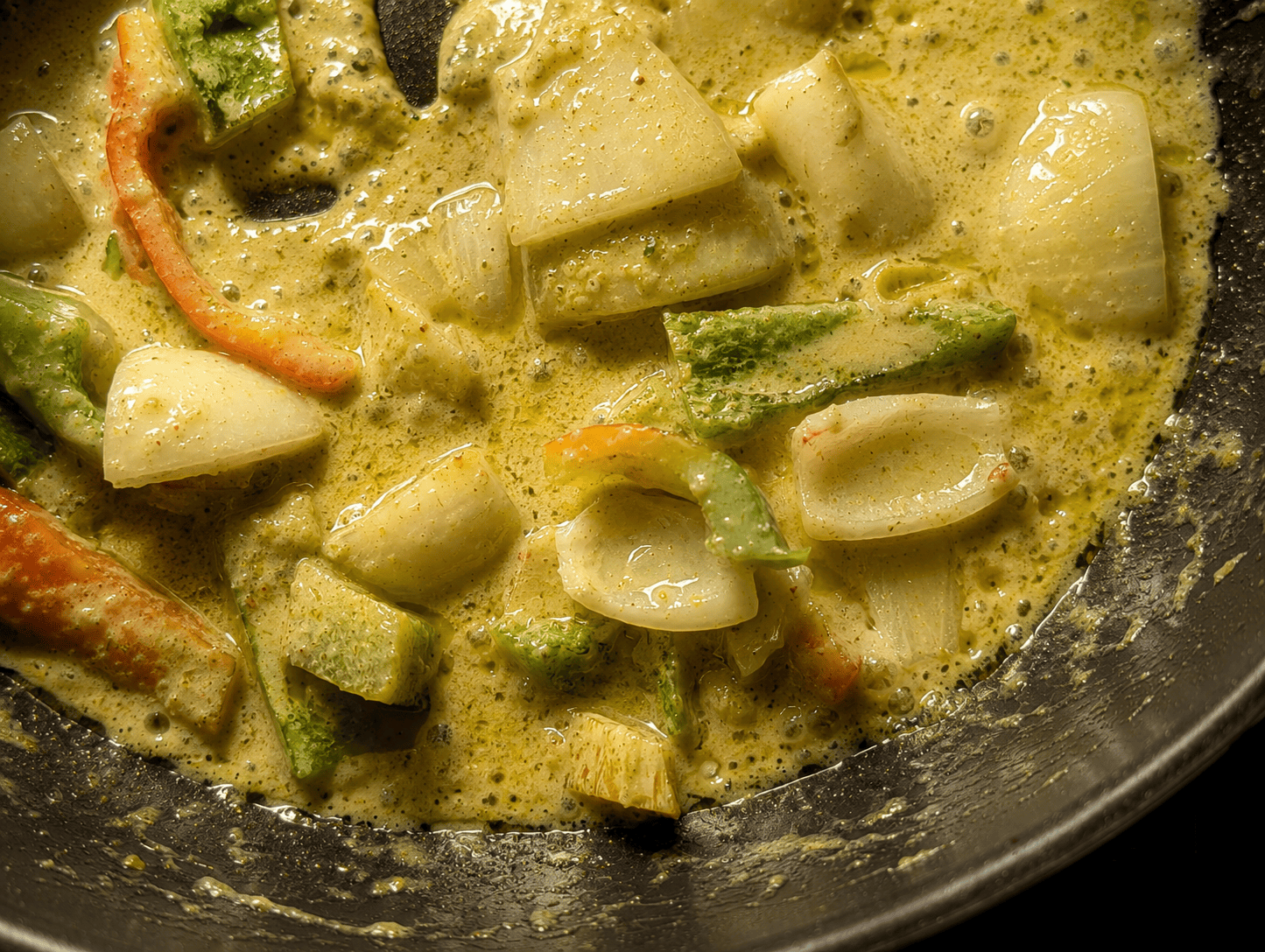
- Add the green curry paste and half the coconut cream to the pan and stir it together.
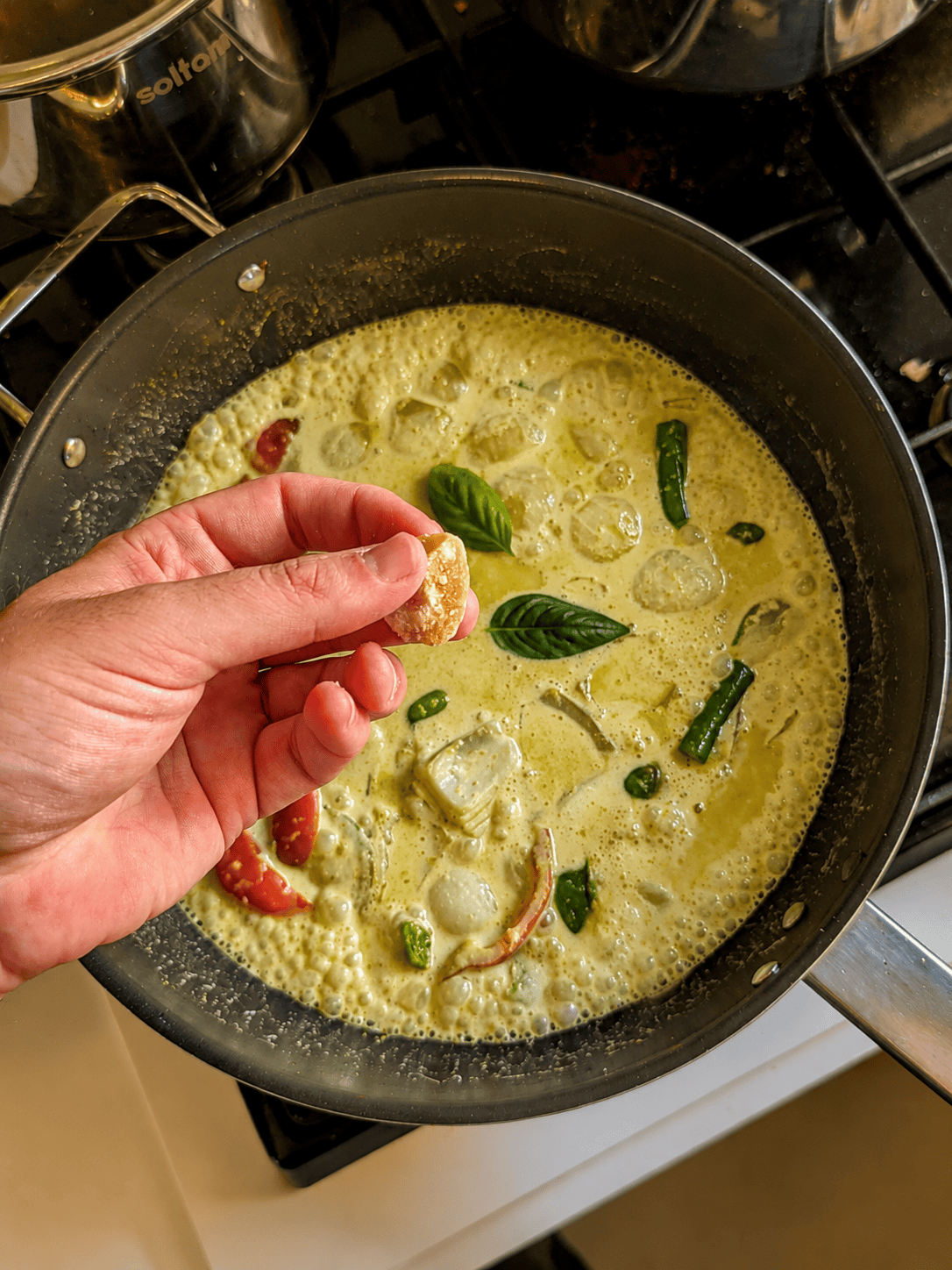
- Once it is combined and starts to bubble, give it a couple of minutes. Watch the surface: when you see tiny thick bubbles of fat appearing, the paste and the cream have properly come together. That is your signal to move on.
- Do not rush this. It is the most important two minutes in the recipe.
- Add the palm sugar, the fish sauce and a pinch of MSG. The sugar rounds off the heat and the fish sauce brings the salt and the funk, they work as a pair.
- Pour in the rest of the coconut cream and stir it through.
- Pour in the chicken stock and bring the pan up to a boil.
- Then drop the heat to low. The fish is going in next and it must not go into a rolling boil.
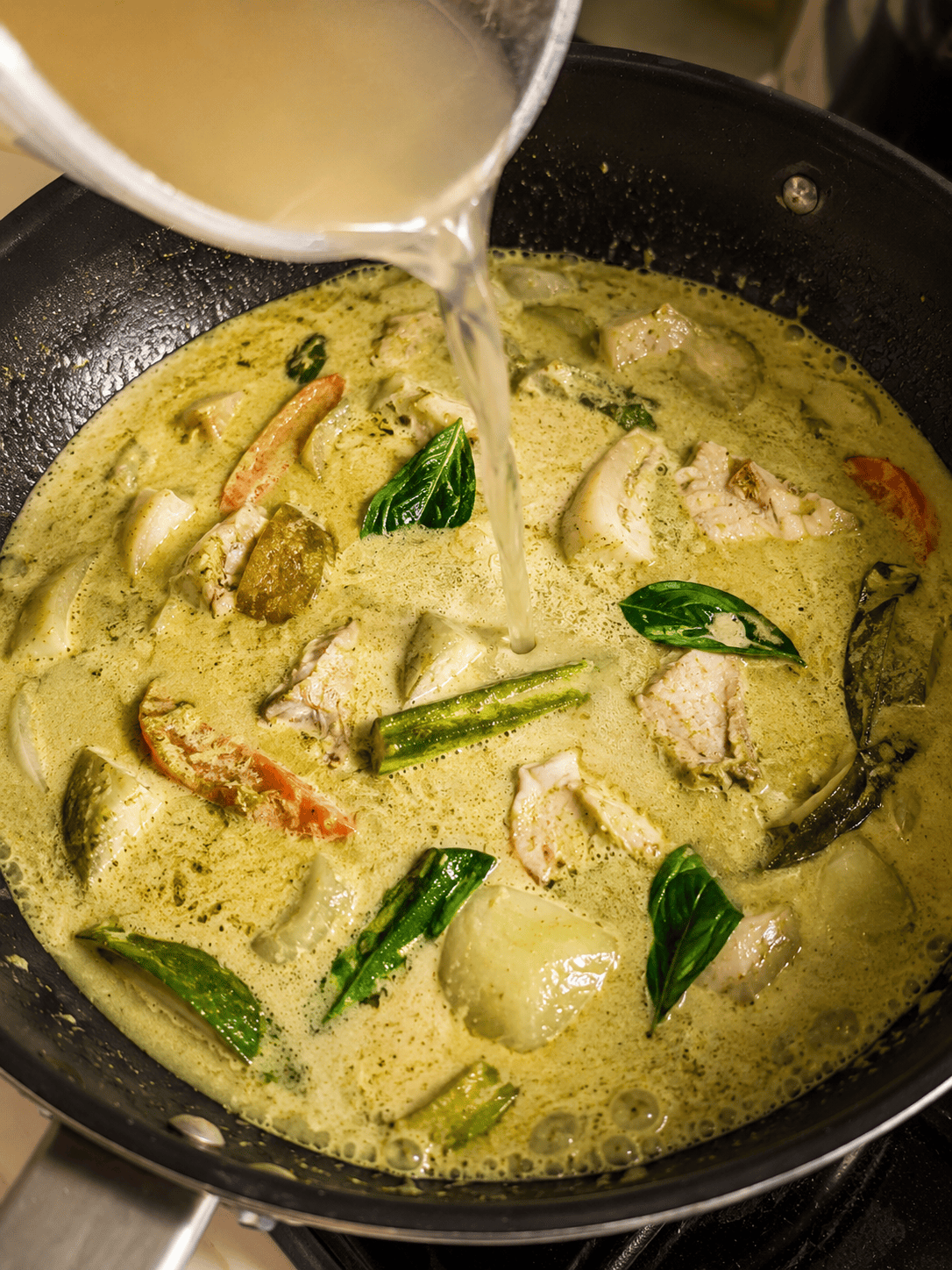
- Add the fish piece by piece so the chunks settle in the sauce instead of landing in a pile and breaking apart.
- Throw in the basil leaves.
- Let everything cook together on low heat for about 15 minutes. Resist stirring it much, the fish is fragile and it will fall apart if you push it around.
- Get white rice going while the curry simmers, the timing works out almost exactly.
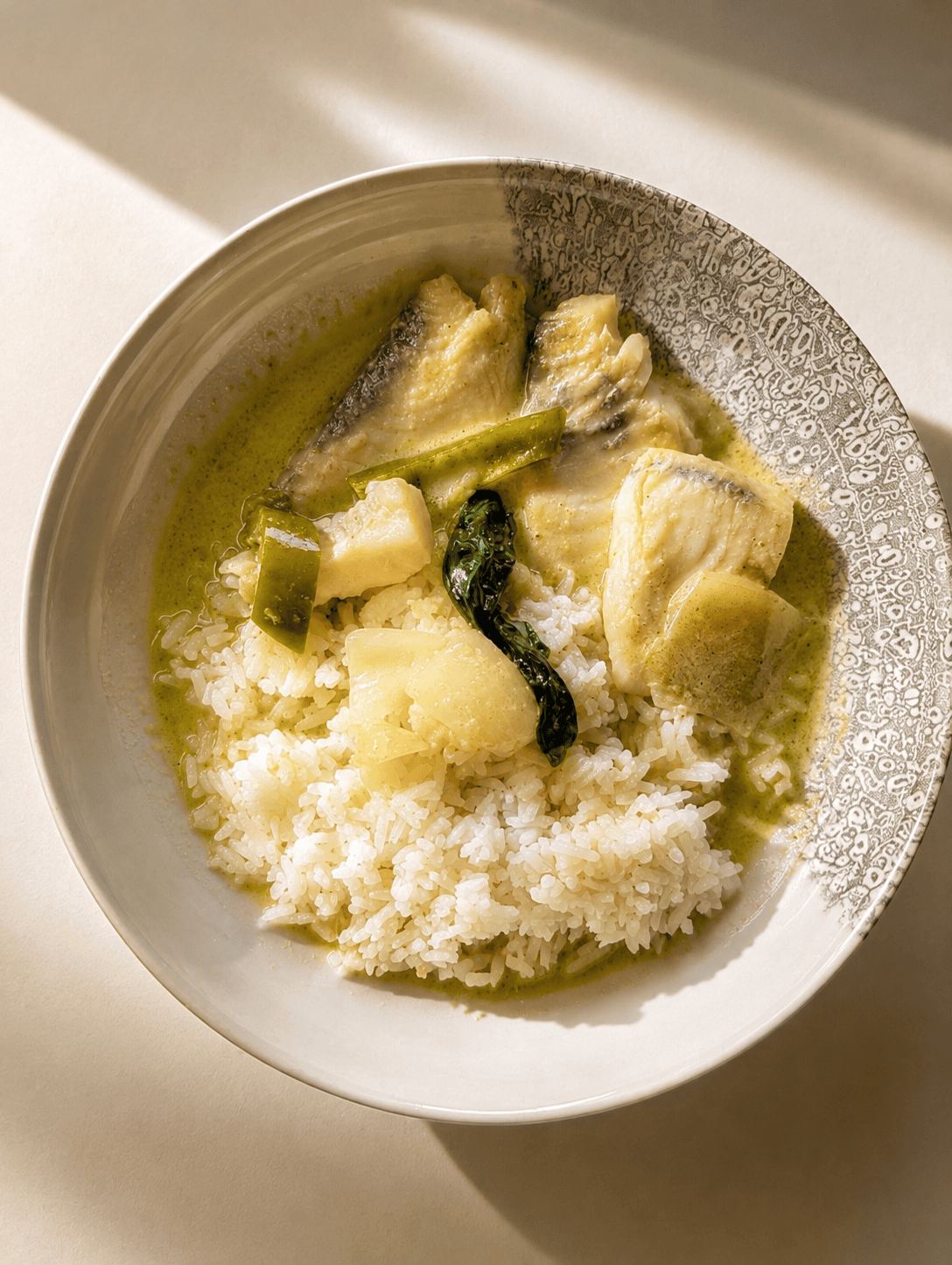
- Spoon the curry over the rice, making sure everyone gets fish, vegetables and plenty of the sauce.
- 🥛 Crack the cream properly: The tiny bubbles of separated fat are the whole recipe. If you skip that step and just dump everything in the pot, the curry will taste flat no matter what else you do.
- 🥦 Use coconut cream, not milk: You need the fat content to split. Light coconut milk cannot do this.
- 🐟 Pick a firm white fish: Cod, halibut, sea bass, grouper or tilapia all hold together well. Cut the pieces large, small ones disintegrate in the sauce.
- 🌶 Taste the paste first: Brands vary enormously in heat and salt. Start with less paste and less fish sauce than you think, then adjust at the end.
- 🍃 Basil at the end: It goes in with the fish so it perfumes the curry without cooking down to nothing. Thai basil is the traditional choice if you can find it.
- ❄️ Reheat gently: Keeps in the fridge for 2 days. Warm it slowly on low heat, since a hard reheat will break the fish and can split the sauce.
Frequently Asked Questions
If you take one thing from this recipe, let it be the two minutes spent cracking the cream. It is the step that separates a real green curry from a coconut soup with paste stirred in. Homemade chicken bone broth lifts the whole pan here too. Leave a comment and tell me what fish you used and how hot you took it.