Thai Mango Sticky Rice Recipe (Khao Niao Mamuang)
(soaked glutinous rice, salted coconut cream, and one perfectly ripe mango)
This Thai mango sticky rice recipe skips the bamboo steamer entirely and uses a plain rice cooker, which is what I actually have on the counter. Six ingredients, one pan of coconut sauce, and a mango. The whole thing lives or dies on two details that are easy to get wrong: soaking the rice long enough, and using far less water than you would for regular rice. Get those right and you end up with glossy, separate grains that hold their shape when you mold them, not a wet clump. If you like this style of Thai cooking, my green curry noodle stir fry runs on the same coconut base.
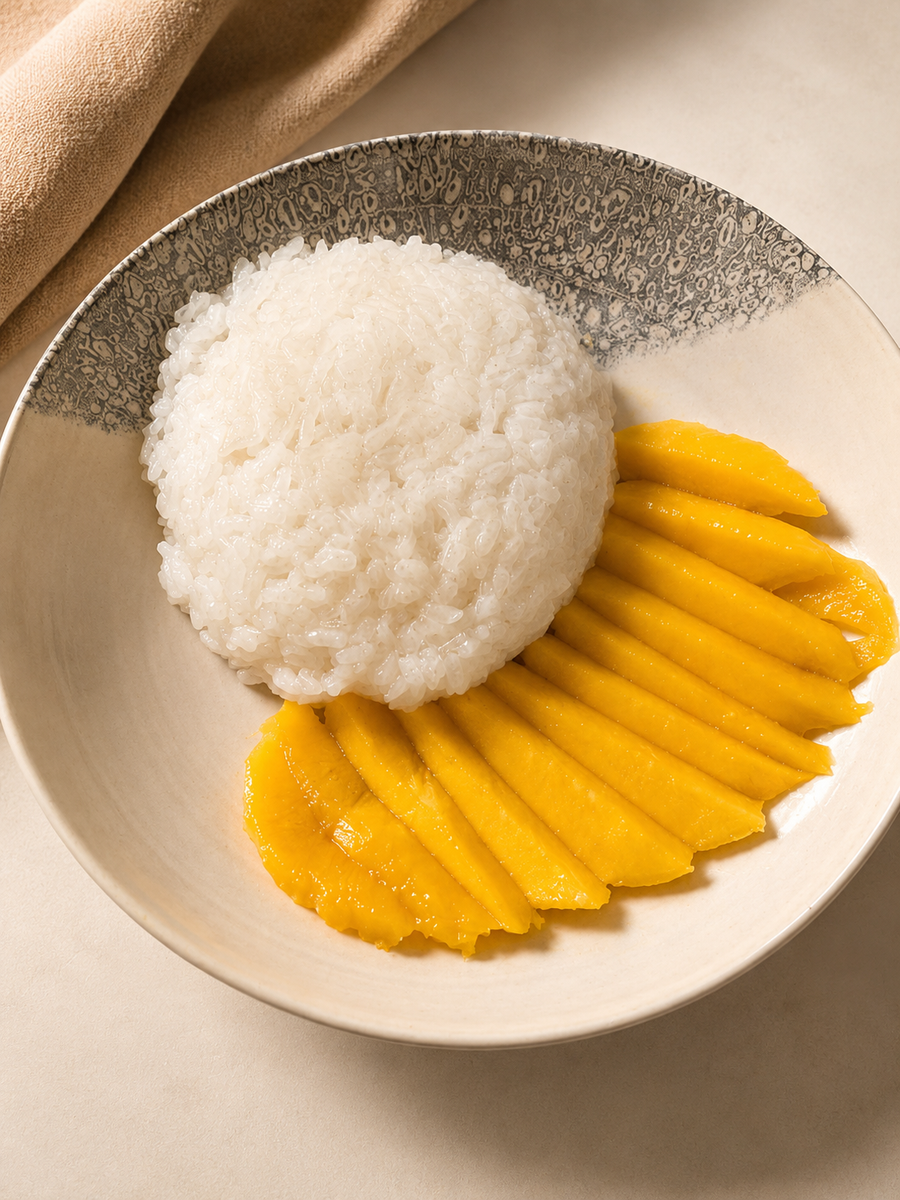
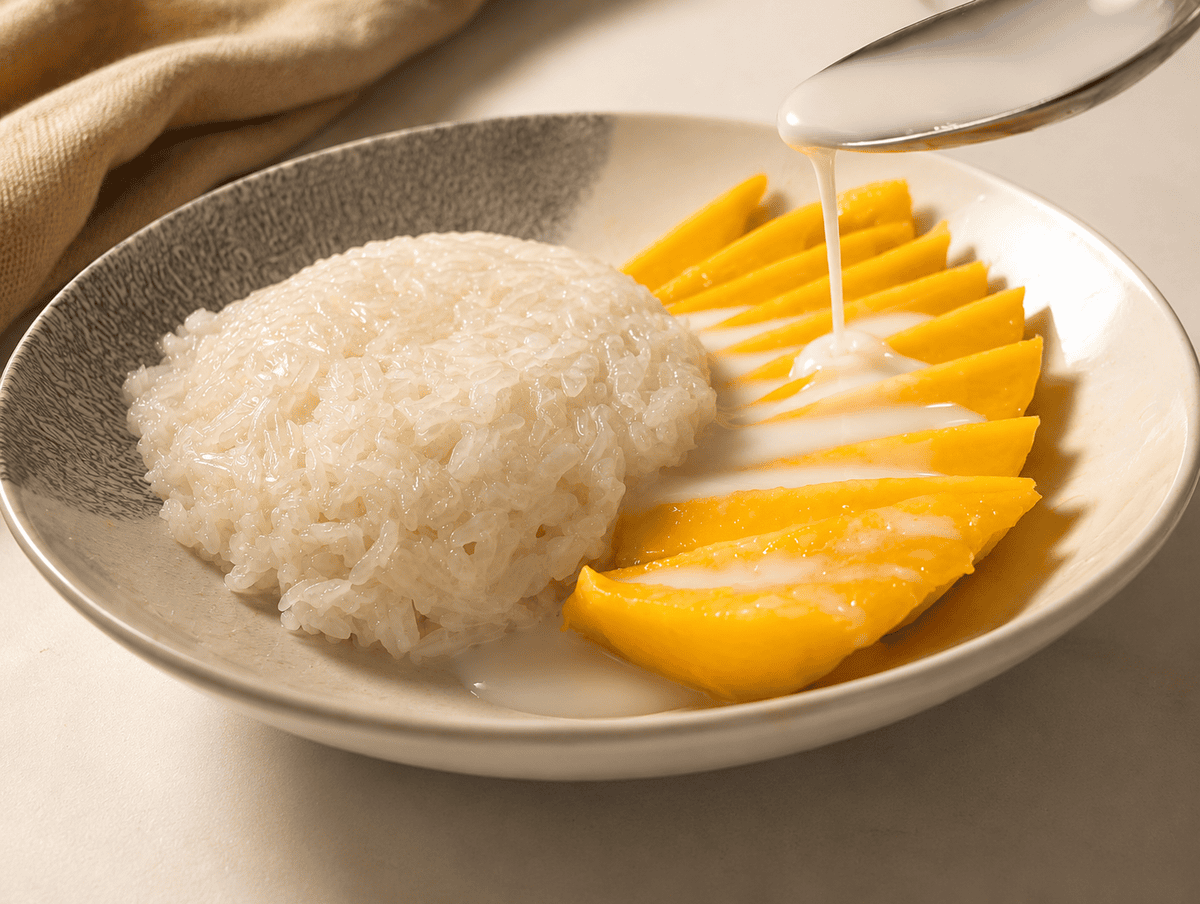
Molded sticky rice and fanned mango slices, the way it is served at Thai street stalls
Why This Thai Mango Sticky Rice Recipe Works
Mango sticky rice, or khao niao mamuang, is the most famous dessert in Thailand for a reason. It is three components and none of them are difficult. What separates a good version from a disappointing one is texture, and texture here comes down to how the rice is treated before it ever meets the coconut.
Glutinous rice is not a variety you can substitute. It is high in amylopectin starch, which is what makes the cooked grains cling to each other rather than stay loose. Jasmine rice will not do this no matter how you cook it. Look for bags labeled glutinous rice, sticky rice, or sweet rice.
The soak is the step people skip, and it is the step that decides everything. Dry glutinous rice needs hours to hydrate all the way to the center of each grain. Cook it dry and the outside turns soft while the core stays chalky, giving you that gritty, uneven bite you get from a bad takeaway version. Two to four hours works, overnight is better.
Because the rice has already absorbed a lot of water during the soak, it needs far less water in the pot. Roughly one to one, rice to water, sometimes slightly under. This is the second thing people get wrong: they use the ratio they would use for plain rice, and end up with porridge. If you have made sushi rice before, the same principle applies, soak first and cut the cooking water back.
The sauce carries a full teaspoon of salt against half a cup of sugar. That sounds like a lot until you taste it. Thai desserts are built on a salty-sweet contrast, and the salt is what keeps the coconut from reading as flat and cloying. It is not a seasoning afterthought, it is half the flavor.
How to Make Mango Sticky Rice, Step by Step
- Put the cup of glutinous rice in a bowl, cover with cold water, and swirl it with your hand.
- Pour off the cloudy water and repeat until the water runs mostly clear, usually four or five rounds.
- This removes excess surface starch. Skip it and the finished rice turns gluey on the outside instead of glossy.
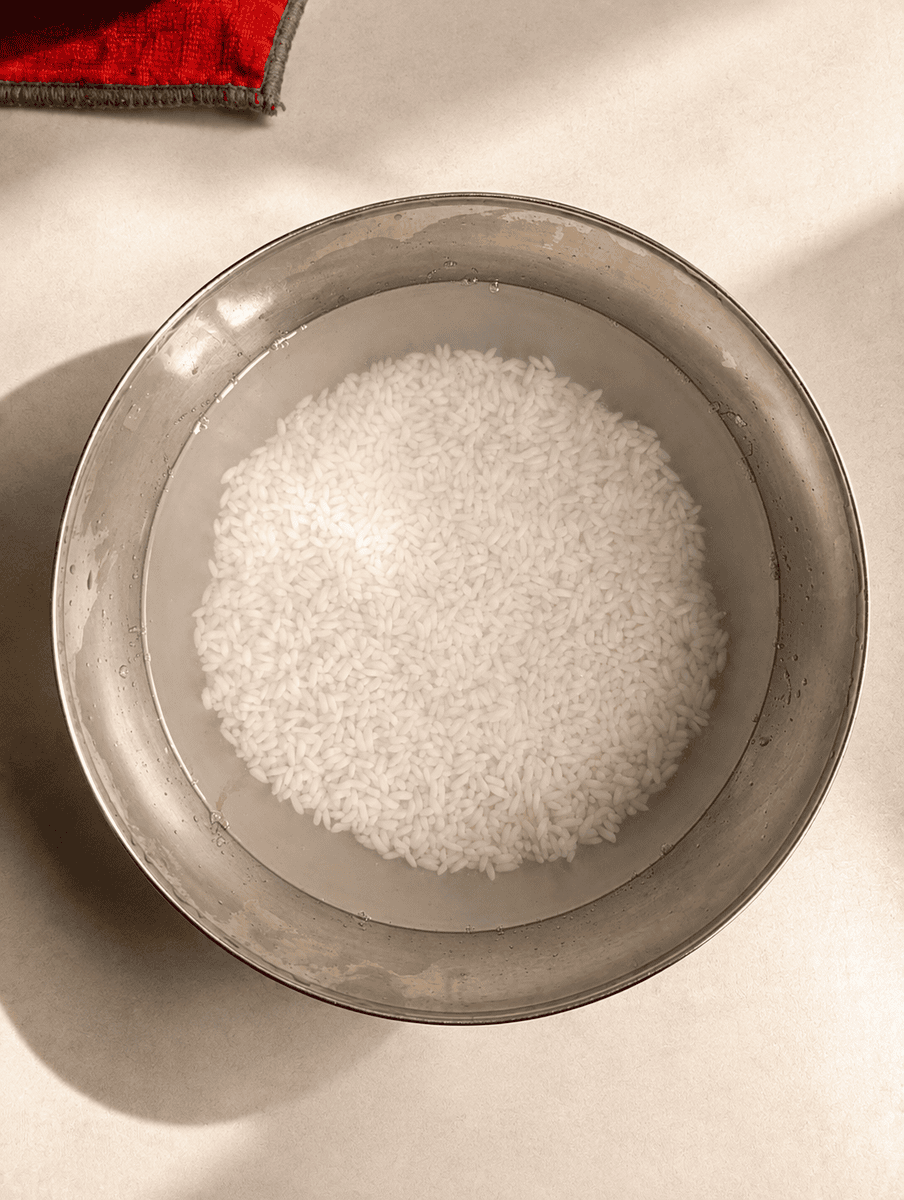
- Cover the rinsed rice with fresh cold water and leave it for 2 to 4 hours, or overnight if you can plan ahead.
- The grains go from chalky white to slightly translucent as they hydrate.
- Drain it well before cooking. You want the rice damp, not sitting in water.
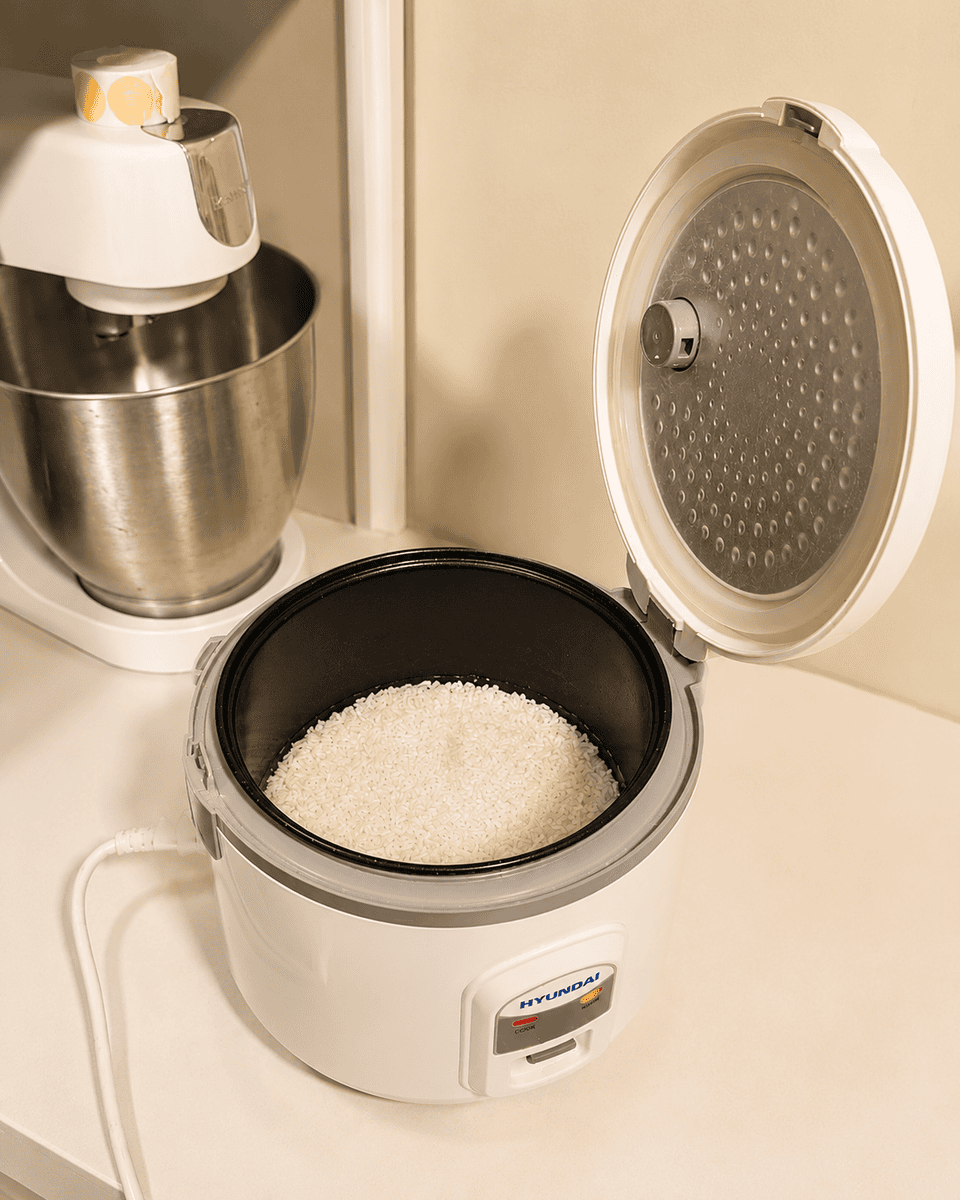
- Add the drained rice and about 1 cup of water to the rice cooker bowl, or a little less.
- Run a normal cycle. No steamer basket, no cheesecloth, no bamboo cone.
- When it finishes, the grains should look shiny and hold together when pressed, with no hard center.
- Tip the cooked rice into a wide bowl and spread it so it is not sitting in a hot dense pile.
- Let it cool down. Ten minutes in the fridge speeds this up if you are impatient.
- This matters because hot rice will drink the coconut sauce straight in and go soggy. Cool rice absorbs it slowly and stays distinct.
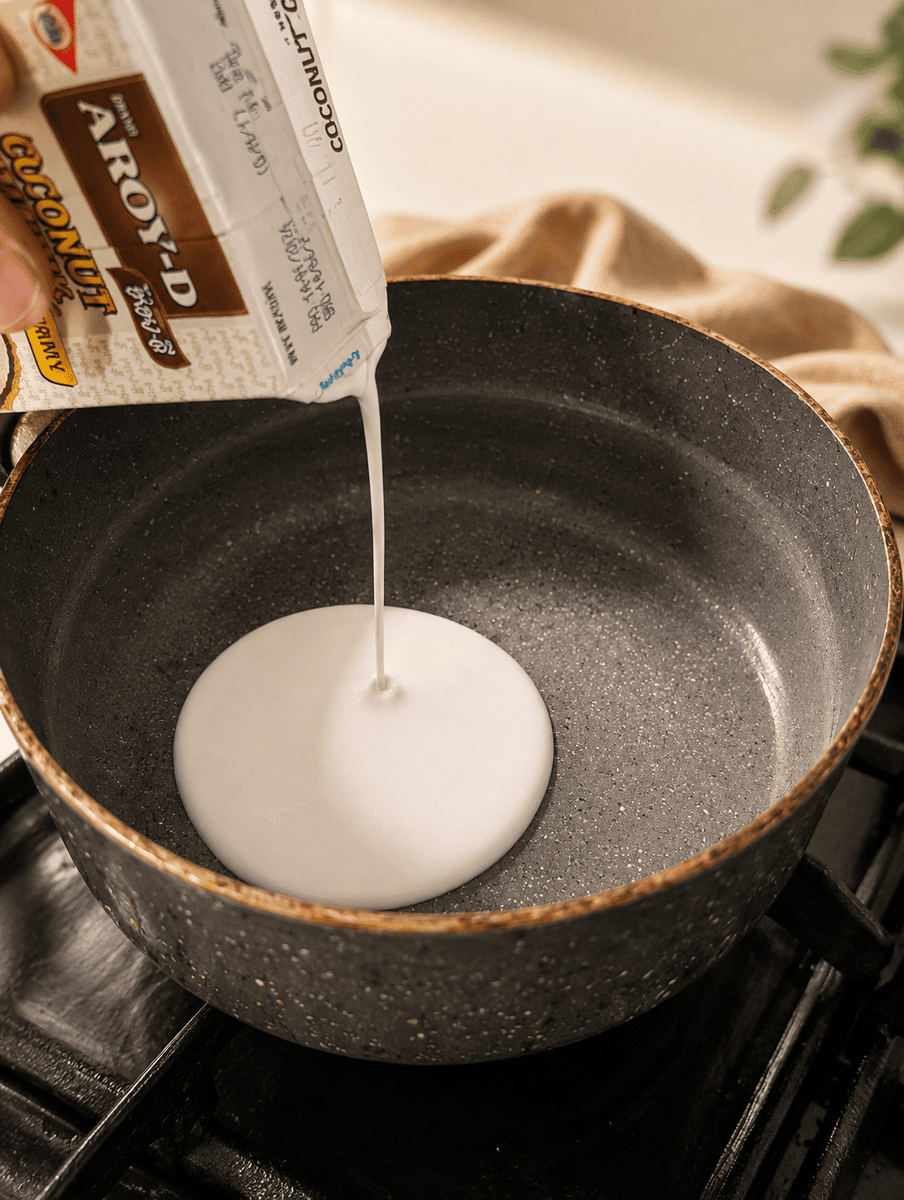
- In a small saucepan, combine the coconut cream, sugar, and salt.
- Warm it on low until it reaches a gentle boil, stirring constantly so the sugar and salt fully dissolve.
- About 5 minutes total. Take it off the heat and let it cool completely.
- Do not walk away from it. Coconut cream catches on the bottom of the pan quickly.
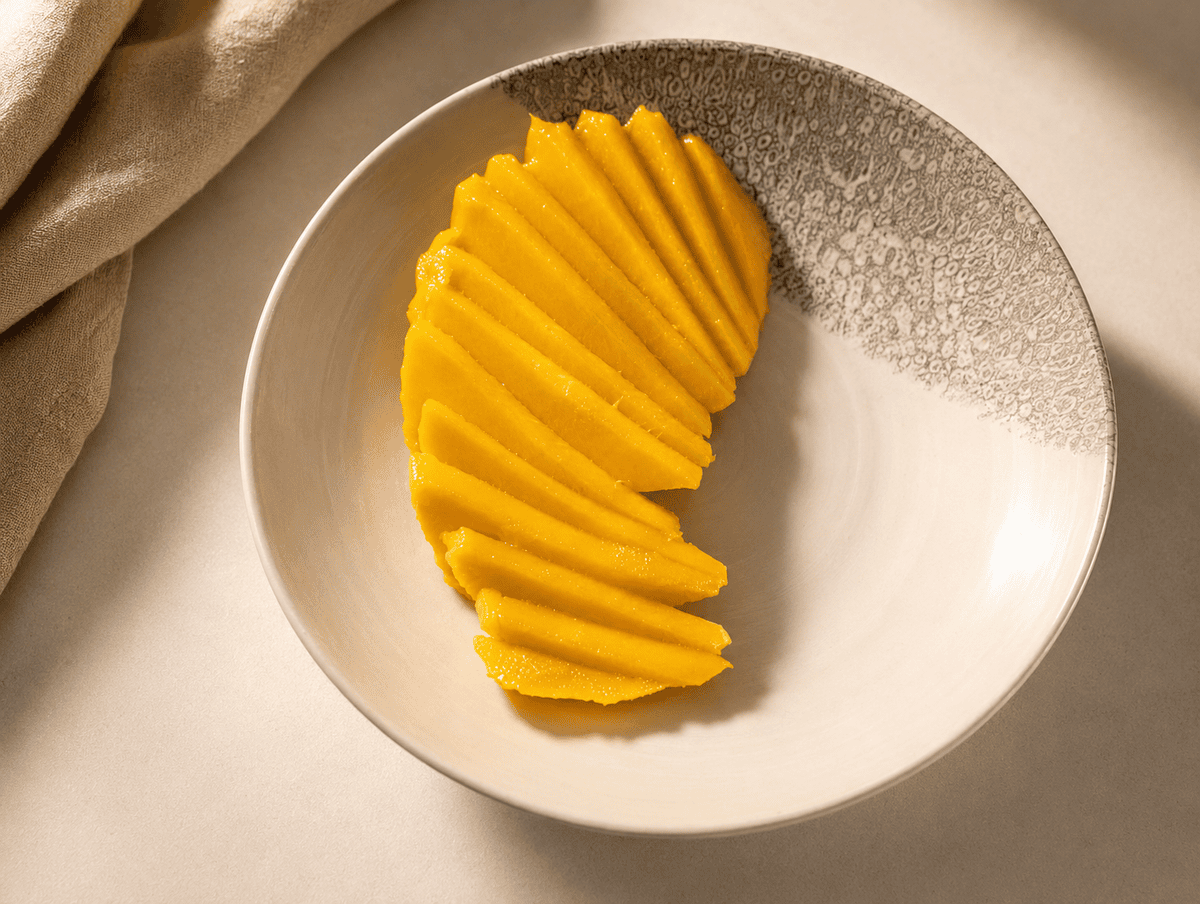
- Peel the mango, then cut each cheek away from the flat stone.
- Slice each cheek into thin, even strips so they fan out on the plate.
- Thin slices look better and eat better than thick chunks, which overwhelm the rice.
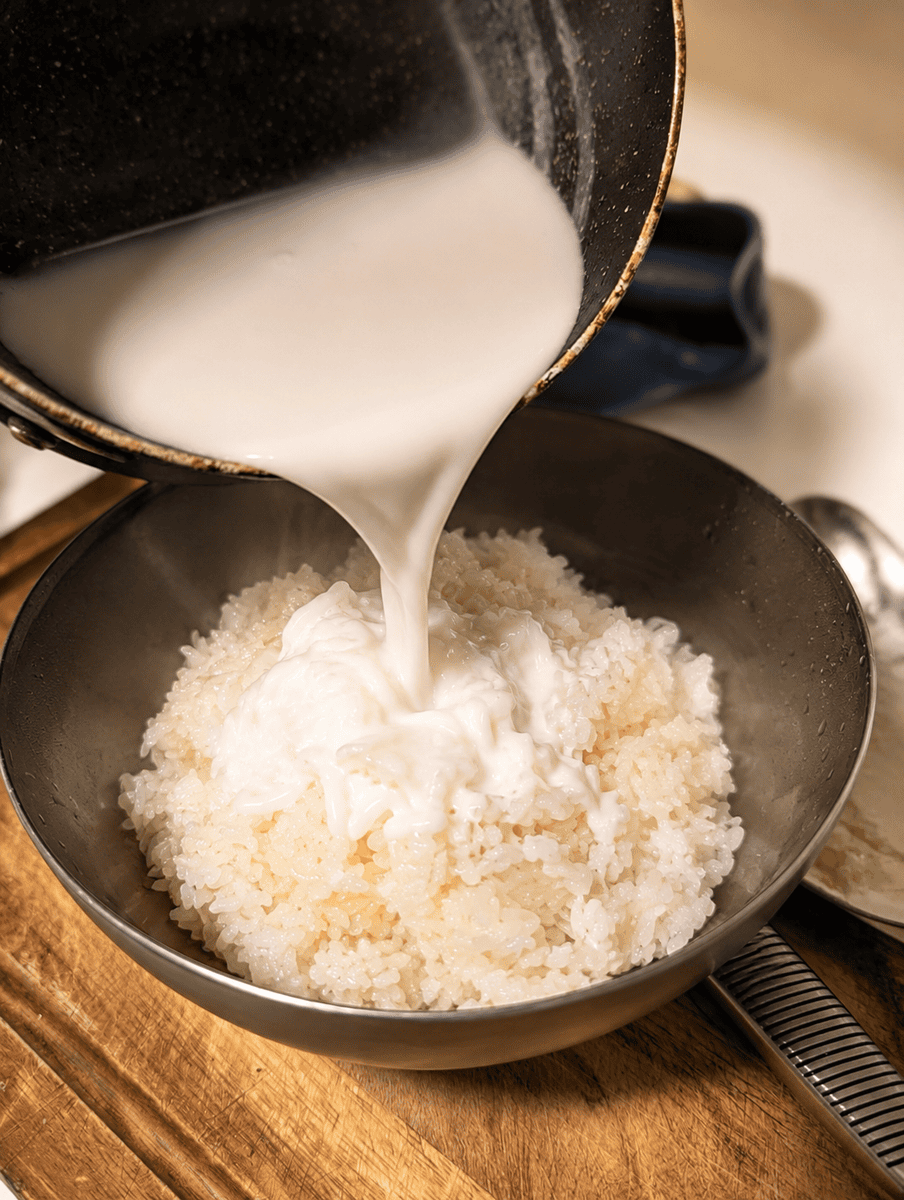
- Pour roughly half the cooled coconut sauce over the cooled rice and fold it through gently.
- Stop there. Keep the rest for drizzling at the end.
- The rice should stay sticky and firm enough to handle in one mass. If the grains start breaking apart into individual wet beads, too much sauce has gone in.
- Pack the dressed rice into a small bowl, pressing lightly so it takes the shape.
- Invert the bowl onto the serving plate and lift it away. The rice should hold as a clean dome.
- Lay the mango slices alongside and drizzle the remaining sauce over the mango, no more than a tablespoon.
- If the dome slumps, the rice took on too much sauce or is still too warm. Chill it briefly and try again.
- 🍚 Buy the right bag. Glutinous rice, sticky rice, and sweet rice are the same thing. Jasmine rice is not, and no cooking method will make it behave.
- ⏳ Soak overnight if you can. Two hours is the floor, not the target. The longer soak gives you a noticeably more even grain.
- 💦 Measure the cooking water short. Start at 1:1 and lean under rather than over. You cannot take water back out.
- ❄️ Cool both parts before combining. Warm rice plus warm sauce equals mush. Both need to come down first.
- 🥭 Buy the mango a few days early. A firm supermarket mango will not do. It needs to give slightly when pressed and smell sweet at the stem.
Picking the Right Mango
The mango is not a garnish here, it is one of two main components, and an underripe one will sink the plate. In Thailand the varieties used are nam dok mai and ok rong, which are sweet, smooth, and free of stringy fibers. Outside Thailand the closest widely available match is the Ataulfo, sometimes sold as honey or champagne mango, with its small flat stone and dense yellow flesh.
A ripe one gives a little under gentle pressure, the way a ripe avocado does, and smells sweet right at the stem end. Color is unreliable, since some varieties stay green when fully ripe. If your mango is firm, leave it on the counter for two or three days rather than pushing ahead. The rice will wait.
Fibrous varieties are worth avoiding entirely. They shred rather than slice cleanly, and the texture fights the smooth rice instead of complementing it. For more background on the dish and its regional variations, the Wikipedia entry on mango sticky rice covers the Thai history in detail.
How to Serve Thai Mango Sticky Rice
Serve it at room temperature or very slightly chilled, never hot. The contrast between cool mango and dense, room-temperature rice is part of the point, and heat makes the coconut sauce read greasy instead of creamy.
In Thailand it usually arrives with a sprinkle of toasted sesame seeds or crisp fried mung beans over the top for crunch. Neither is essential, but a pinch of toasted sesame adds a nutty edge that cuts the sweetness if you have some in the cupboard.
It is best the day it is made. The rice firms up in the fridge overnight and loses the soft chew, though a short rest at room temperature brings most of it back. If you are building a Thai dinner around it, this lands well after something sharp and spicy rather than after a heavy braise.
Frequently Asked Questions
Drop a comment below and let me know how this Thai mango sticky rice recipe turned out for you. If you are working through more rice technique, my congee uses leftover rice in the opposite direction, cooked down soft instead of held firm.