Red Kibbeh Soup with Pumpkin and Mangold (Kubbeh Soup)
(sweet and sour tomato broth, dumplings straight from frozen)
Red kibbeh soup is the pot I make when I want dinner to look after itself. Pumpkin, onion, celery and mangold go into a pot of water along with crushed tomatoes, tomato paste and lemon juice, and it turns into a sweet and sour red broth while you get on with something else. Then the kubbeh dumplings go in one by one, straight from the freezer. Because the dumplings are built on rice or semolina, they release starch into the broth as they cook, and that is what gives this soup its body. It is a one pot dinner that feeds a crowd, and it is better the next day.
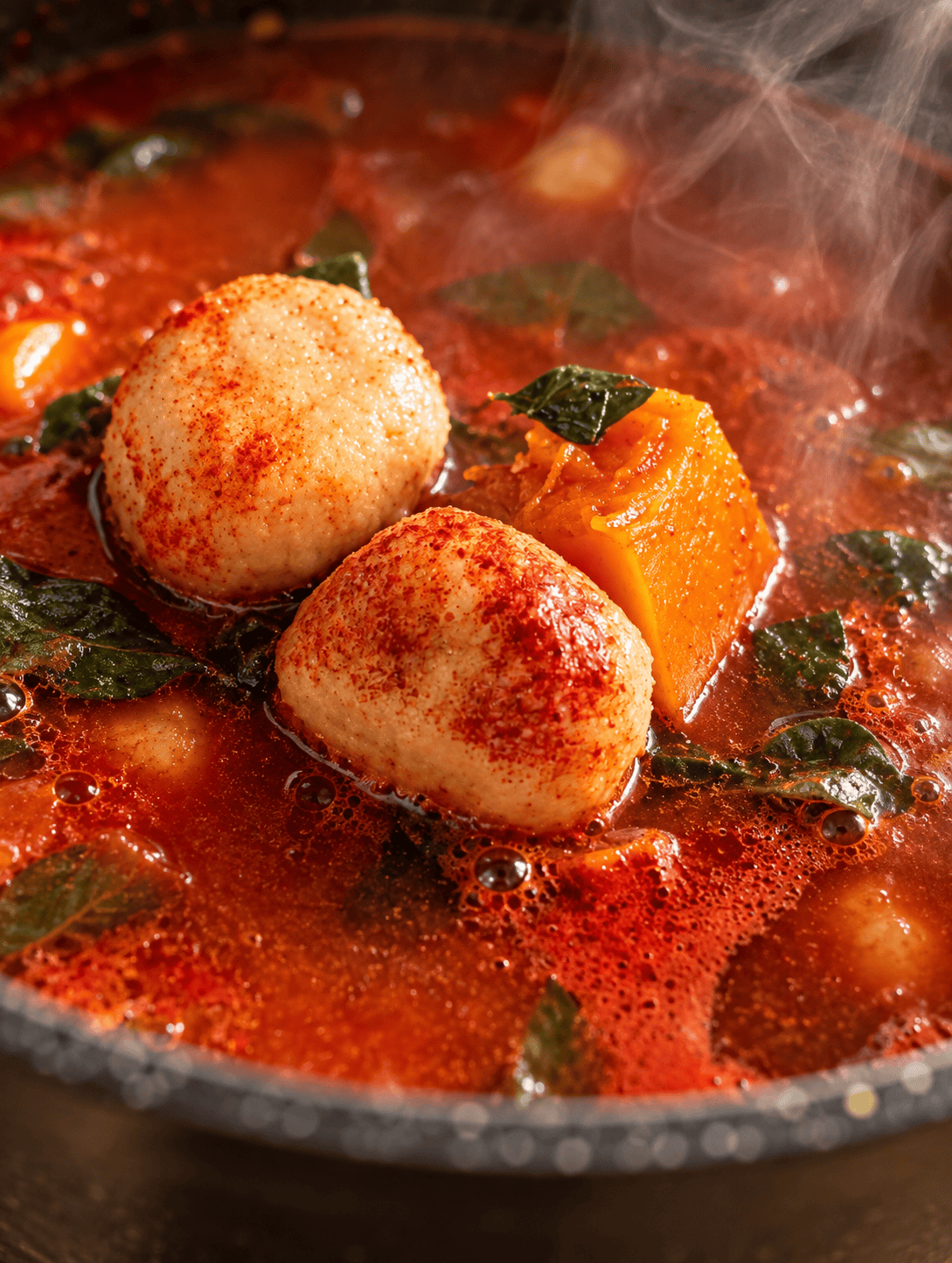
Dumplings, pumpkin and mangold in a red tomato broth
Why This Red Kibbeh Soup Works
The broth is doing three jobs at once and none of them takes any skill. The crushed tomatoes bring the volume and the colour, the tomato paste brings the depth and the slight sweetness that comes from concentrated tomato, and the lemon juice cuts across both so the pot does not taste flat. Pumpkin softens into the liquid and sweetens it from the inside, and the mangold and celery leaves pull it back towards something green and savoury. That push and pull is the whole character of the soup.
There is also no browning stage, no searing, no building a base. Everything goes into cold water together and the heat does the work. That matters more than it sounds, because it means the soup is genuinely a fifteen minute job at the chopping board and then nothing. If you have ever avoided making a proper kubbeh soup because the dumplings looked like a project, this is the version that removes the project.
The last thing, and the thing most recipes skip over, is that the dumplings are not just sitting in the soup. They are changing it. Kubbeh are wrapped in rice or semolina, and as they simmer they shed starch into the broth. A pot that was thin and watery when the dumplings went in comes out with a soft, rounded body an hour later, and it keeps thickening overnight in the fridge.
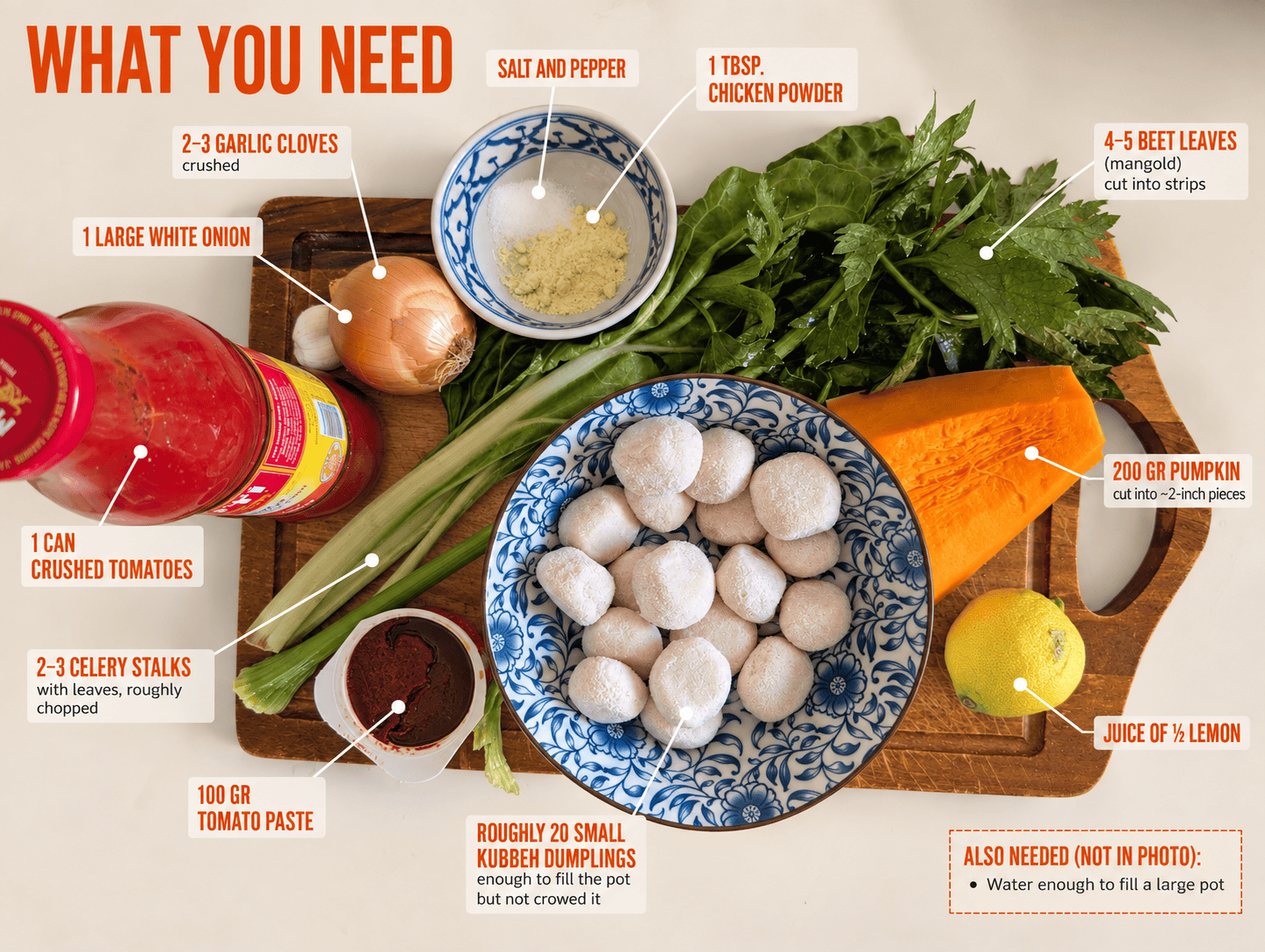
What Goes Into the Pot
The pumpkin is cut large, into roughly two inch pieces, because it is going to sit in liquid for the best part of an hour. Small cubes disappear into the broth completely. Big pieces hold their shape and give you something to find with your spoon at the end, while still giving up their sweetness to the liquid.
The greens are worth a word. Beet leaves, known here as mangold, have thick pale stalks and dark, slightly bitter leaves, and they behave very differently from spinach in a long simmer. They hold together instead of dissolving. The celery goes in with its leaves attached, and those leaves matter as much as the stalks do, since they carry most of the aroma. If you cannot get beet leaves at all, young spinach added in the last few minutes will give you green in the bowl, but it will not give you the same body.
The dumplings I make up front and freeze, which is the reason this soup happens on a weeknight at all. They go into the pot frozen, no defrosting, and they cook through in the simmer. If you buy them ready made, buy the small ones. Large kubbeh need a longer cook and will crowd the pot.
How to Make Red Kibbeh Soup, Step by Step
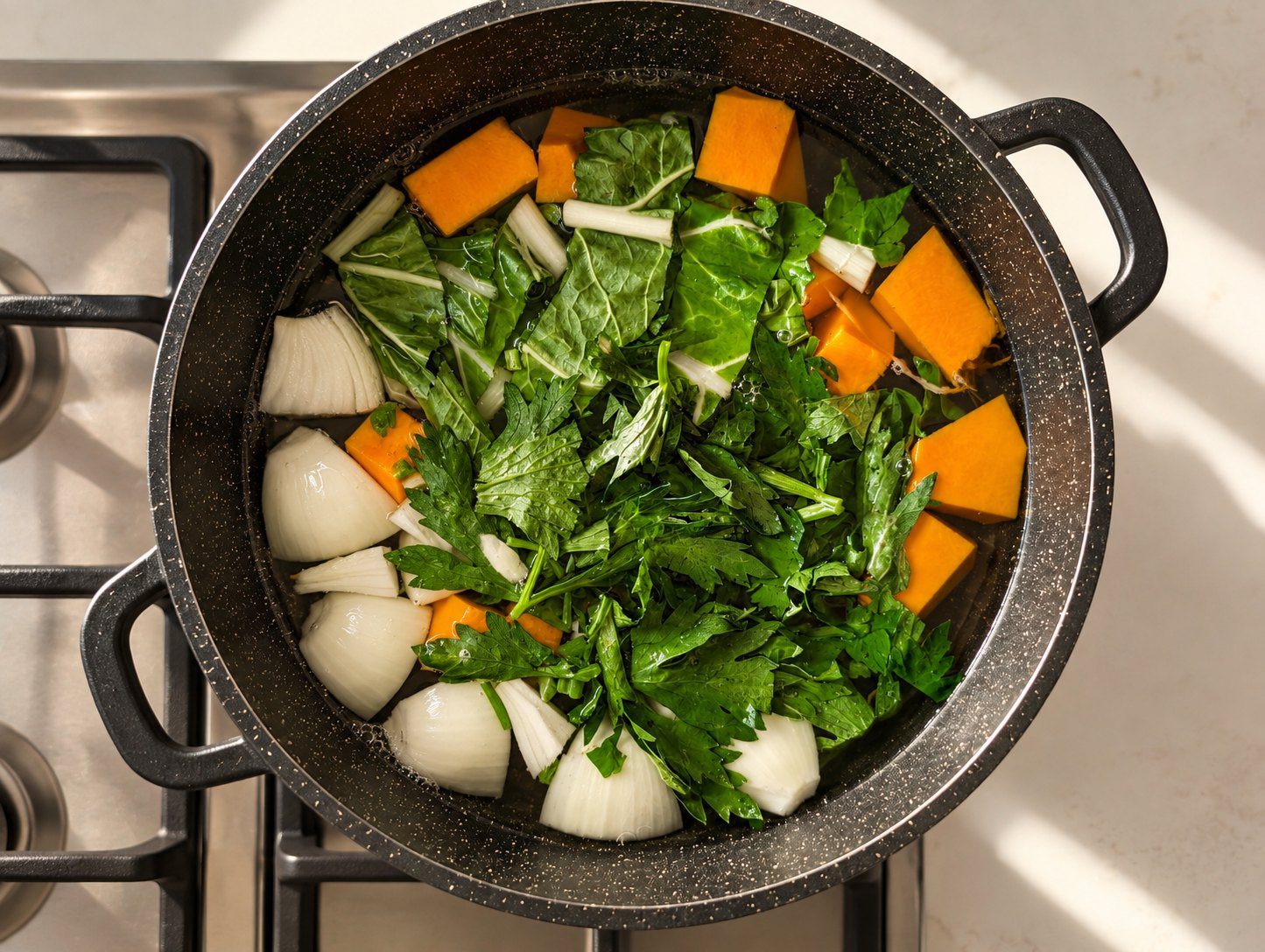
- Fill a large pot roughly up to ⅔ with water.
- Add the pumpkin, onion, mangold, celery and garlic.
- Season with salt, pepper and the chicken powder.
- Nothing is browned first and nothing is sautéed. It all goes in cold.
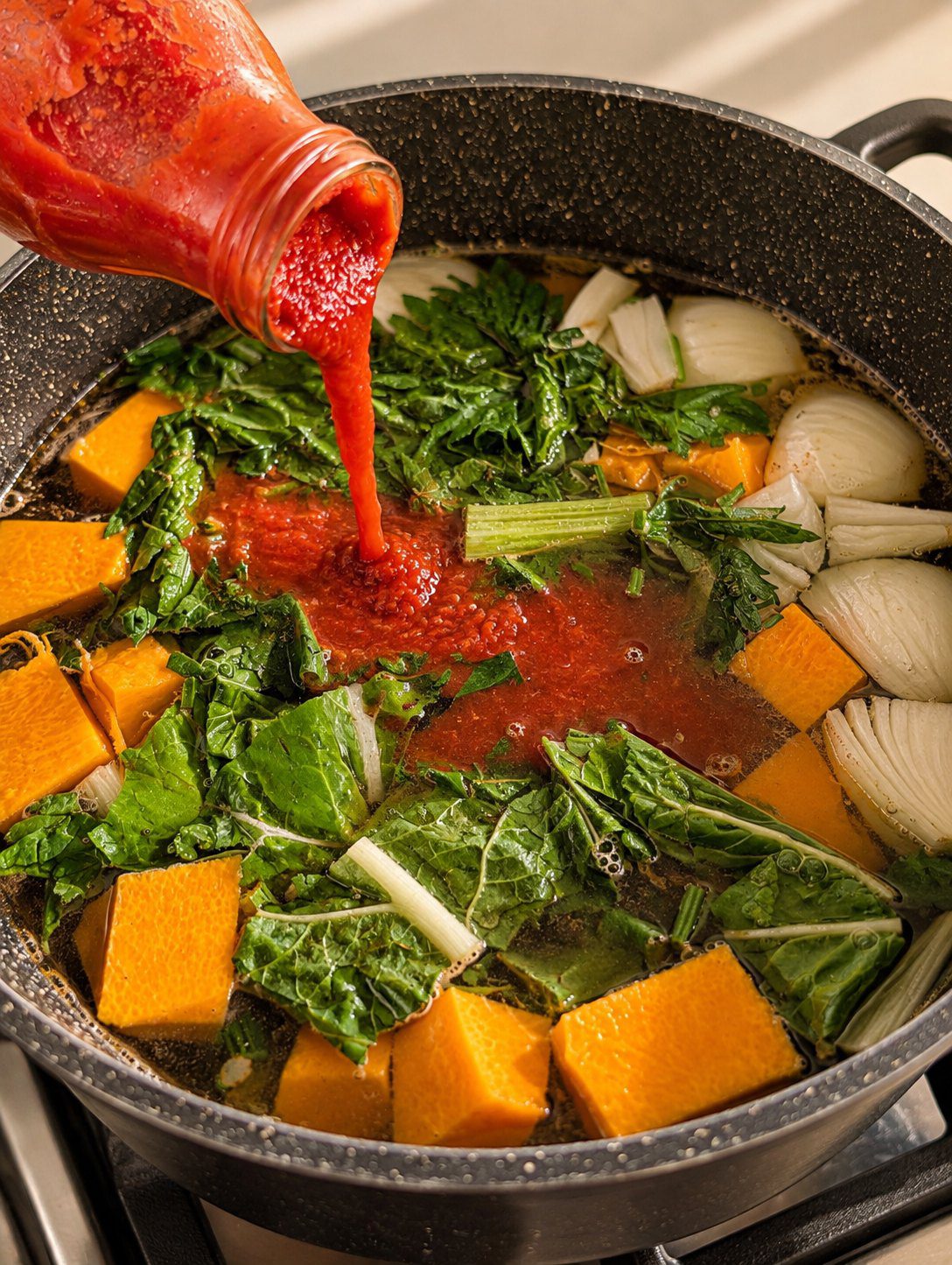
- Add the crushed tomatoes and the tomato paste.
- Squeeze in the juice of half a lemon.
- Stir once so the paste breaks up rather than sitting in a lump at the bottom.
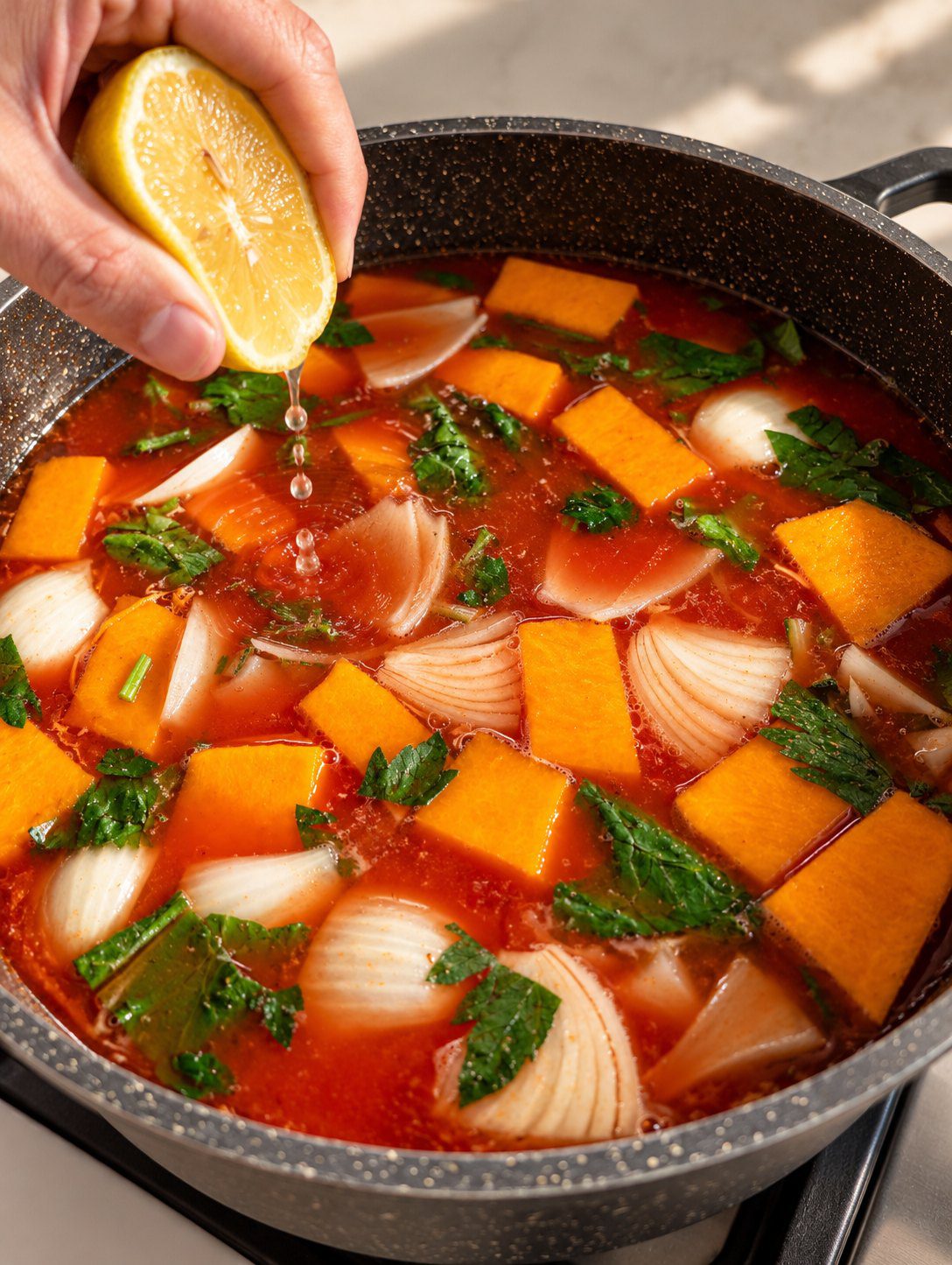
- Bring the pot to a boil.
- While it heats, get the kubbeh out. I make them up front and freeze them, so they can go in frozen.
- Line them up next to the stove so you are not hunting for them with one hand while stirring with the other.
- Once the soup is boiling, lower the heat.
- Add the kubbeh one at a time rather than tipping them all in together.
- Stir the pot slowly and constantly as they go in, so the kubbeh do not stick to the bottom of the pan.
- Fill the pot, but do not crowd it. They need room to move.
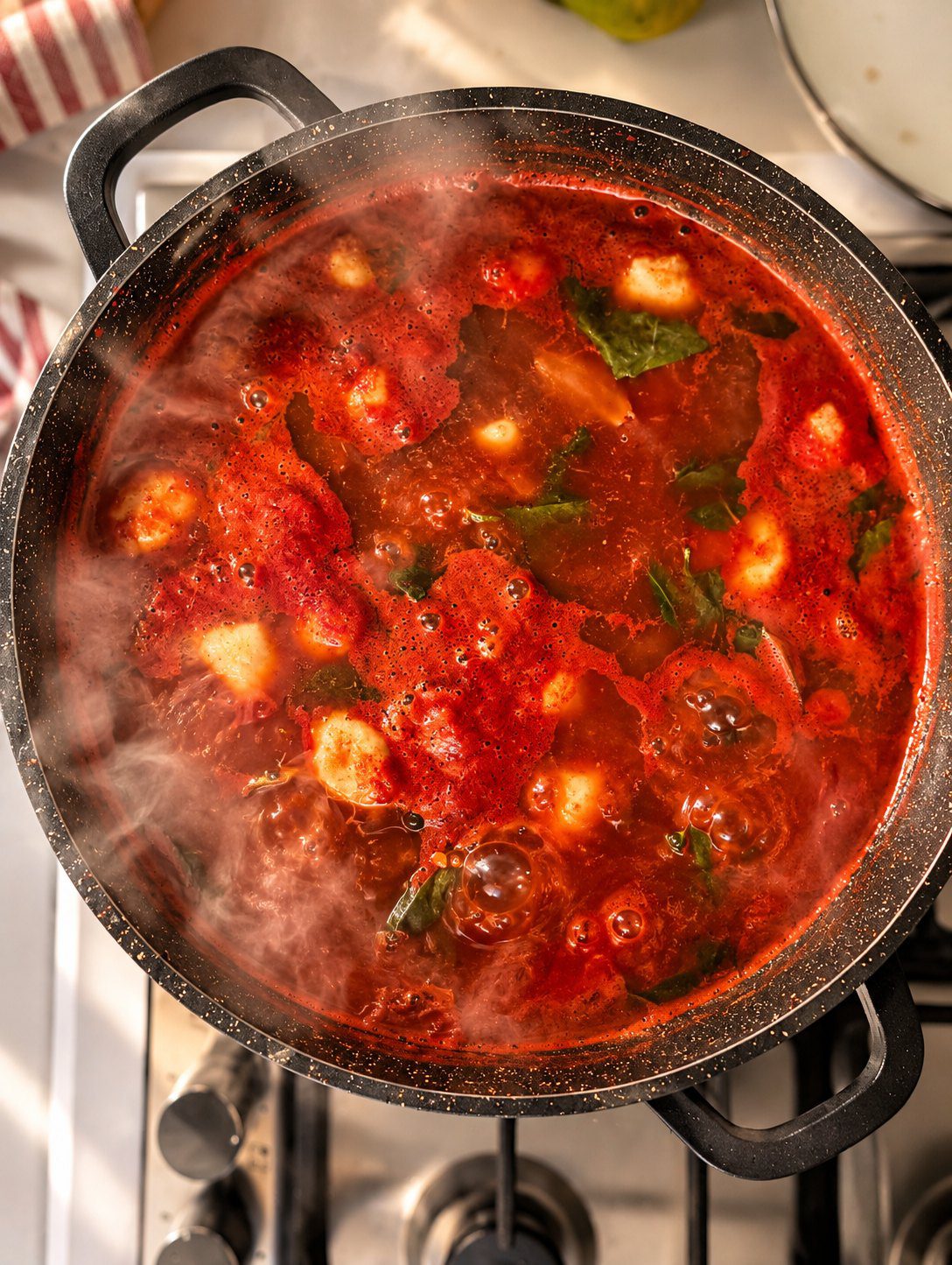
- Put the lid on and let it cook for about 30 minutes.
- The dumplings will firm up and float, and the broth will thicken slightly as the starch comes out of them.
- Taste before serving and adjust the salt and the lemon.
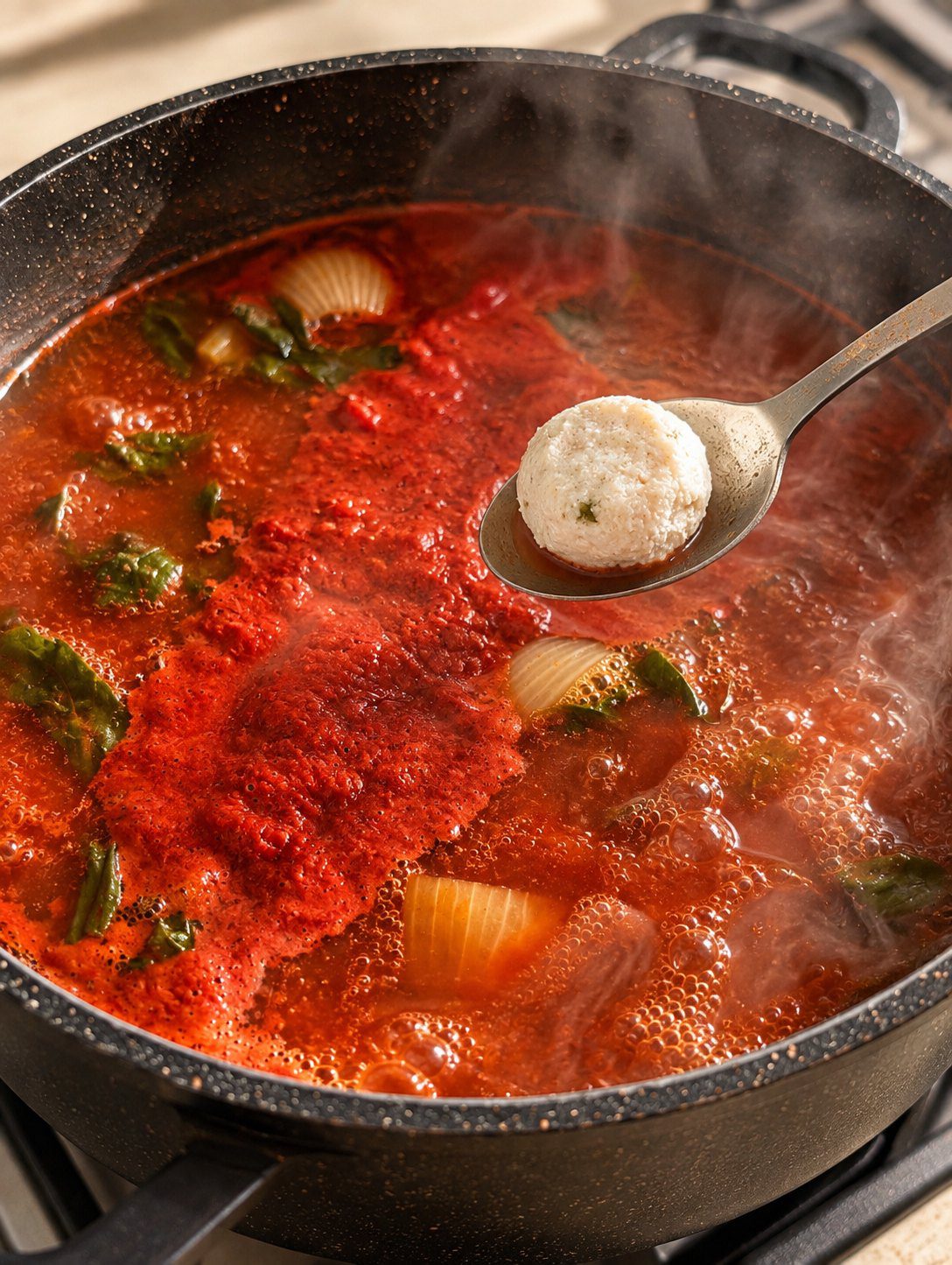
- 🥄 Keep stirring while the kubbeh go in: This is the one moment the soup needs your attention. A dumpling that settles on the bottom of a hot pot sticks, and when you free it, it tears.
- 🎃 Cut the pumpkin big: Two inch pieces survive the simmer. Small dice melts into the broth and you lose the texture that makes the bowl interesting.
- 🍅 Break up the tomato paste: One hundred grams of paste dropped in as a single lump will sit on the base and scorch. A single stir after it goes in is enough.
- 🌿 Use the celery leaves: Most of the aroma in celery is in the leaves, and this soup has no stock behind it, so you want everything the vegetables can give.
- 🕐 Make it a day ahead: It is great food for family gatherings, a pot that can be shared by many, and it improves overnight rather than tiring out.
How to Serve It
Serve it in deep bowls with three or four dumplings each, a piece or two of pumpkin, and plenty of the broth. It does not want much alongside it. Bread for the bottom of the bowl is the only thing I would actually call necessary, and a squeeze of extra lemon at the table for anyone who likes it sharper.
If you are feeding a table rather than a family, this is a good centre for a spread. Put the pot down whole and let people serve themselves, with a couple of cold salads next to it so there is something crunchy against all that soft, warm starch.
Frequently Asked Questions
Let me know in the comments how your pot turned out, and whether you went with homemade or shop bought kubbeh. If you want to make the dumplings yourself, my fried kibbeh recipe walks through the wrapper dough in detail. For more in this direction, there is my Middle Eastern stuffed zucchini, and if you want a stock to keep in the freezer for everything else, start with my chicken bone broth.