Beet Kibbeh Soup (Sweet and Sour Kubbeh Soup)
(shredded beet, a tart lemon broth, and dumplings that thicken the pot)
Beet kibbeh soup is the sweet and sour one: coarsely shredded beet and carrot, tomato paste, a spoon of sugar, and lemon juice added slowly until the broth lands exactly between the two. The kubbeh dumplings go in at the end and finish cooking in the soup, releasing starch as they go, which is why the pot tastes better the next day than it does the night you make it. If you want the tomato and pumpkin version instead, that one is my red kibbeh soup.
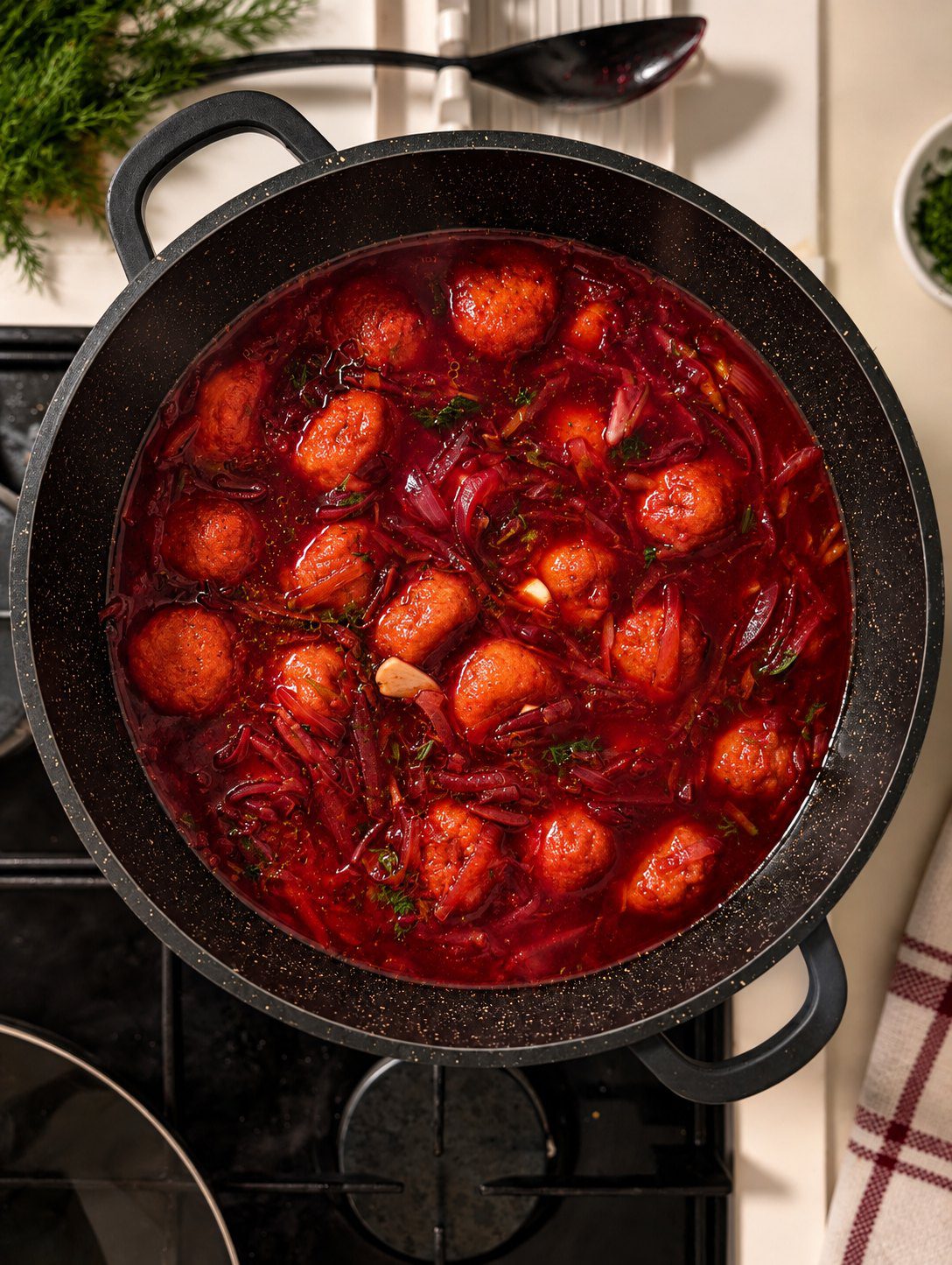
Twenty small dumplings, one pot, and a broth that gets better overnight
Why Beet Kibbeh Soup Works
Most soups pick a side. This one refuses to. Tomato paste and a spoon of sugar push it sweet, the lemon pulls it sharp, and the beet sits underneath both with its own earthy sweetness holding everything together. Get the balance right and every spoonful tastes like it is about to tip one way and never does.
The beet does two jobs, and both of them depend on it being fresh. Shredded raw beet gives up its colour into the broth as it cooks, which is where that deep purple red comes from. Vacuum packed, pre cooked beet has already lost most of that to the processing, and the soup ends up a duller brown. The pigment responsible is betanin, the same compound used commercially as beetroot red, and it is sensitive to how you treat it.
Then there are the dumplings. Because kubbeh are built around rice or semolina, they leak starch into the broth while they simmer, and the soup thickens slightly without a single spoon of flour going in. That is also why it improves overnight. The starch keeps working in the fridge, the sweet and sour settles down, and the pot you reheat the next day is better than the one you served. It makes a lot, it holds well, and it feeds a table full of people out of one pot.
How to Make Beet Kibbeh Soup, Step by Step
The whole recipe is one pot and six steps. Shred, sauté, add liquid, taste, add dumplings, lid on. The only part that needs judgement is the lemon, and the fix there is to add it in stages rather than all at once.
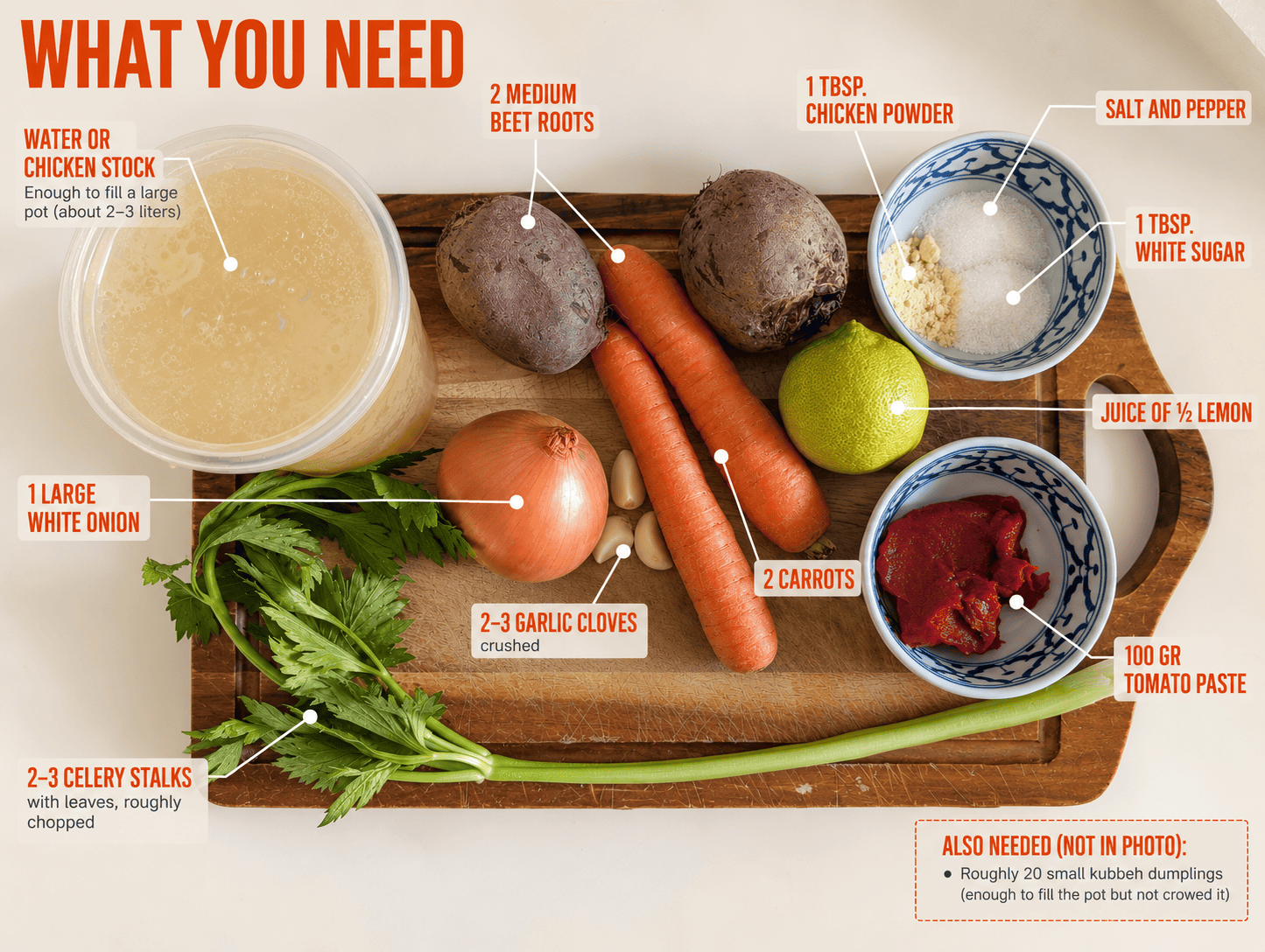
- Peel the beet roots and carrots and shred them on the large holes of a box grater or food processor disc, not the fine ones. You want strands with some bite, not a pulp.
- Slice the onion into strips rather than dicing it, so it stays visible in the finished soup.
- Crush the garlic cloves and roughly chop the celery stalks along with their leaves.
- Gloves on for this part. Beet juice goes everywhere.
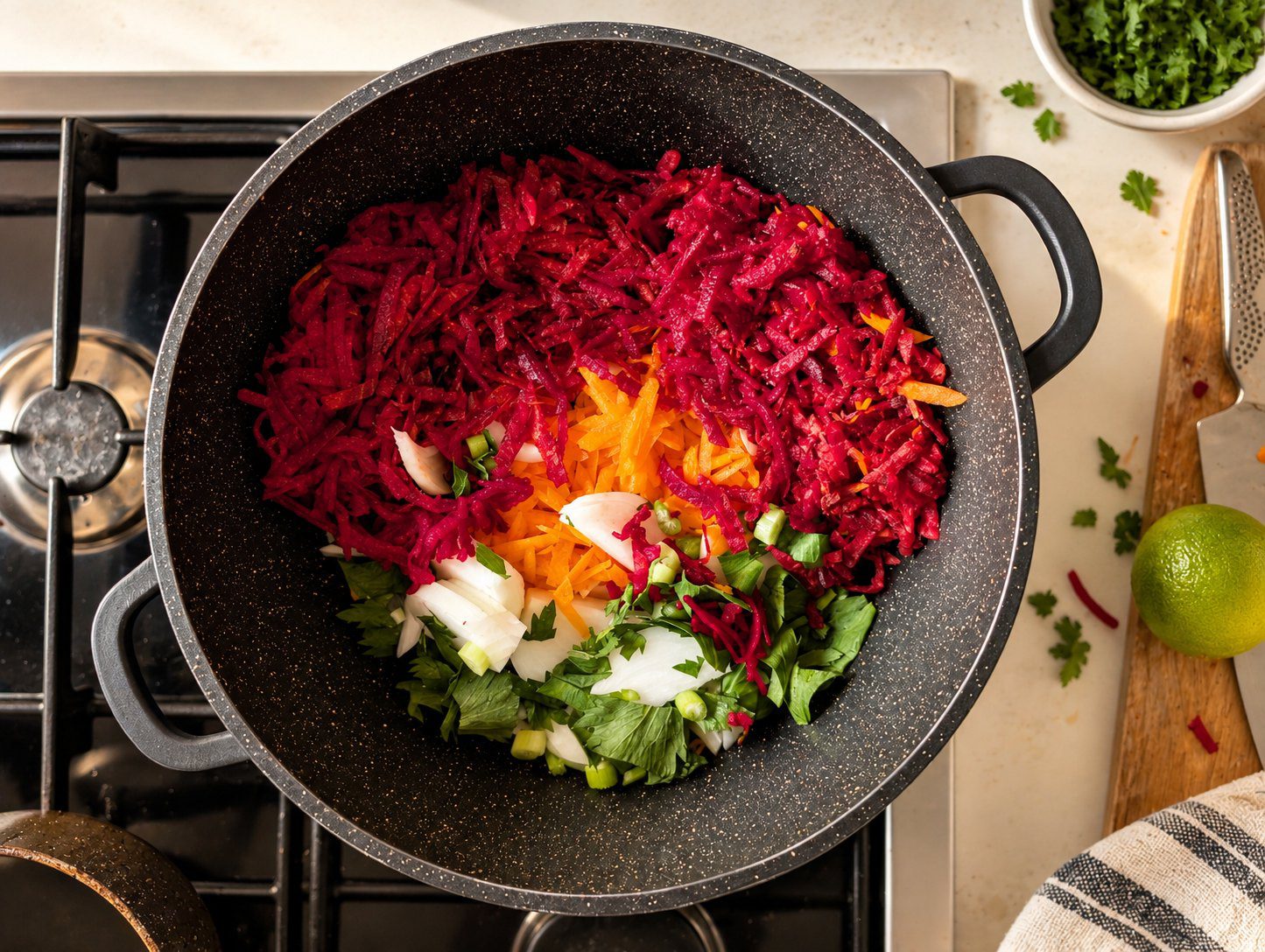
- Warm a little oil in a large pot over medium heat.
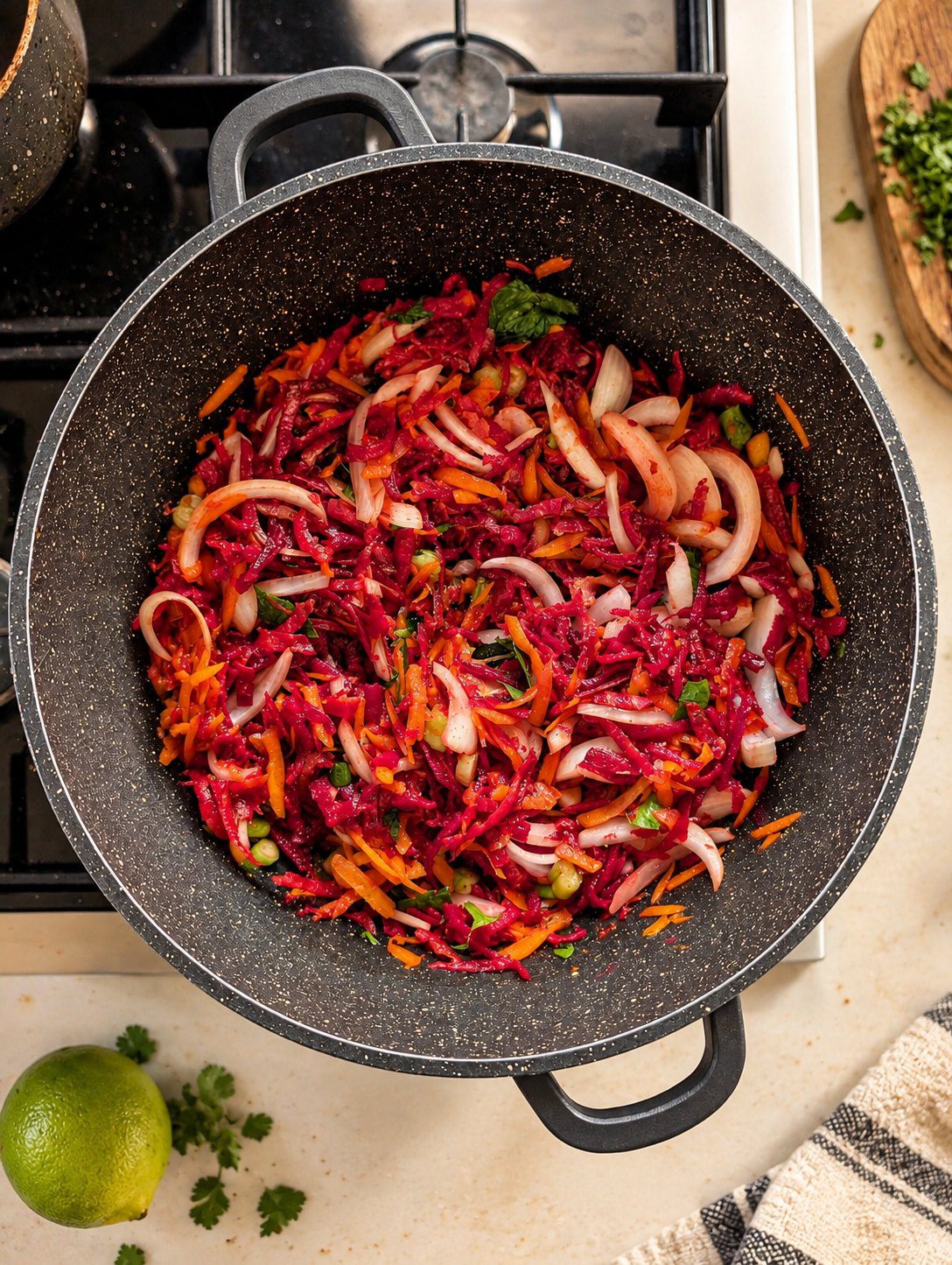
- Add the shredded beet and carrot, the onion strips, the crushed garlic and the chopped celery, and sauté for a few minutes.
- They do not need to cook through here. You are just waking them up before the liquid goes in, and they still have half an hour of simmering ahead of them.
- Pour in enough water to fill the pot, or use chicken stock for the same amount. Stock gives a rounder broth, and a good homemade chicken bone broth is worth using here if you have some in the freezer.
- Stir in the tomato paste, the chicken powder, the sugar, salt and pepper.
- Add only part of the lemon juice at this stage, not the whole half lemon.
- Bring the pot up to a boil.
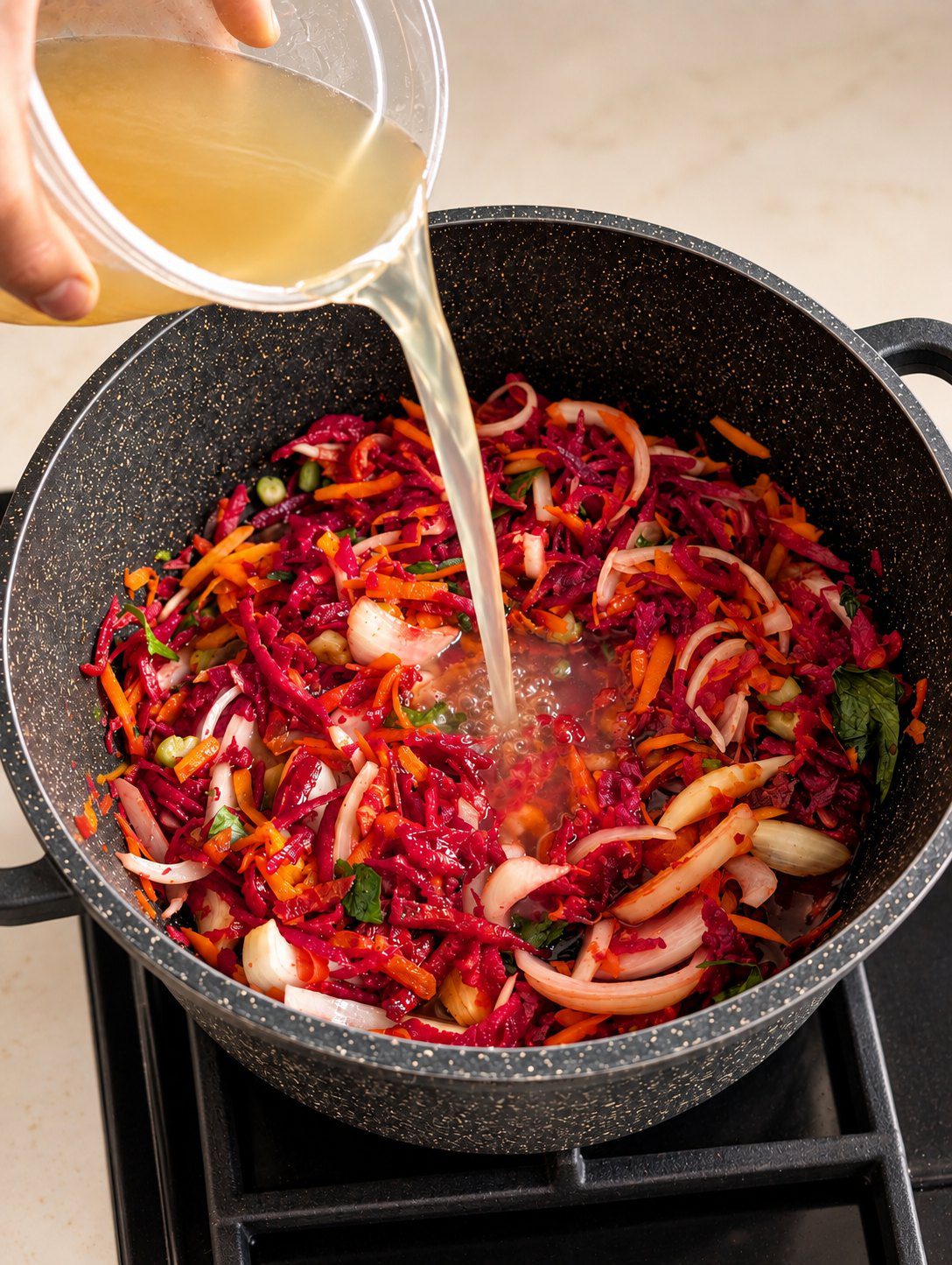
- Once it is boiling, taste the broth properly with a spoon, not a quick sip.
- Too flat and it needs salt or a little more lemon. Too sharp and a pinch more sugar brings it back.
- Keep adjusting until it reads as sweet and sour at the same time rather than one and then the other.
- Get this right now. Once the dumplings go in you want to stop stirring things around.
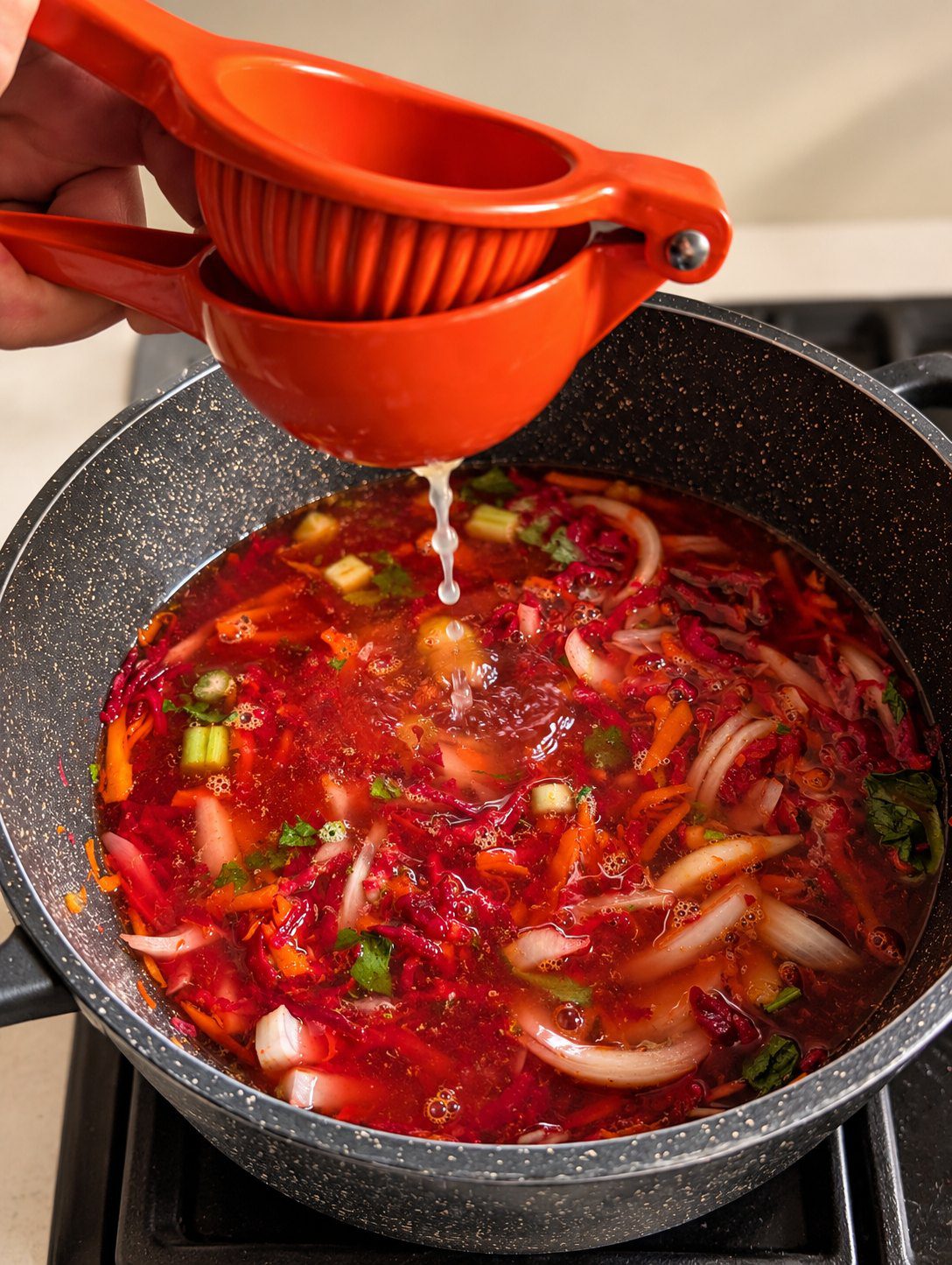
- Lower the heat so the pot is at a gentle simmer rather than a rolling boil.
- Add the dumplings one at a time, not by the handful. I make mine in advance and freeze them, and they go into the pot straight from the freezer with no defrosting.
- Stir the pot slowly and constantly while they go in. Kubbeh sink, and if they settle they stick to the bottom.
- Roughly 20 small ones fills a large pot. They should have room to move, so stop before the surface is packed.
- Put the lid on and let it cook for about 30 minutes.
- Give it a slow stir every so often so nothing catches on the base.
- The dumplings cook through and release their starch, and the broth thickens a little as they do.
- 🧤 Gloves before you grate: Beet stains hands, boards and tea towels, and they last far longer than you would expect.
- 🥕 Shred coarse, not fine: Fine shreds dissolve into the broth over half an hour. Large holes on the grater keep the strands intact.
- 🍋 Half the lemon, then taste: The single easiest way to ruin this soup is emptying the whole lemon in at once.
- 🥄 Stir while the kubbeh go in: Slow, constant, gentle. They stick to the bottom the moment you stop paying attention.
- ❄️ Make the dumplings ahead: A batch shaped and frozen in advance turns this into a weeknight soup. They cook from frozen.
- 🌙 Cook it a day early if you can: Overnight in the fridge does more for this soup than any extra ingredient will.
How to Serve Beet Kibbeh Soup
Serve it in deep bowls with three or four dumplings each and plenty of broth, and put bread on the table. That is the whole serving plan. The soup is a full meal on its own, the dumplings carry the protein and the starch, and anything elaborate alongside it just gets in the way.
It is a good pot for a crowd. One large pot goes round a table of six comfortably, and because it holds and reheats so well it works for family gatherings where people eat at different times. If you are making a bigger kibbeh spread, the fried version is the obvious companion: my fried kibbeh with a crispy bulgur shell gives you the crunch that a soup cannot, and the two together cover most of what people want from kibbeh.
Frequently Asked Questions
Make it once and you will see why this pot gets made for gatherings. If you do, leave a rating below and tell me where you landed on the lemon, because everyone finds their own point on that line. For the rest of the kibbeh family, there is the red kibbeh soup with pumpkin and mangold and the crispy fried kibbeh.