Fluffy Japanese Milk Bread
(the softest bread you’ll ever make)
If you’ve ever walked past a Japanese bakery and wondered how they get their bread so impossibly soft and pillowy, this is the recipe. Japanese milk bread, also known as Shokupan, gets its signature cloud-like texture from a simple cooked paste called tangzhong. The result is a loaf with a golden, glossy crust, a feather-light crumb, and a sweetness that makes it perfect on its own, or with garlic butter melted all over it.
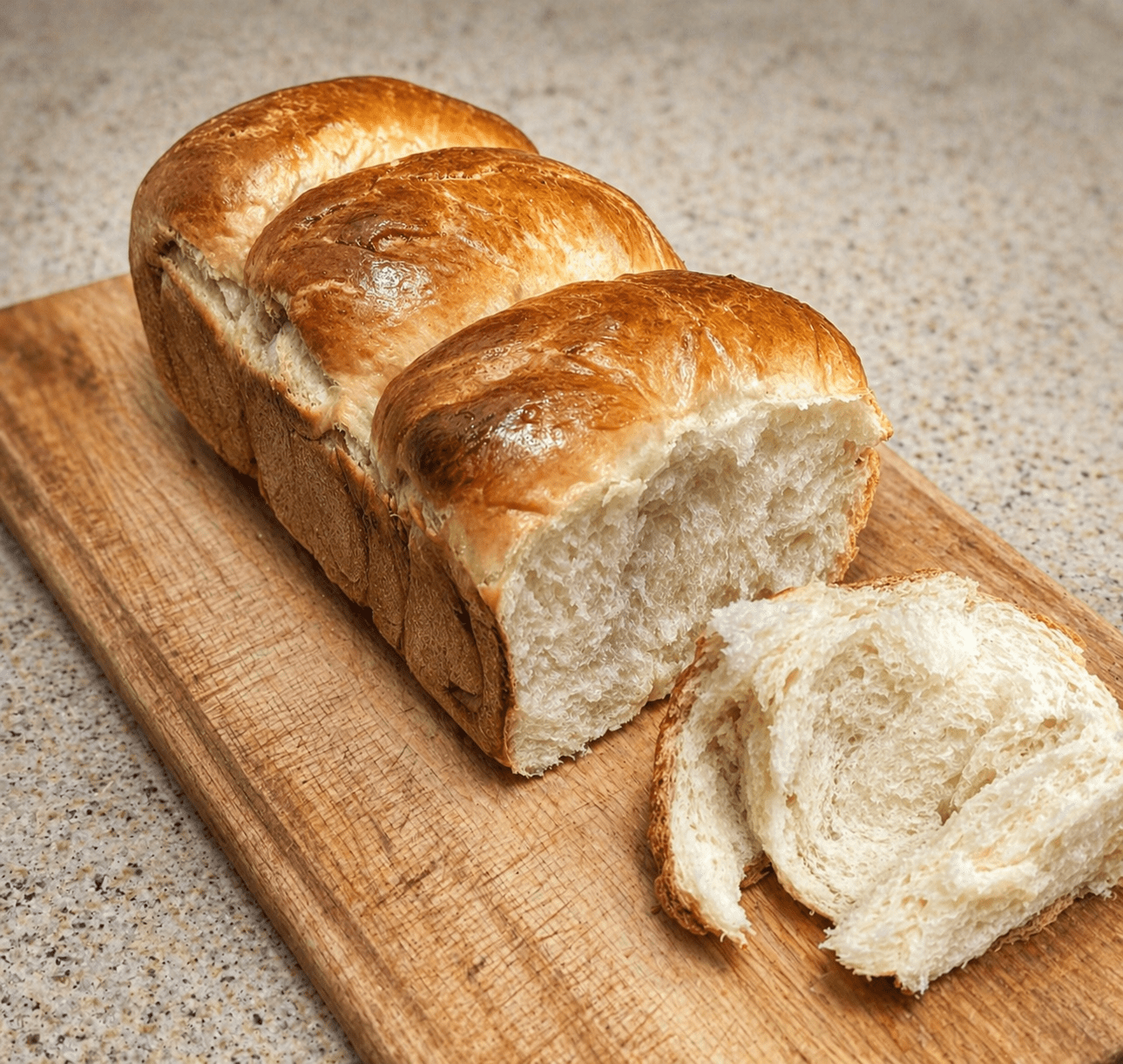
Fluffy Japanese milk bread sliced on a wooden cutting board showing soft white crumb
Why This Japanese Milk Bread Recipe Actually Works
The secret is tangzhong, a cooked paste made from flour, water, and milk. Heating the flour gelatinises the starches before they even enter the dough, which means they can hold significantly more moisture during baking. More moisture equals softer bread that stays soft for days, not hours. This is why Japanese bakery bread never seems to go stale the way a standard loaf does.
The second factor is patience. The dough needs two proper rests, first to develop structure, then to allow the rolls to proof before baking. Skip or rush either rest and you’ll lose that signature pillowy pull.
How to Make It, Step by Step
- In a small pan over low heat, combine 45 g water, 45 g milk, and 20 g flour. Whisk constantly until smooth with no lumps. The paste is ready when it starts to thicken, about 30 seconds to 1 minute.
- Remove from heat, add the cold milk, and let it cool completely. Once cool, whisk in the egg until fully combined. Set aside.
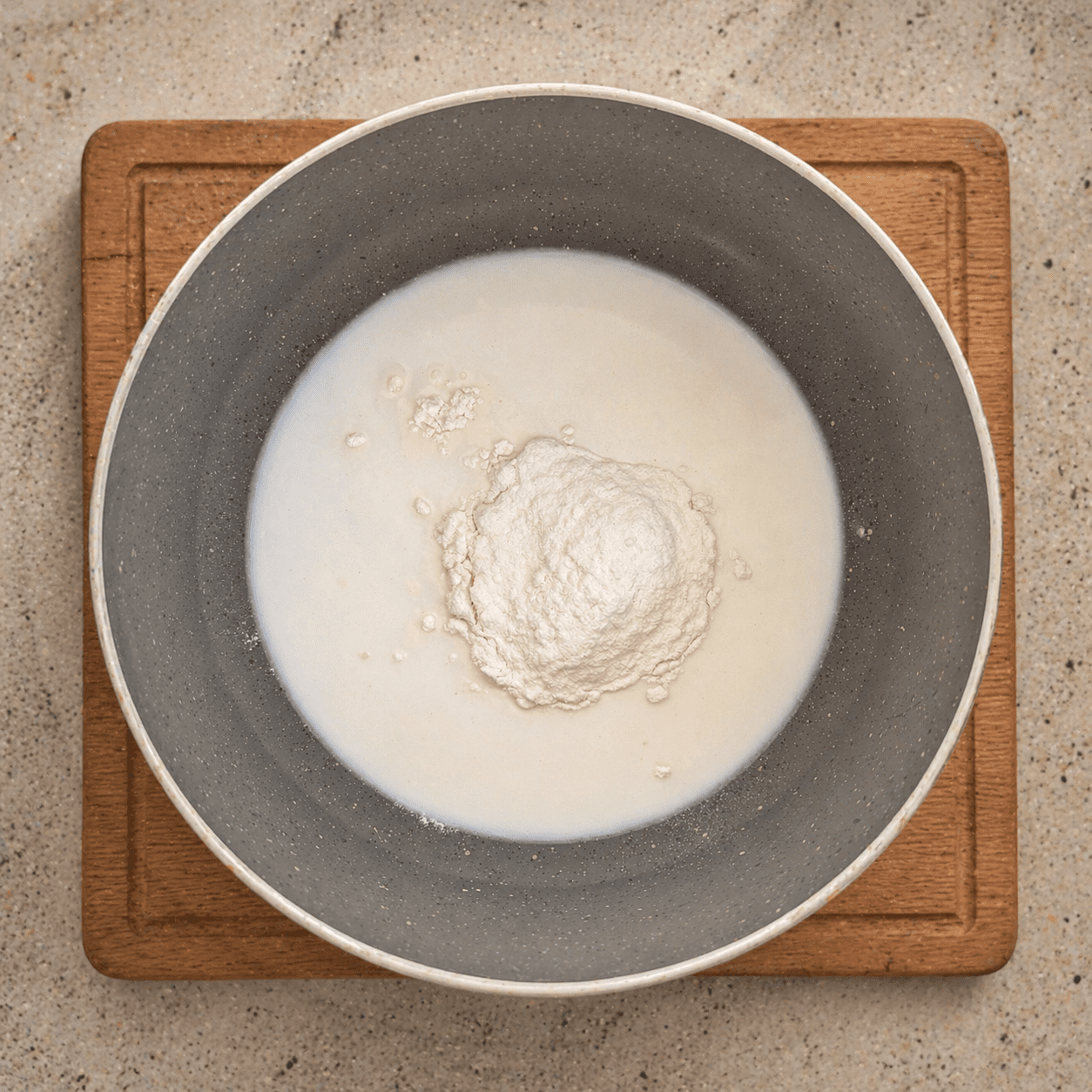
- In a stand mixer bowl (or by hand), combine flour, sugar, salt, and yeast. Add the cooled tangzhong and mix on low speed.
- Add the melted butter. After about 30 seconds, increase to medium speed and knead for 8 minutes until the dough is smooth, elastic, and slightly tacky, but not sticky.
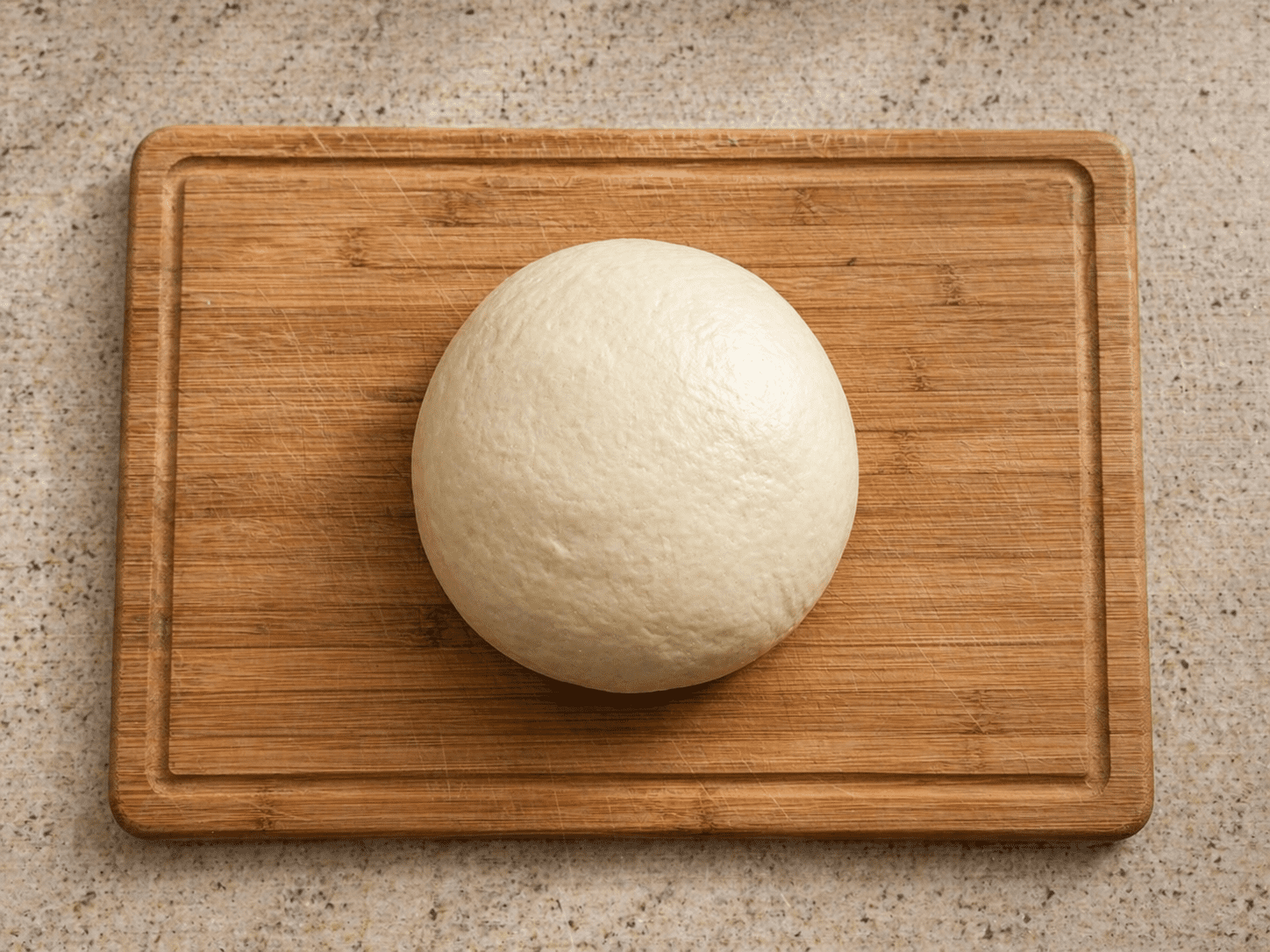
- Shape the dough into a ball. Lightly oil the mixing bowl, place the dough back in, and coat the top with a little oil to prevent drying.
- Cover with a damp towel and let rest for 1.5 to 2 hours depending on room temperature. The dough should rise and feel puffy.
- Divide the dough into 6 equal pieces. Roll each into a smooth ball.
- Place the balls into a lightly greased baking pan. Cover again with a damp towel and let rest for another 1 hour.
- Preheat the oven to 180°C (350°F).
- Brush the dough gently with egg wash, one egg beaten with a splash of milk.
- Bake for 15 minutes. Check, if the top is browning too quickly, loosely cover with foil and continue baking for another 15 minutes.
- Melt some butter and mix with finely chopped garlic and fresh parsley.
- As soon as the bread comes out of the oven, brush generously over the top. Let it soak in for a minute before pulling the rolls apart.
- 🌡️ Yeast temperature: Use warm water and milk, not hot. If it’s too hot it kills the yeast; too cold and it won’t activate. It should feel neutral to the touch.
- 🧈 Butter timing: Add the butter after the initial mix, not at the start. Adding it too early coats the flour and prevents gluten from developing properly.
- 📏 Equal pieces: Weigh the dough and divide evenly so all rolls proof and bake at the same rate.
- 🌬️ Steam matters: The damp towel during resting isn’t just to keep the dough warm, it traps humidity so the surface stays pliable and the dough can expand freely.
- 🍞 Storage: Wrap tightly and store at room temperature for up to 3 days. Do not refrigerate, it dries out. Freeze individual rolls for up to 1 month.
Frequently Asked Questions
Drop a comment below and let me know how it turned out. First time making tangzhong? I’d love to hear if it surprised you. If you’re into bread baking, the no knead Dutch oven bread is another great one, zero kneading, incredible crust. Tag your photos and share that pull-apart moment.
Pingback: Classic Homemade Sushi Recipe — Better Than You Think
Pingback: Classic Pancakes Recipe (Low Calorie Version Included)