Middle Eastern Stuffed Zucchini (Kusa Mahshi)
(cored, packed with beef and rice, braised in tomato)
This is the Middle Eastern stuffed zucchini known across the Levant as kusa mahshi. Zucchini gets cored into hollow tubes, packed with a mix of ground beef, raw rice and parsley, then braised in a light tomato broth until the rice swells and the zucchini turns silky. The rice cooks inside the zucchini as it simmers, drinking up the tomato and the meat juices, so every bite is seasoned all the way through. A quick run under the grill at the end browns the tops. It is humble home cooking, the kind of pot that feeds a whole table.
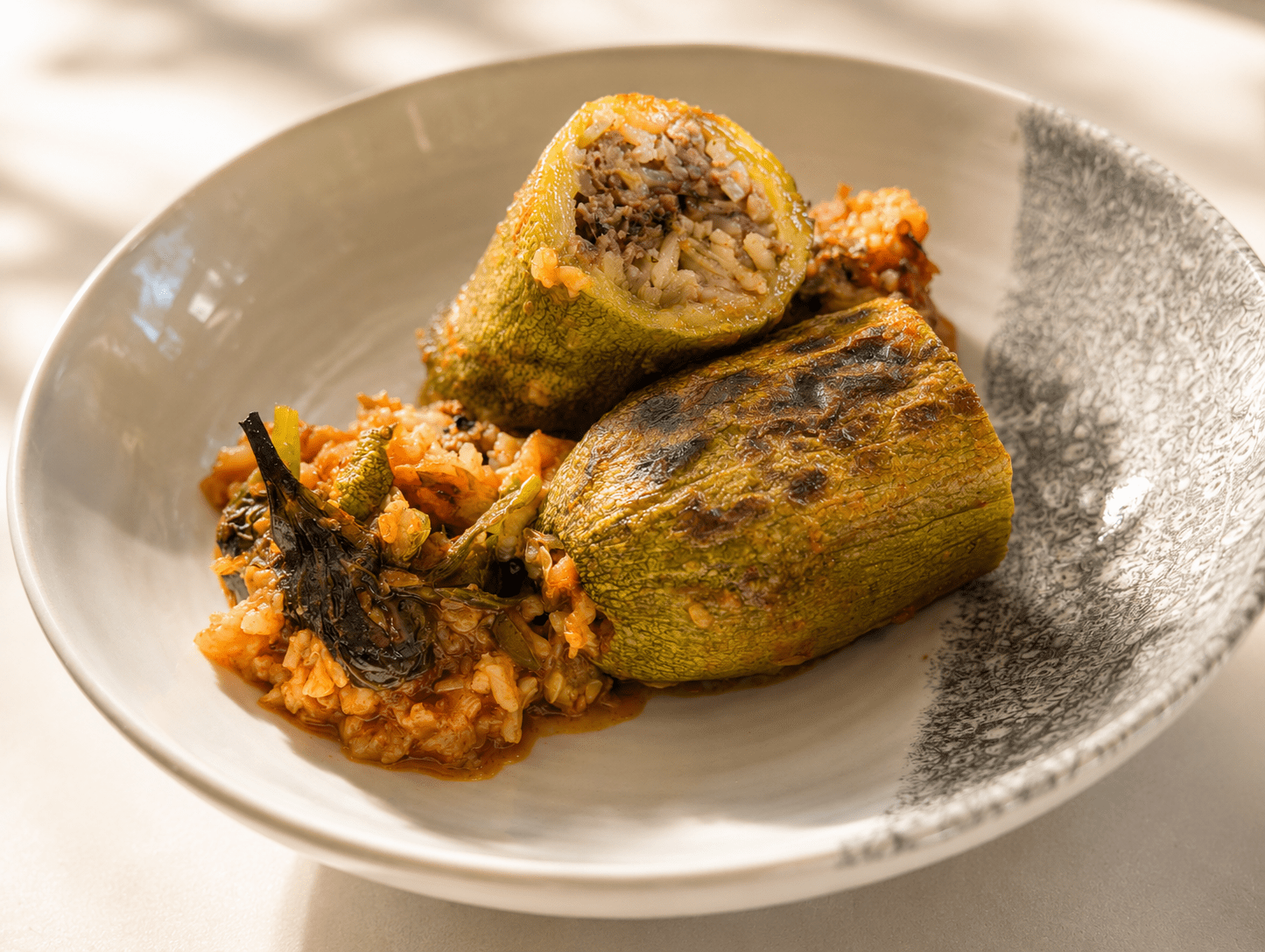
Kusa mahshi, cut open to show the beef and rice filling that cooked right inside the zucchini
Why This Stuffed Zucchini Works
The whole dish runs on one idea: the rice goes in raw and cooks inside the zucchini. As the pot simmers, the grains absorb the tomato broth and the fat from the beef, swelling until they fill the shell. There is no separate step to cook the rice and nothing to drain. That is also why the filling stays loose when you pack it, since the rice needs room to expand.
Coring the zucchini into a tube, open at both ends, does two things. It is far easier to stuff than a closed cavity, and it lets the broth flow through so the rice cooks evenly from the inside. The scooped out flesh does not get thrown away either. It goes straight into the sauce, where it breaks down and thickens the broth, so nothing is wasted and the pot tastes deeper.
How to Make Kusa Mahshi, Step by Step
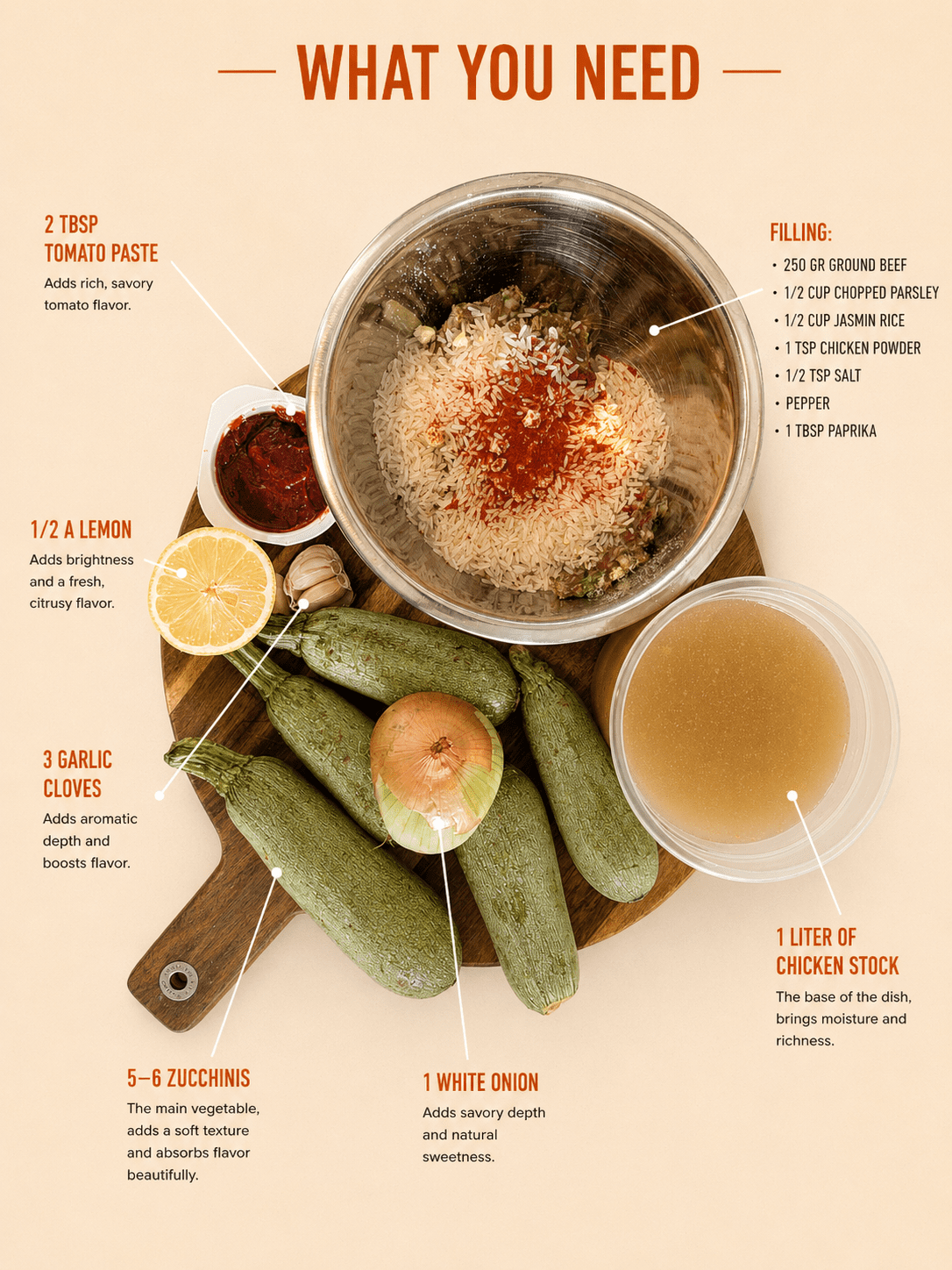
- In one bowl, combine the ground beef, raw jasmine rice, chopped parsley, paprika, chicken powder, salt, and pepper.
- Mix until everything is evenly spread through the meat. The rice stays raw, there is no need to cook it first, it cooks later inside the zucchini.
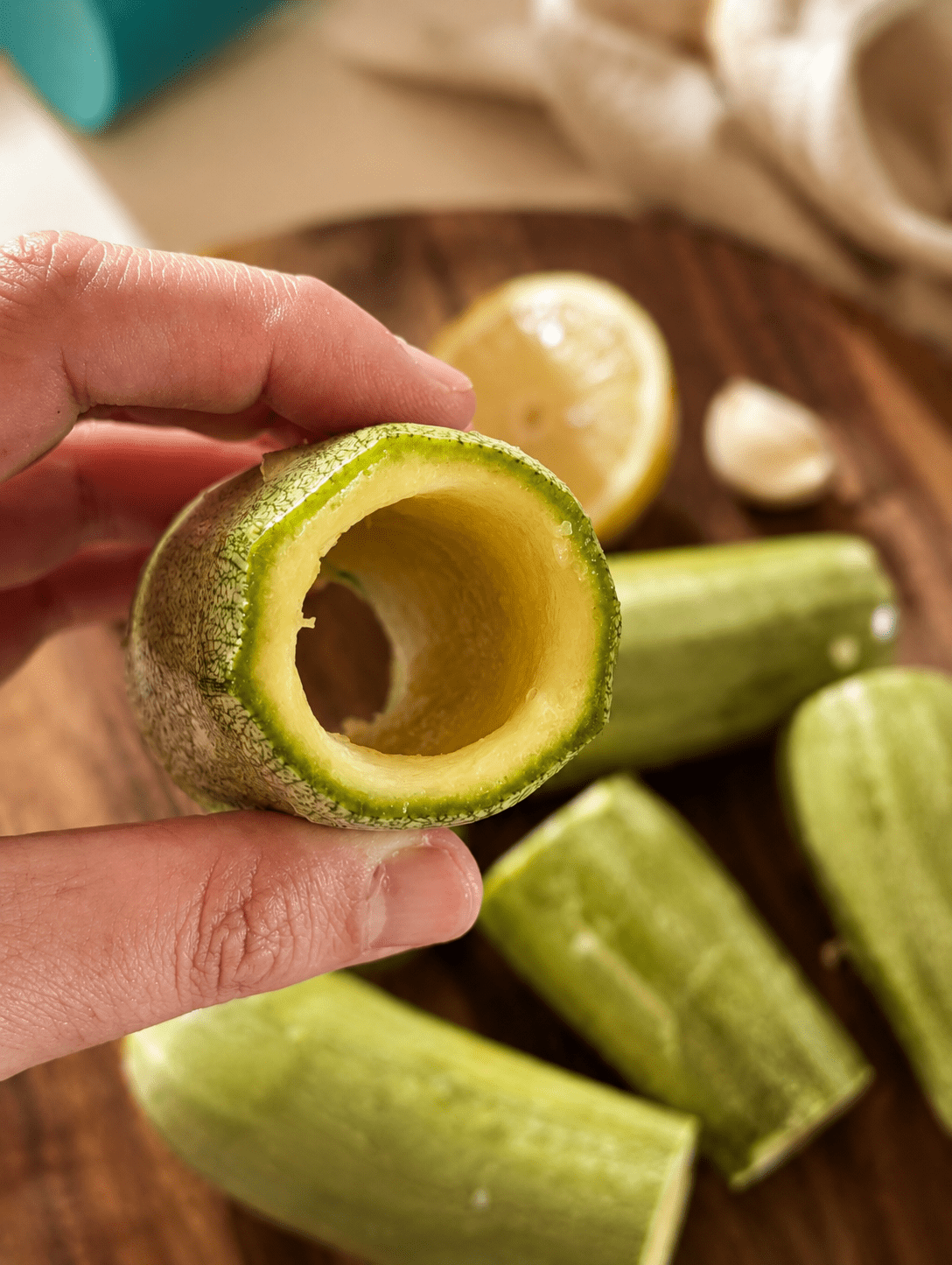
- Trim the ends off each zucchini. Using a vegetable corer or the handle of a teaspoon, hollow out the inside to make a tube. Working from both ends makes it easier and gives you an open tube that is simple to fill.
- Leave the walls about half a centimeter thick so they hold together during cooking. Do not push all the way through the side.
- Save the scooped out flesh in a bowl. You will use it in the sauce.
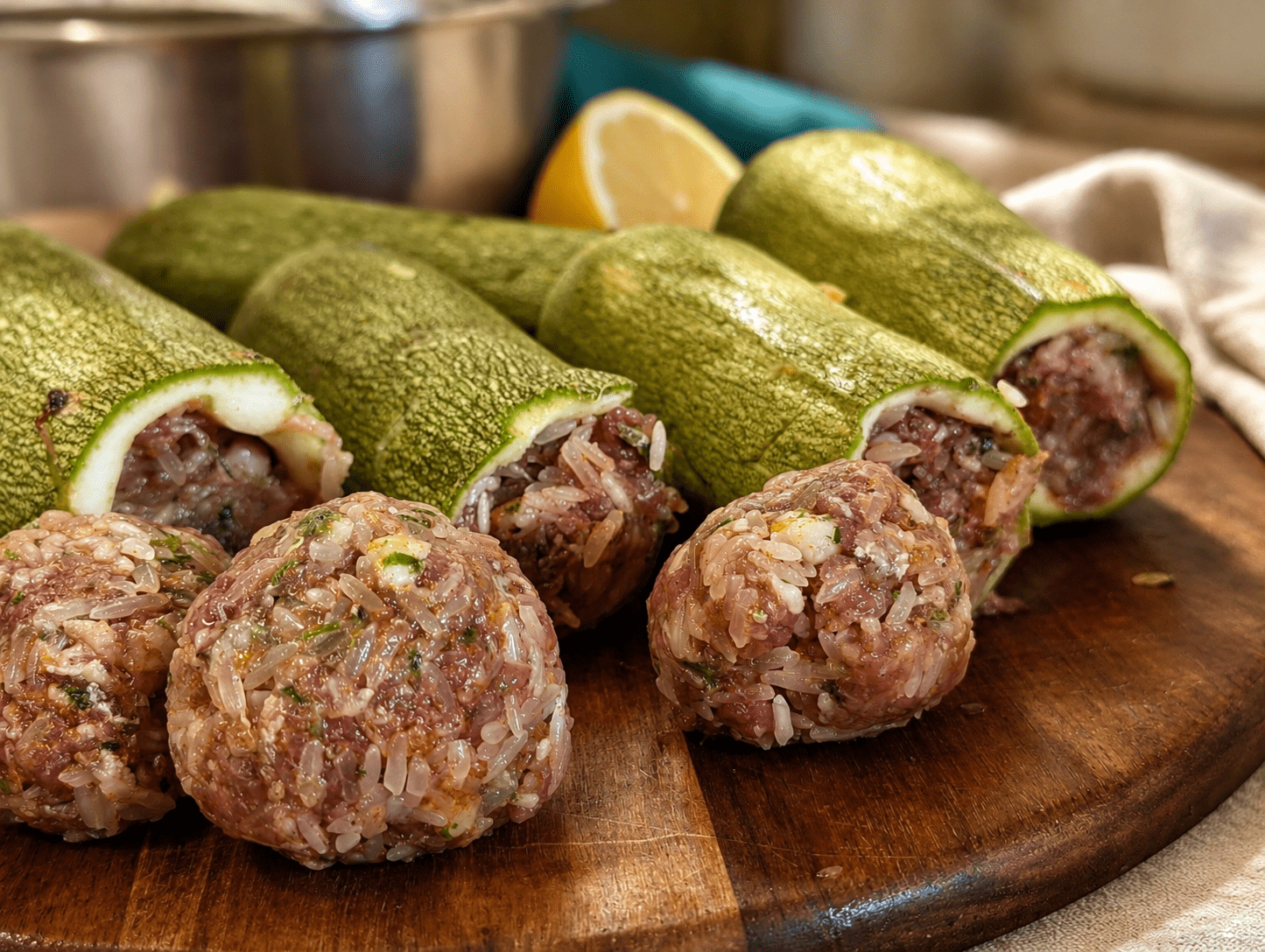
- Pack the filling into each zucchini, stopping at about three quarters full so the rice has room to expand.
- If you have filling left over, roll it into meatballs. They cook right alongside the zucchini in the same pot.
- In a separate bowl, combine the reserved zucchini flesh, the chicken stock, and the tomato paste. Add a squeeze of the lemon.
- Mix well and set aside. This is what cooks the rice and becomes the sauce.
- Use a wide, deep pot that can go into the oven. Drizzle in some oil and add the quartered onion and the halved garlic cloves.
- Lay the stuffed zucchini in the pot and fry for a couple of minutes on each side. Add the meatballs now too.
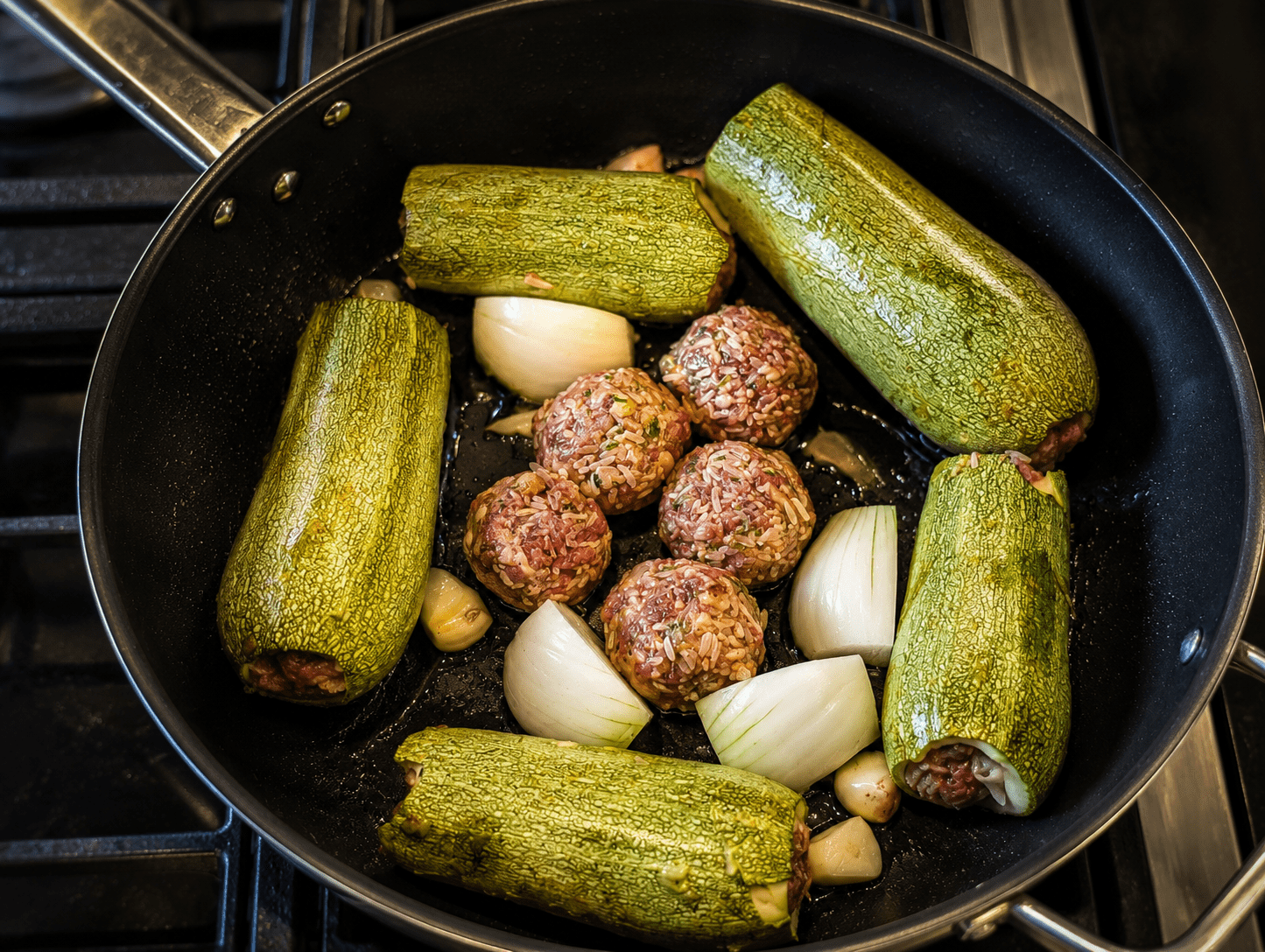
- Pour in the sauce. It should just barely cover the zucchini. If it does not, top up with a little water, but do not drown them.
- Bring to a boil, then lower the heat and cook for about 30 minutes. Throw in a handful of parsley toward the end.
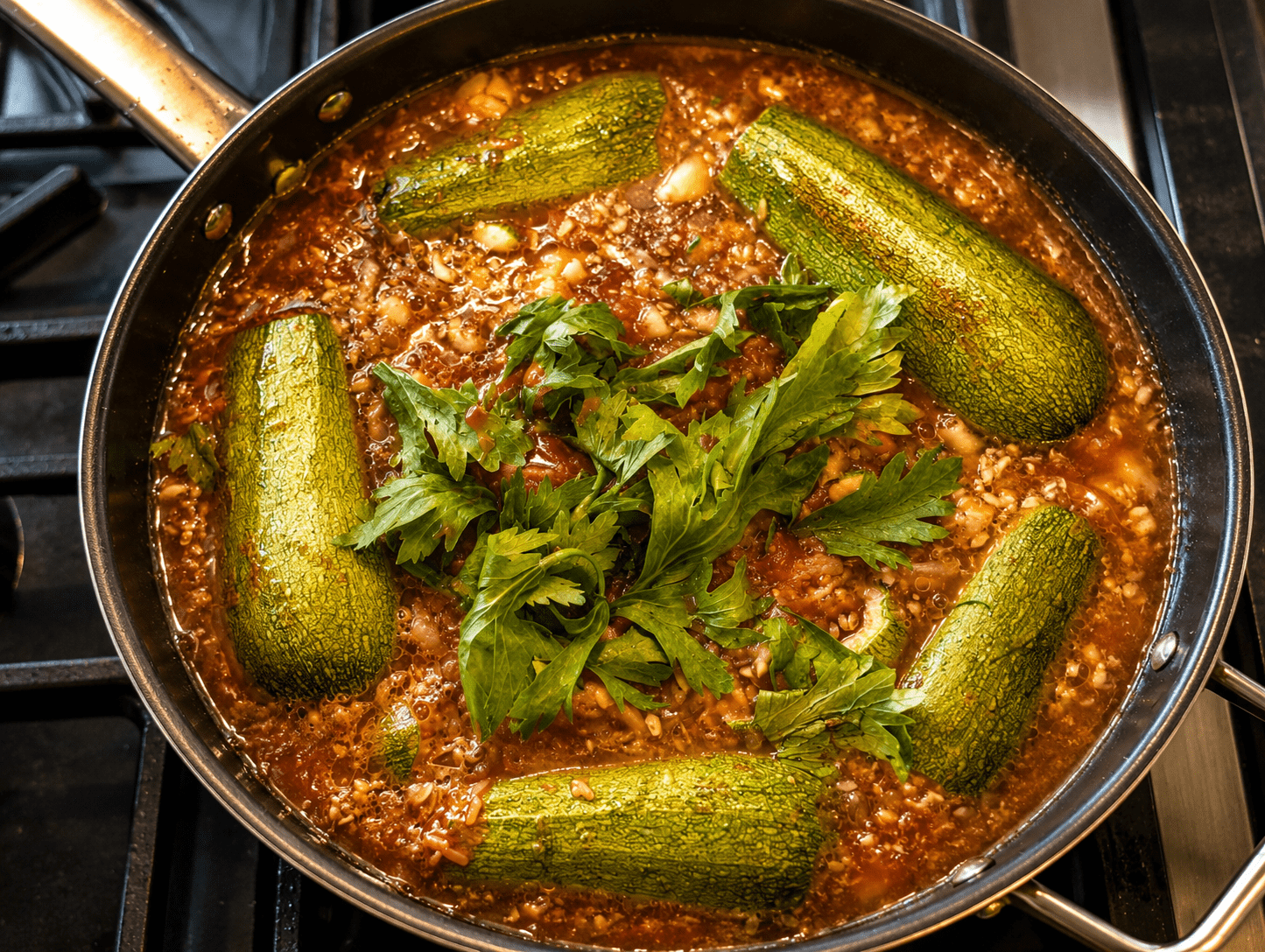
- While it simmers, heat the oven to 200°C (400°F) on the grill setting.
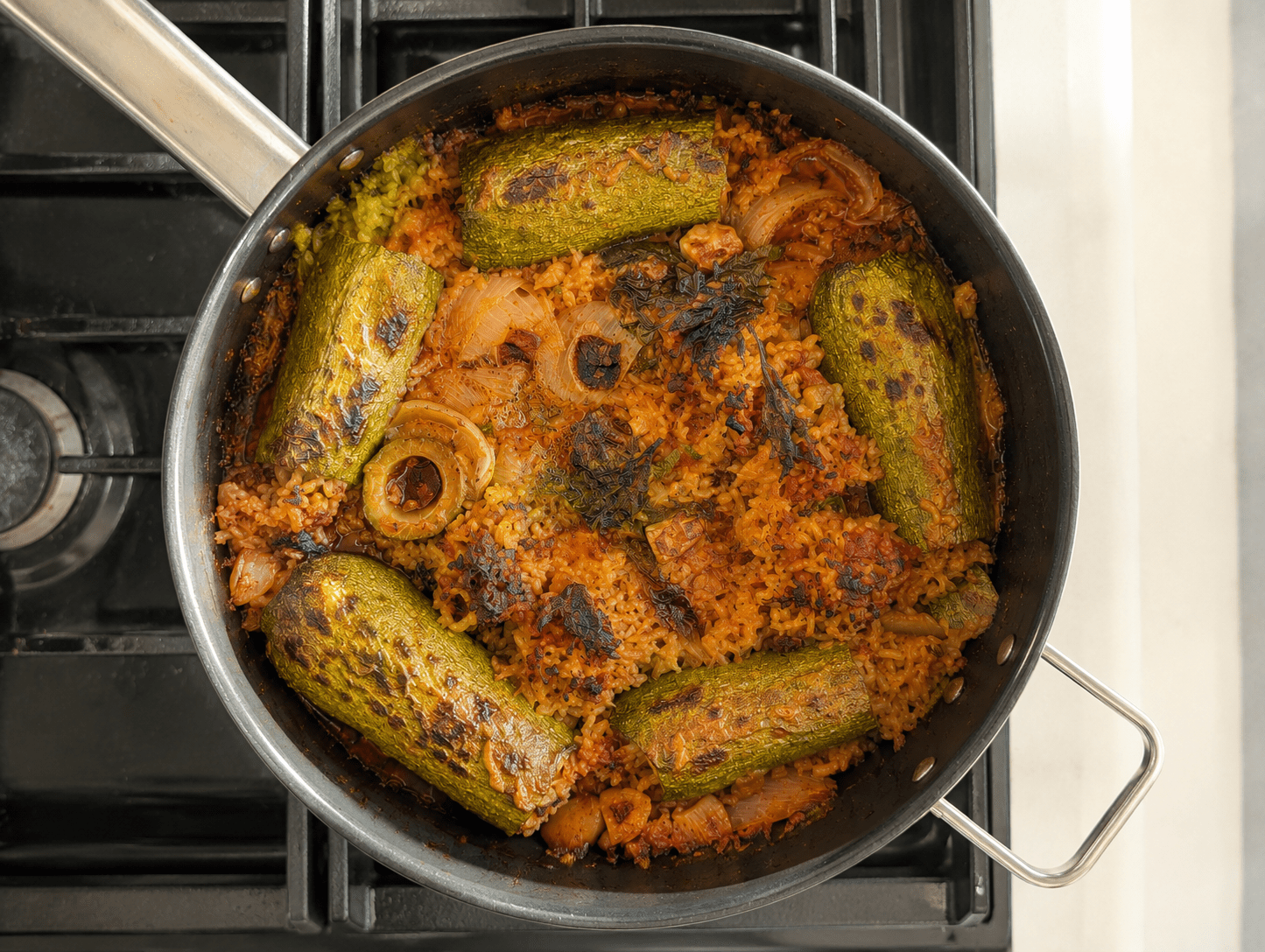
- After the 30 minutes on the stove, take the lid off and move the pot into the oven for about 10 minutes, until the tops are nicely browned.
- Finish with a squeeze of the remaining lemon before serving.
- 🥔 Pick the right zucchini: Go for medium, straight, firm ones. If you can find the pale green Middle Eastern kusa variety, even better, the walls are a touch thicker and core more cleanly.
- 🥄 Mind the walls: Leave the walls about half a centimeter thick. Too thin and they split as the rice swells, too thick and the zucchini stays raw in the middle.
- 🍚 Never overstuff: Three quarters full is the rule. The rice needs the empty space to expand into.
- 🥒 Use the flesh: The scooped out insides go into the sauce. They thicken the broth and add flavor, so do not throw them away.
- 🥩 Roll the extra: Leftover filling becomes meatballs that cook in the same pot. They soak up the same sauce and stretch the meal.
- ❄️ Better the next day: Like most stuffed vegetables, this tastes even better after a night in the fridge. It keeps for up to 3 days and reheats gently.
Frequently Asked Questions
If you make this, leave a comment and let me know how it went. Stuffed vegetables are some of my favorite home cooking, and this one rewards a slow afternoon. For the broth, homemade chicken bone broth takes the whole pot up a level. And if you are building out more Middle Eastern staples, my falafel is a good next one.