Slow Cooked Beef Goulash
(a paprika beef and potato stew built for a lazy Saturday)
This is my version of goulash, a slow cooked beef stew built on a heavy hand of paprika, soft chunks of potato and carrot, and beef that falls apart when you press it with a spoon. It is almost no work. You brown the meat, throw everything else in the pot, seal it, and let low heat do the rest for a few hours. The reward is a deep red, savoury bowl that tastes like it took all day, because it did, just not from you.
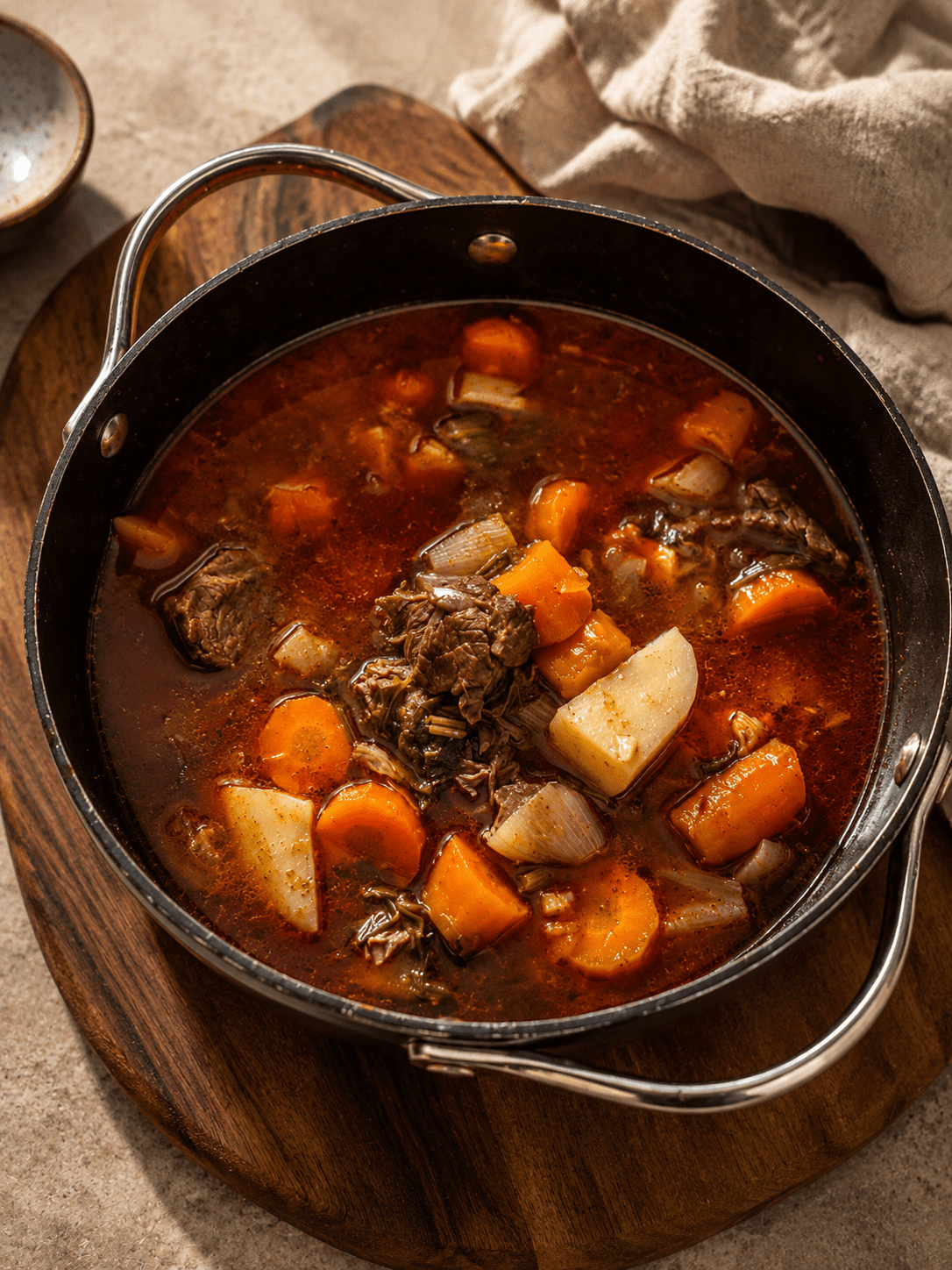
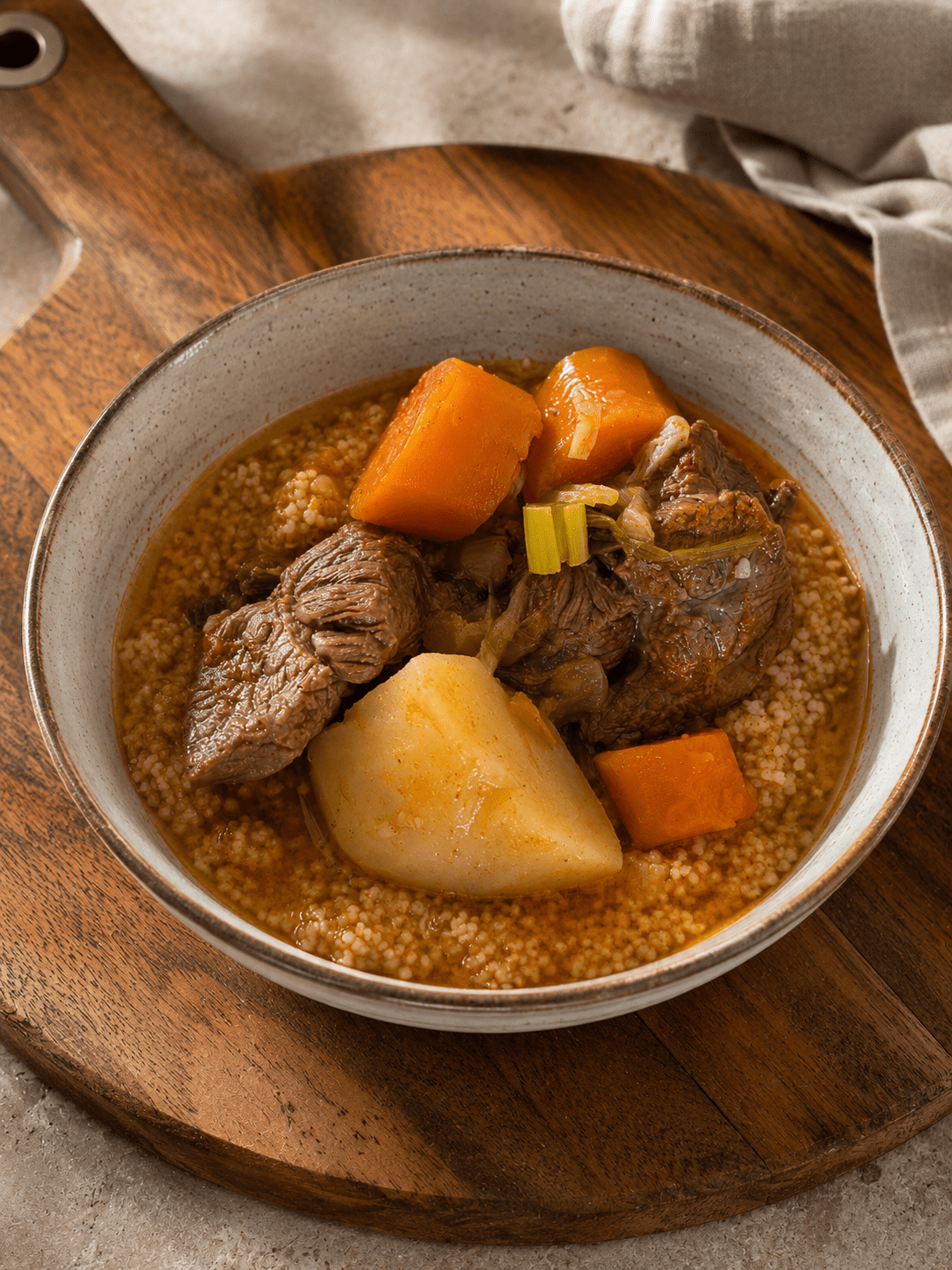
A pot of beef goulash, deep red glossy broth, fork-tender beef and soft vegetables
Why This Beef Goulash Works
Goulash lives and dies on two things: the cut of beef and the patience. Use a working cut with connective tissue running through it, something like chuck, shoulder, shin, or short rib, and give it time on low heat. Those tough fibres slowly break down into gelatin, which is exactly what turns thin broth into something that coats the back of a spoon and makes the meat tender enough to cut with the side of a fork.
The flavour base is simple and front loaded. A heavy two tablespoons of paprika does the heavy lifting, cumin adds a warm earthy note underneath it, and tomato paste brings the deep red colour and a savoury backbone. There is no fancy technique here. Once everything is in the pot, your only job is to keep the liquid in and the heat low.
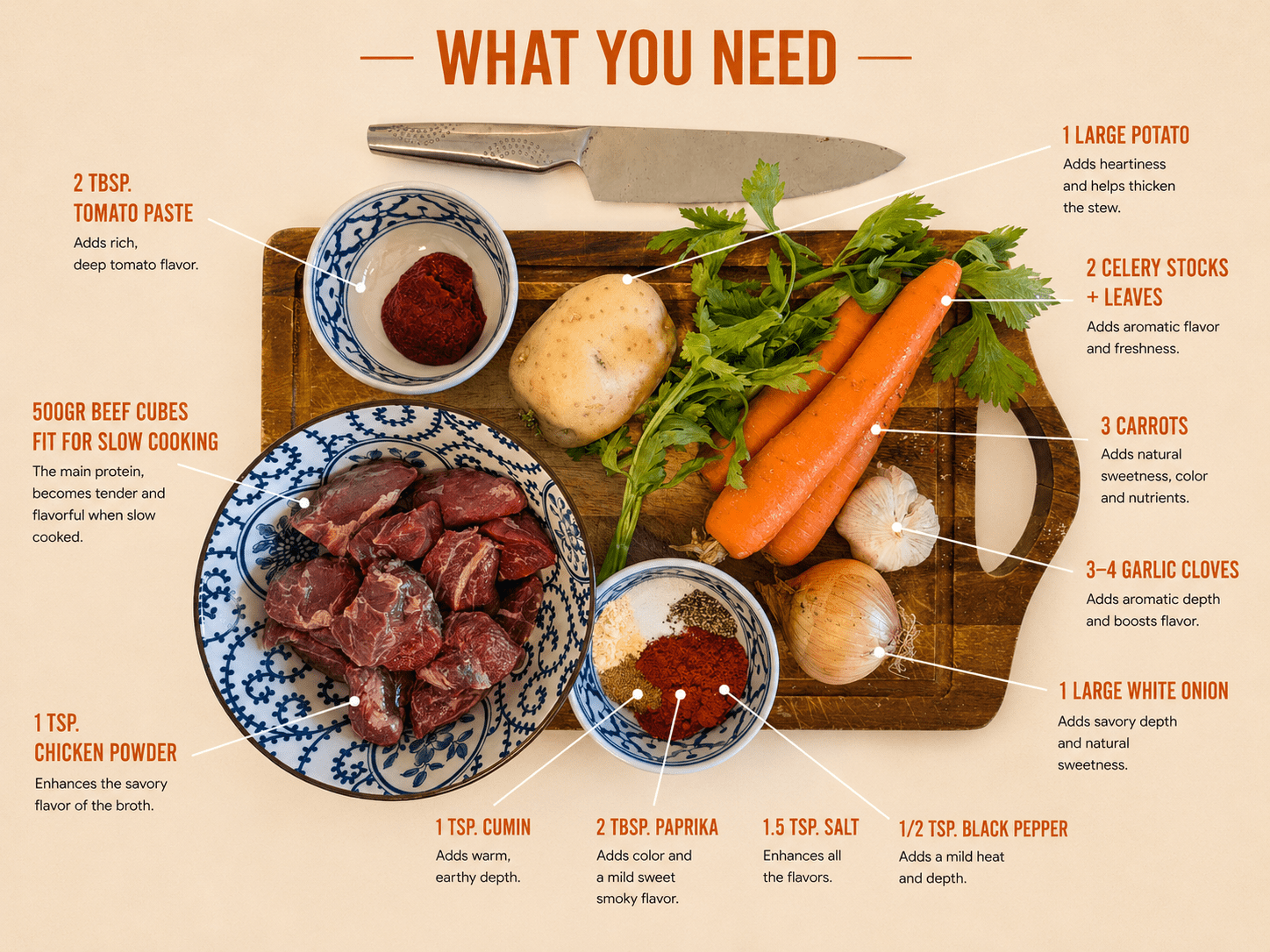
How to Make Beef Goulash, Step by Step
- Use a large heavy pot with a lid that can also go into the oven (no plastic or silicone parts).
- Add a little oil and set the heat to high. Add the beef cubes and brown them well on all sides. If you are using a marrow bone, brown it now too.
- Salt the beef directly after browning, while it is still hot. The meat is not meant to cook through at this stage, you only want colour.
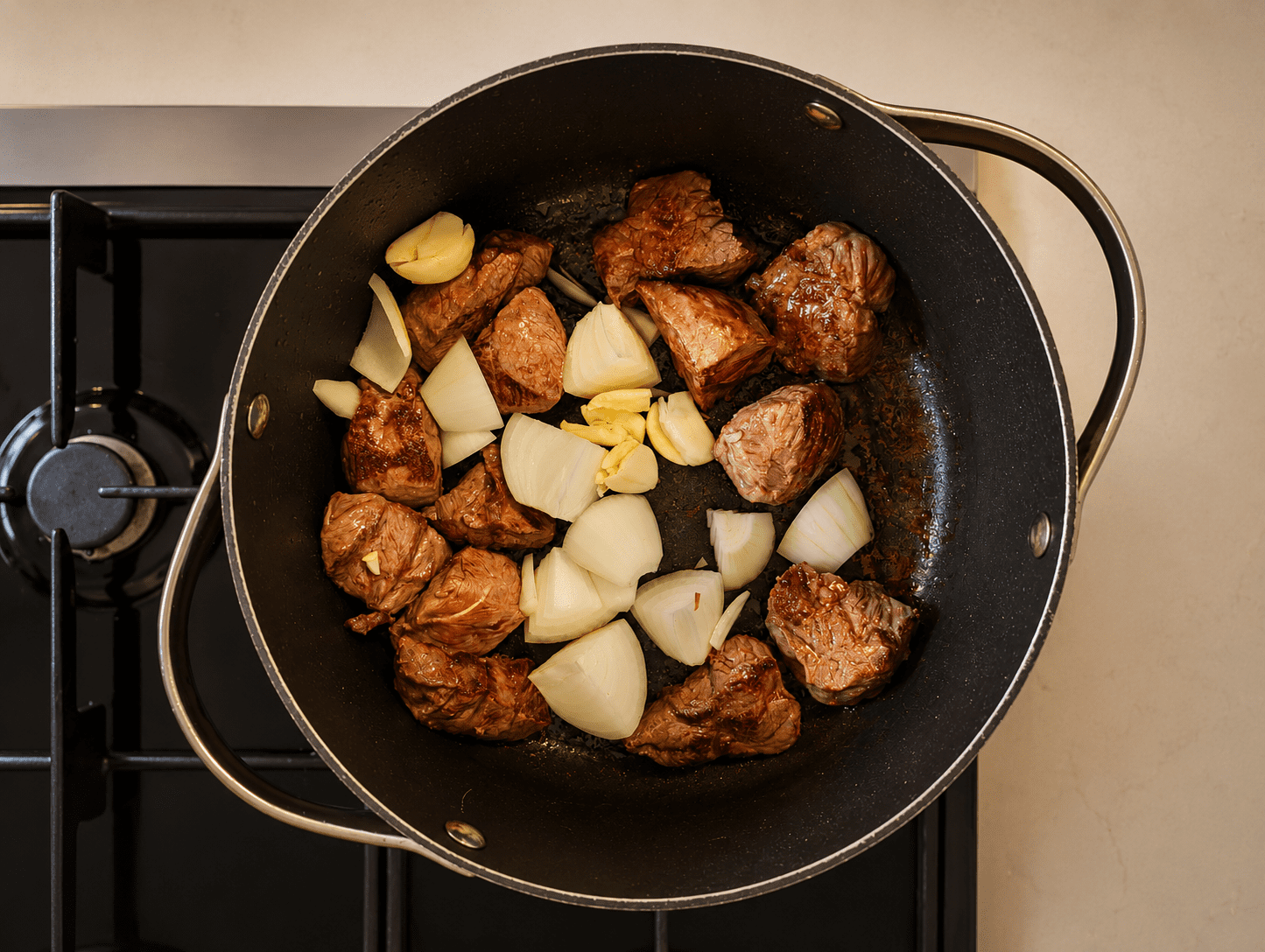
- Peel and cut the potato, onion, garlic, carrots, and celery into large chunks, roughly 2 to 3 cm each. Large pieces hold their shape through the long cook instead of dissolving.
- Add all the vegetables into the pot with the meat.
- Add the paprika, cumin, salt, pepper, chicken powder, and the bay leaf if using. Stir well so everything in the pot is coated in spice.
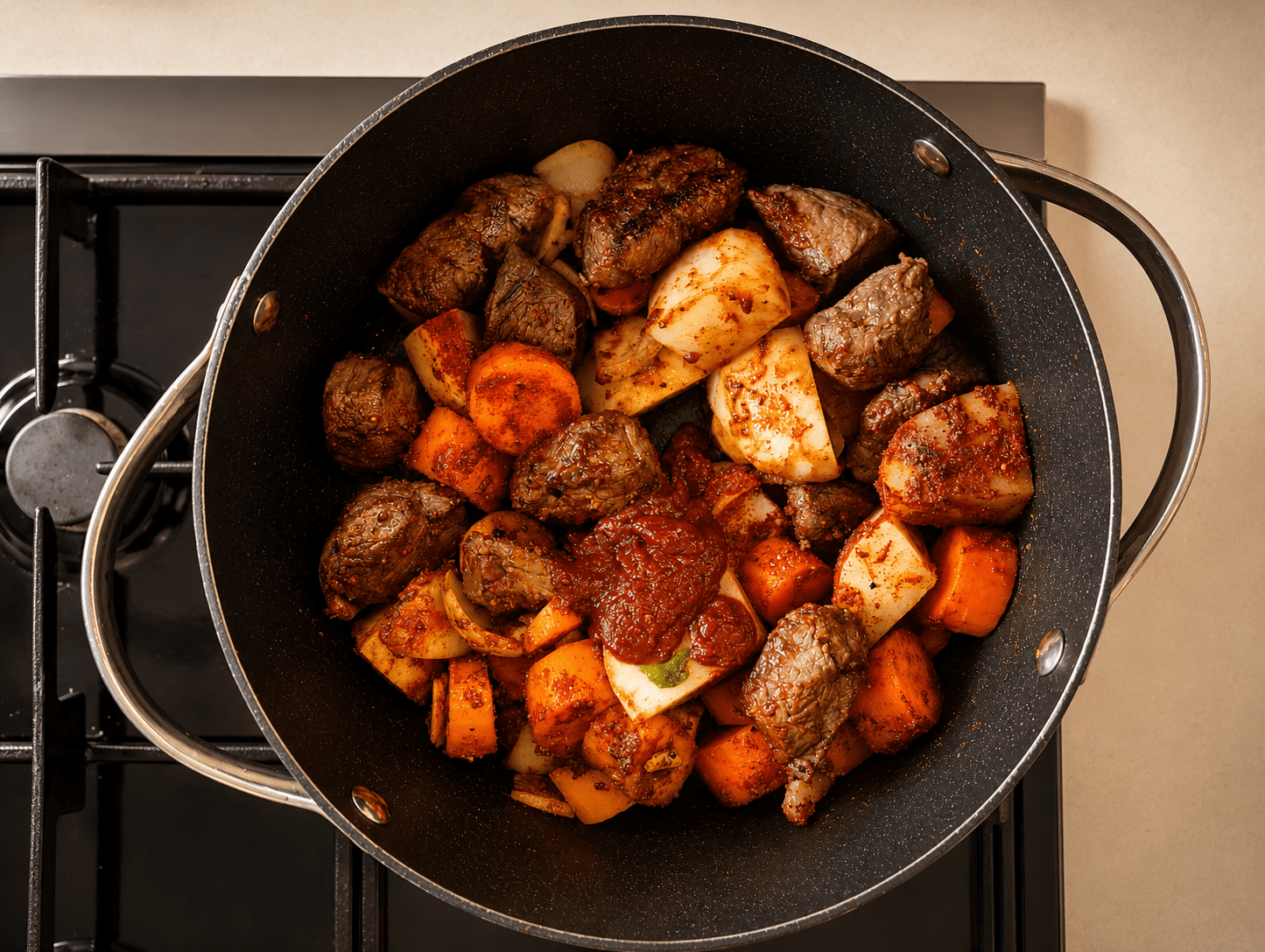
- If you are using wine, pour in the cup of red wine now and let it cook for a couple of minutes until you can no longer smell the alcohol.
- Add the chicken stock or water until everything in the pot is covered.
- Stir in the tomato paste. Bring the pot up to a boil, then drop the heat to its lowest setting.
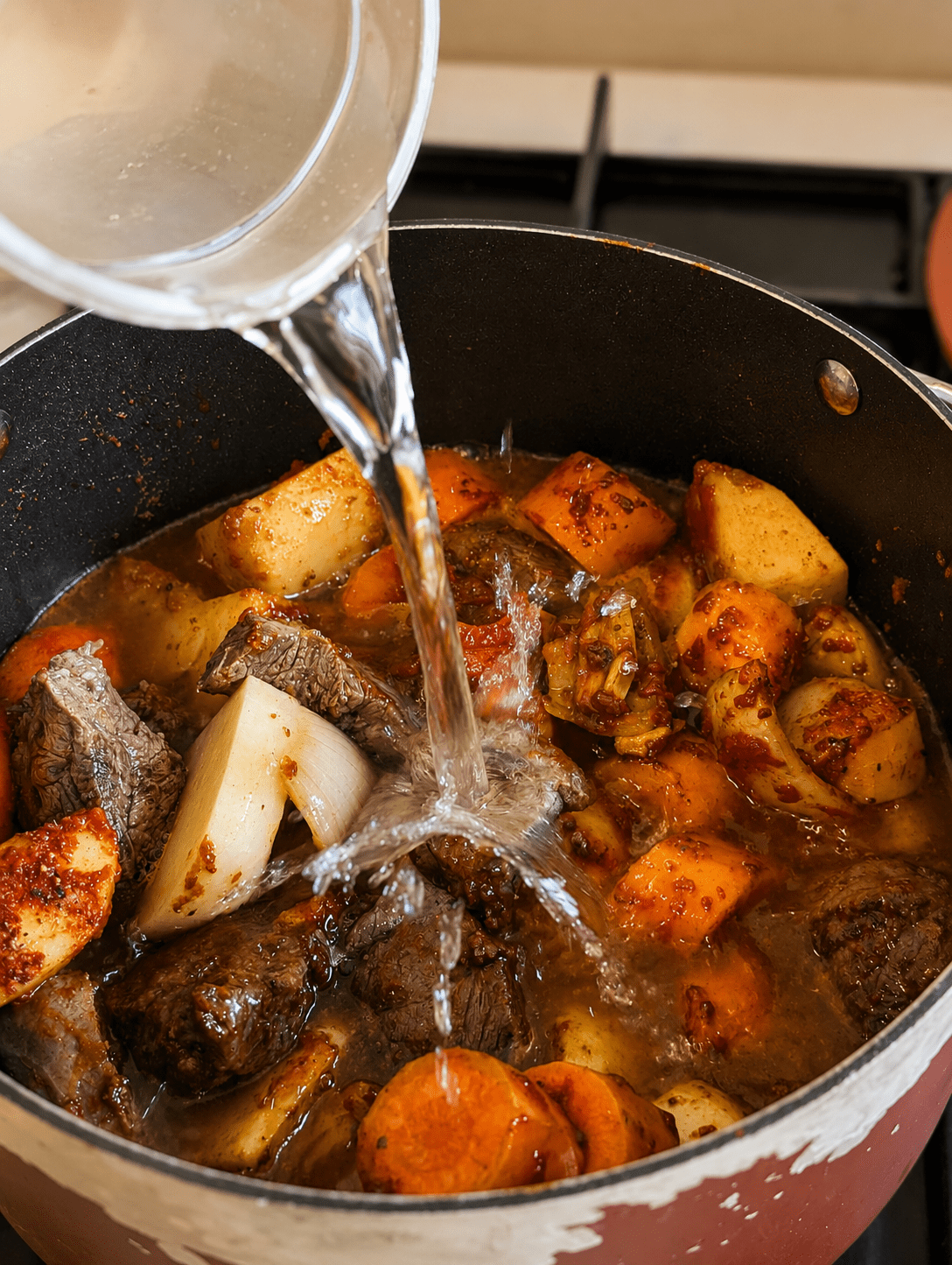
- Lay the parchment over the pot and close the lid. This traps the steam and keeps the liquid inside.
- Cook on the lowest setting on the stove for about 4 hours, or put the closed pot into the oven at 120°C (250°F) for the same time.
- Check on it now and then. If the liquid has reduced too much, just top it up with a little more stock or water.
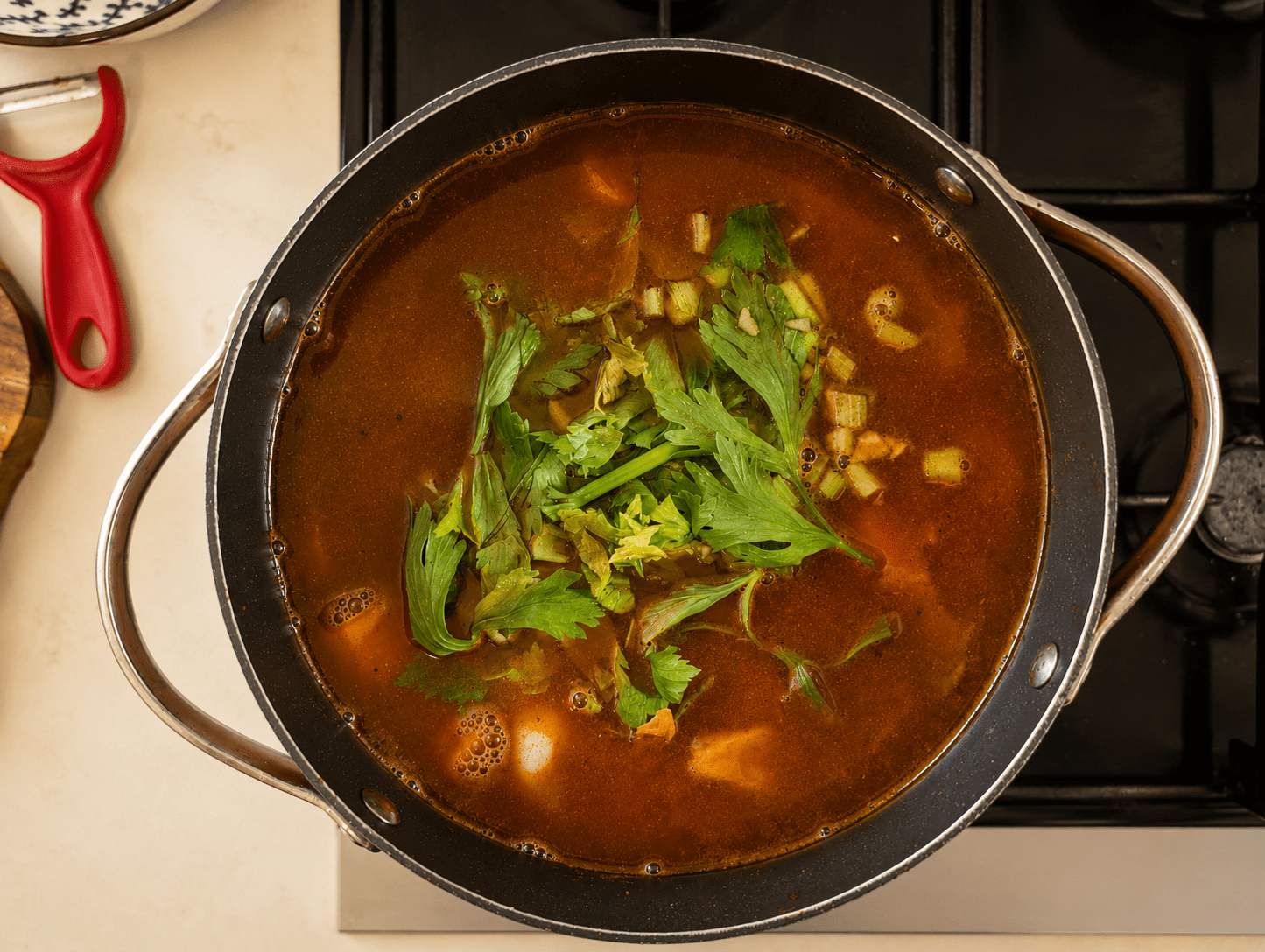
- The goulash is ready when the beef pulls apart easily and the broth has turned deep and rich.
- Serve it over rice or couscous, or with a hunk of crusty bread to mop up the sauce.
- 🥩 Pick the right cut: Chuck, shoulder, shin, or short rib all have the connective tissue that breaks down into gelatin over a long cook. Lean cuts stay dry and tough no matter how long you cook them.
- 🔥 Brown properly: Get real colour on the beef before anything else goes in. This is the single biggest flavour step in the whole recipe and it cannot be skipped.
- 🧻 Keep the liquid in: The parchment under the lid is not optional if you want a saucy goulash. Without it you can lose a surprising amount of liquid over 4 hours.
- 🍷 Wine adds depth: The cup of red wine is optional, but it adds a layer of flavour that is hard to get any other way. Let the alcohol cook off fully before adding the stock.
- 🦴 Add a marrow bone: A beef bone with marrow gives you extra gelatin and a richer broth. If your butcher has one, throw it in and brown it with the meat.
- ❄️ Make it ahead: Goulash keeps in the fridge for up to 4 days and freezes well for up to 3 months. It genuinely tastes better on day two.
Frequently Asked Questions
Drop a comment below and let me know how this beef goulash turned out. Did you run it overnight, or add the wine? If you cooked it with homemade stock, the chicken bone broth makes a real difference to the final bowl. Tag your photos so I can see them.