Libyan Overnight Beef and White Bean Stew (T’bicha)
(beef bones, white beans, and eggs baked low and slow until morning)
T’bicha (also spelled tabikha or t’becha) is the Libyan Jewish word for a slow-cooked pot, and in my house it means one specific dish: beef on the bone, white beans, potatoes, and whole eggs, sealed tight and left in a low oven overnight. It’s the weekend pot that fills the house with a smell you can’t get any other way, and it’s the one dish my two year old points at the oven for. The beans cook down into a thick, almost gelatinous gravy from the bone marrow, and the eggs turn a deep tan and creamy inside. If you like this kind of hands-off long braise, my beef goulash works on a similar principle.
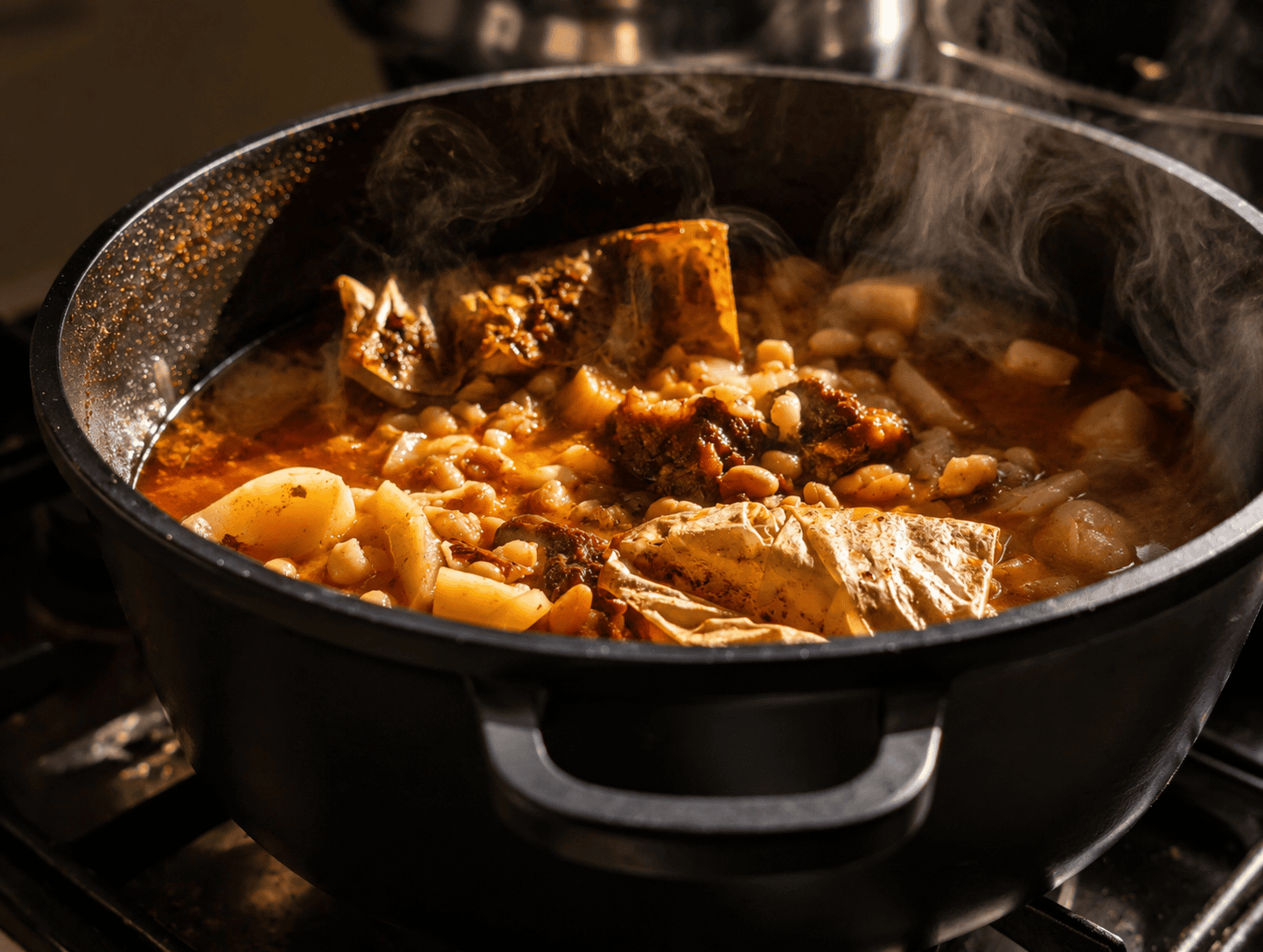
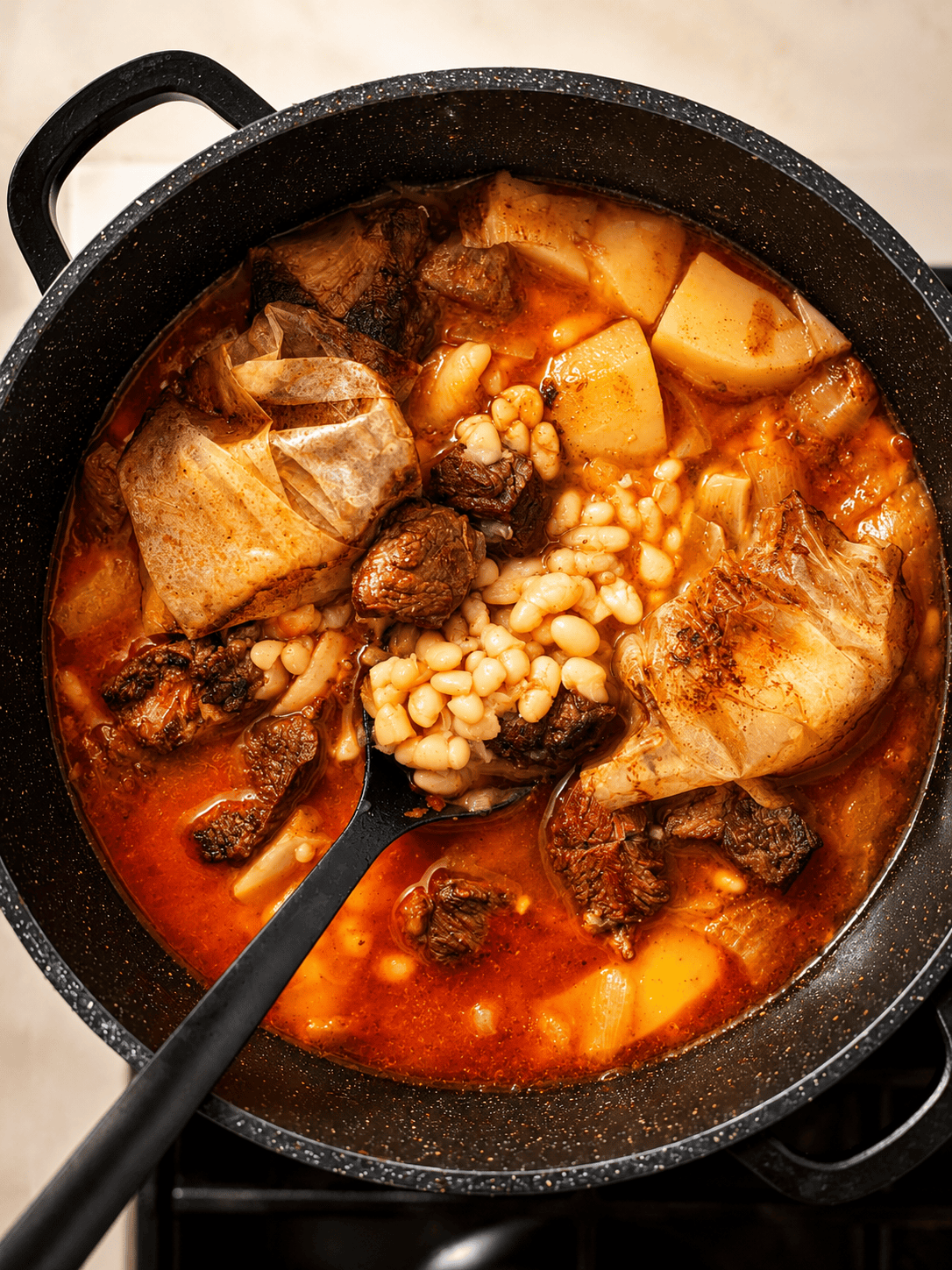
This Libyan beef and white bean stew turns deep red-brown, with meltingly tender beef and beans gone thick and gelatinous after hours in a low oven
Why This Libyan Beef and White Bean Stew Works
T’bicha is a category of Libyan Jewish stews rather than one fixed dish. Ask a family from Tripoli what tbicha means and they’ll ask you which one, tomato-based, beet-based, this Libyan beef and white bean stew. What they all share is the technique: everything goes into one pot, gets sealed tight, and cooks low and slow until it can’t be rushed any further.
This version leans on beef marrow bones for the gelatin that turns the cooking liquid into a thick, rich gravy, and on the eggs for a texture you don’t get anywhere else, closer to a soft-set custard than a boiled egg, from sitting in that gravy for hours. The white beans go in dried and soaked, never canned, because they need the full cook time to absorb the paprika and cumin and turn silky rather than mushy.
The other thing that makes this work is the seal. Parchment paper, then foil, then a tight-fitting oven-safe lid, so that almost no liquid escapes over 6 to 8 hours. Open the pot too early or too often and you lose the steam that’s doing all the work.
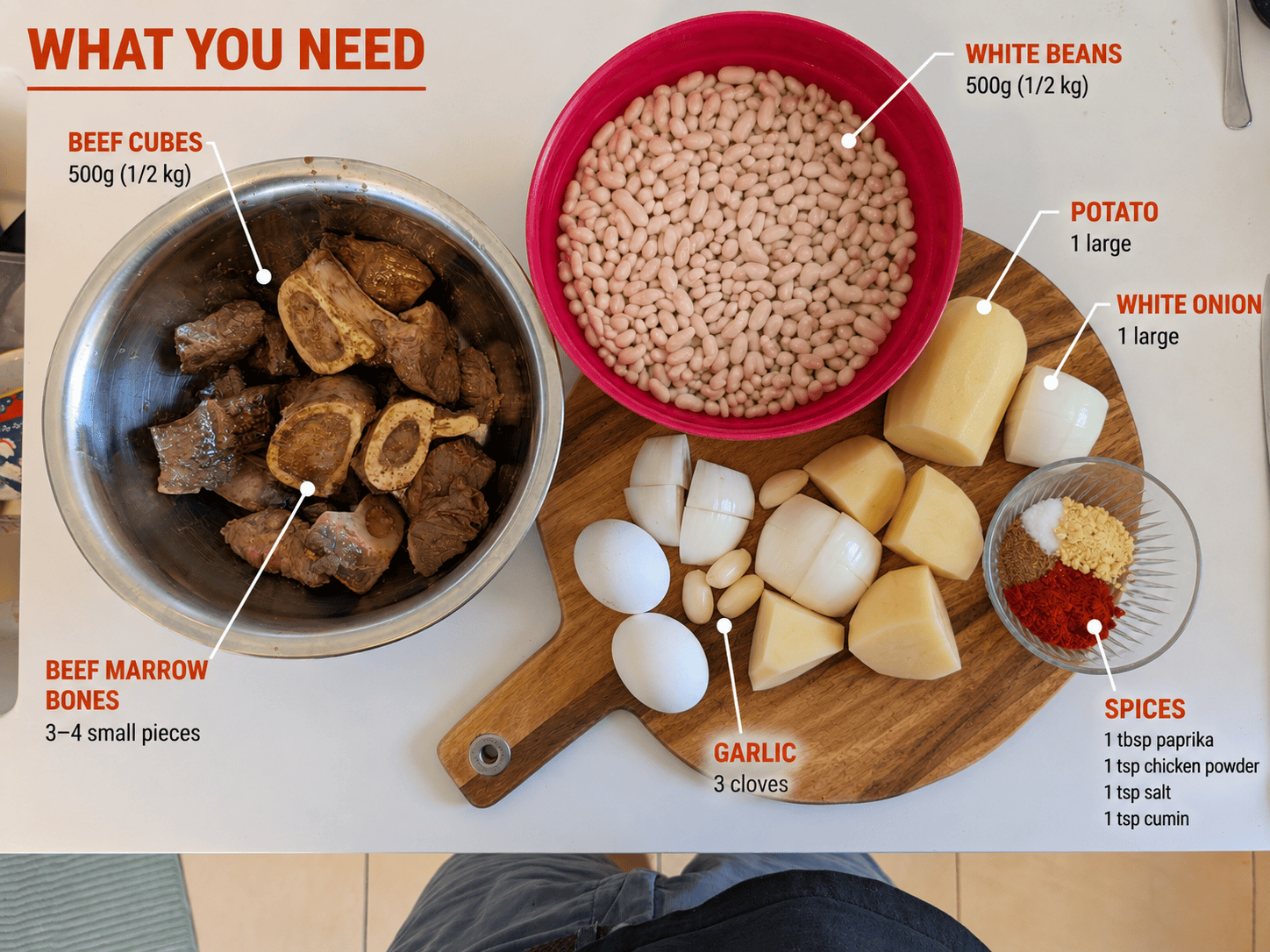
How to Make Libyan Beef and White Bean Stew, Step by Step
- Cover the dried white beans in plenty of water and let them soak for 8-12 hours, or overnight.
- Drain fully before using. Skipping the soak means the beans won’t fully soften even after hours in the oven.
- Cut the beef into large cubes and separate it from the bone if it came as one piece.
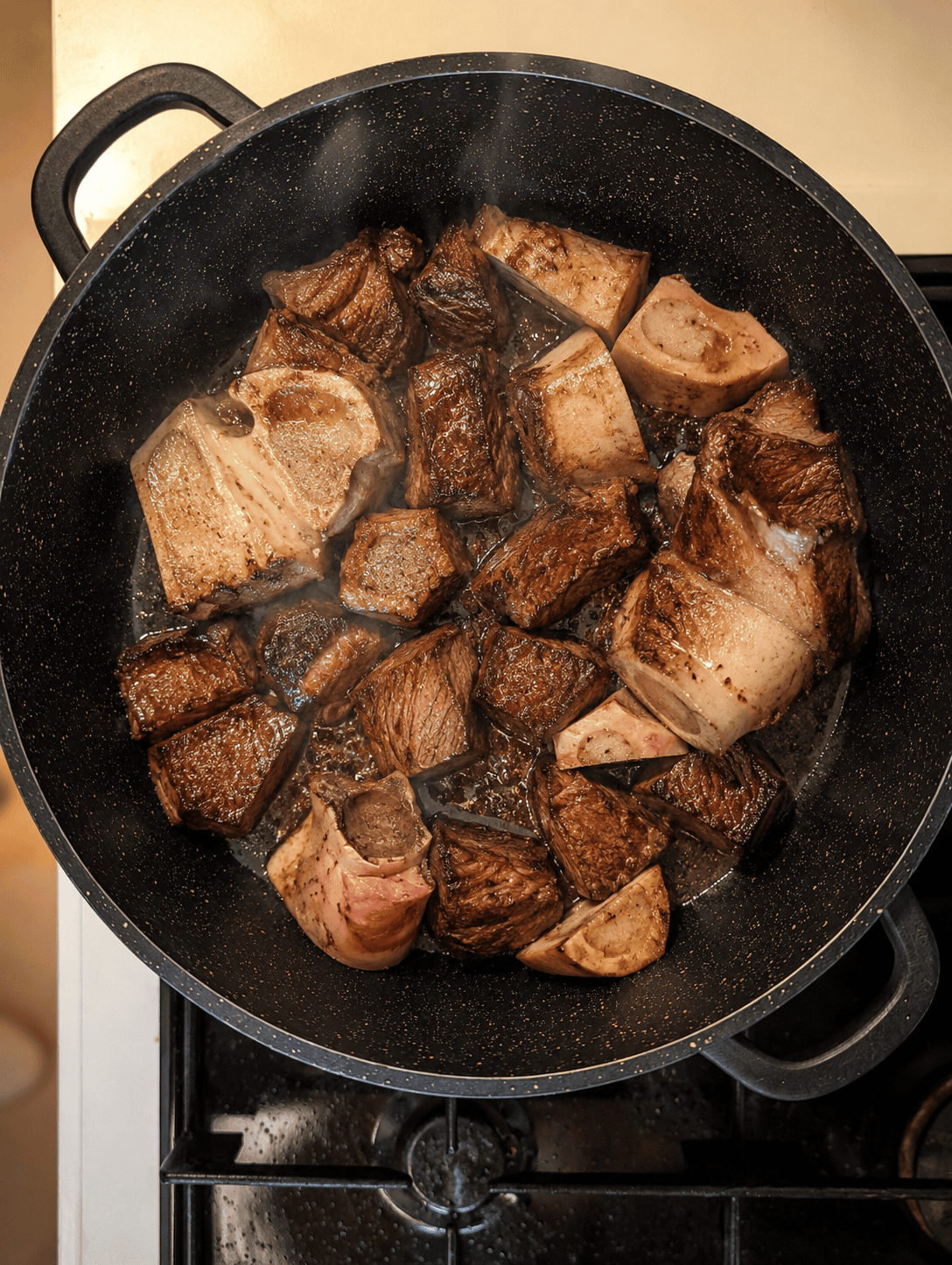
- In a very large pot that’s oven-safe, heat oil over high heat and add the beef cubes and marrow bones.
- Let them brown on all sides without moving them too much. Salt generously at this point.
- Take the meat and bones out and set aside.
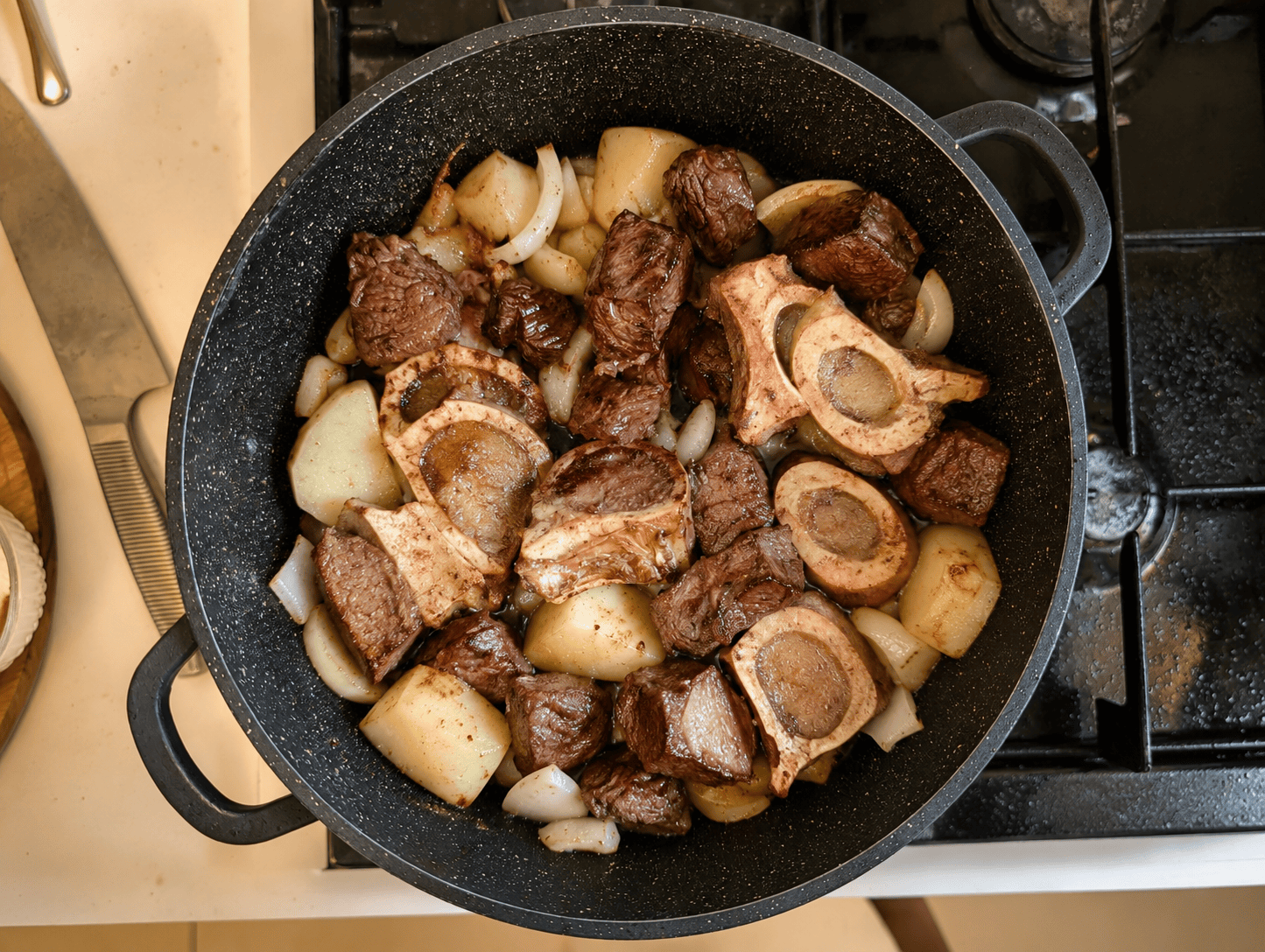
- In the same pot, add the roughly chopped onion, whole garlic cloves, and the potato cubes, cut roughly the same size as the beef.
- Return the browned beef and bones to the pot and let everything cook together for a few minutes over high heat.
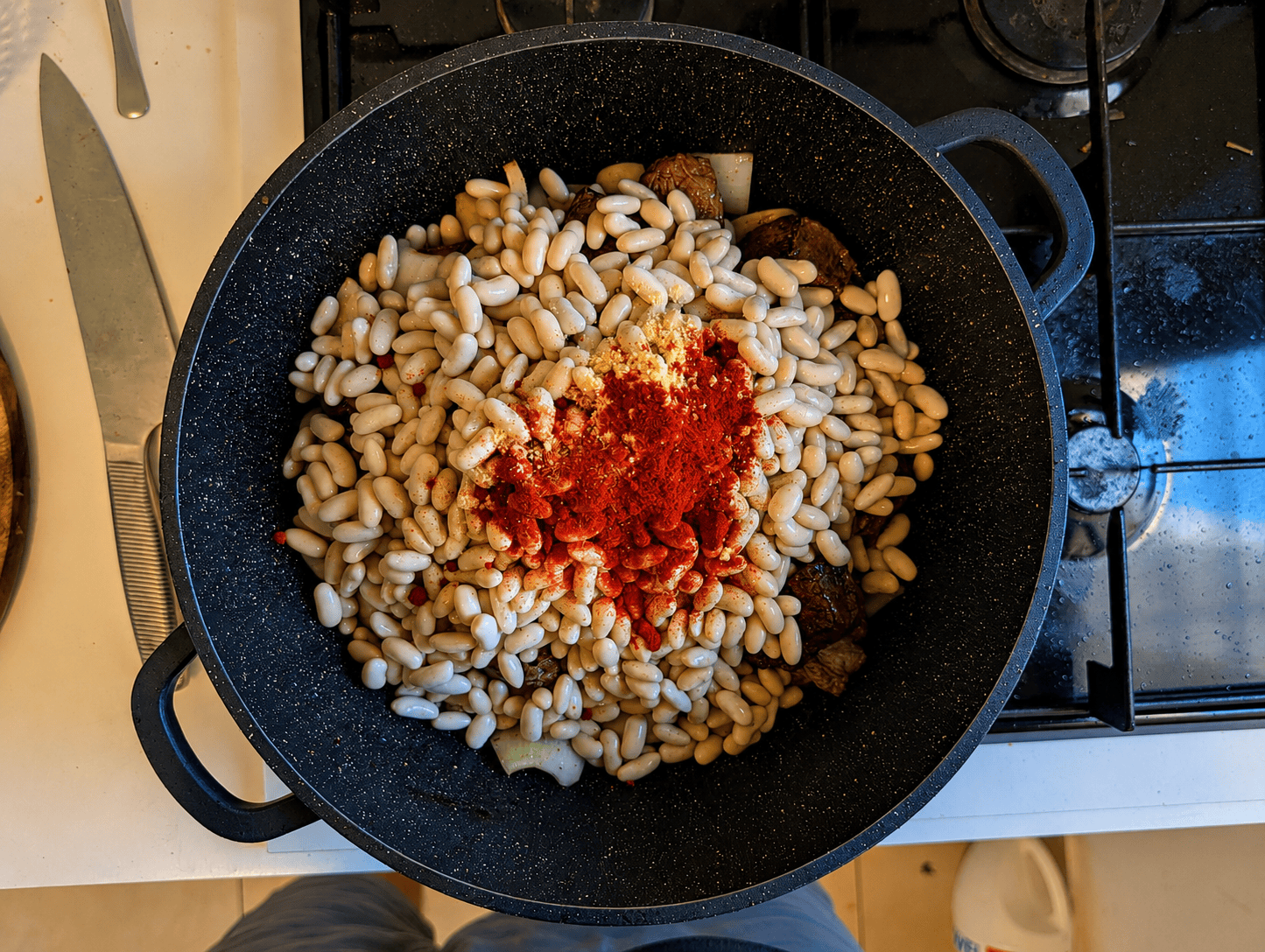
- Add the drained, soaked beans to the pot along with the paprika, cumin, chicken powder, and salt.
- Mix everything together well, so the spices coat the beans, meat, potato, and onion evenly. You’ll see the whole pot turn a deep reddish color.
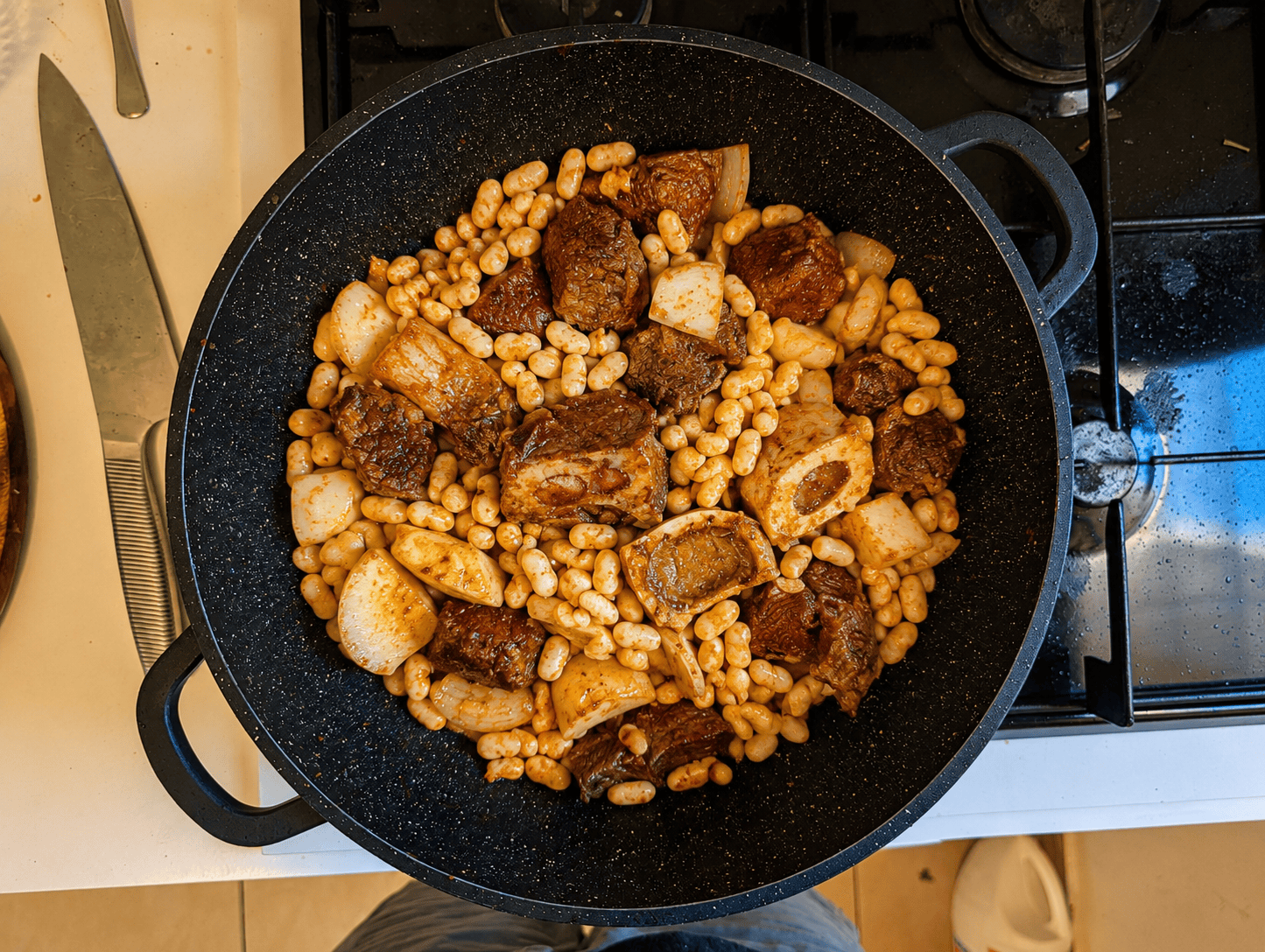
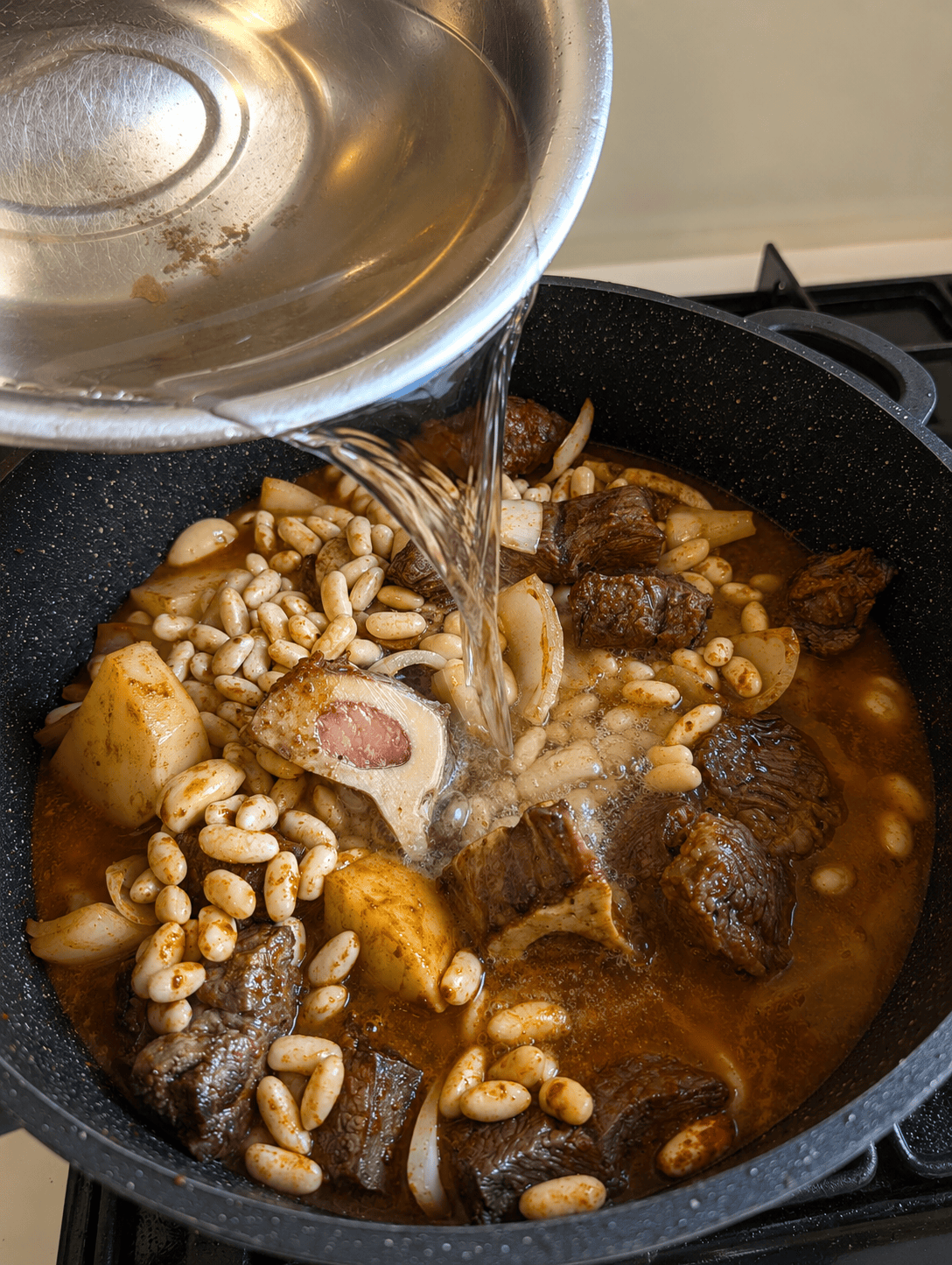
- Pour in enough water (or chicken stock) to cover everything generously, with a little extra on top.
- Bring the pot to a light boil on the stovetop before moving on to the next step.
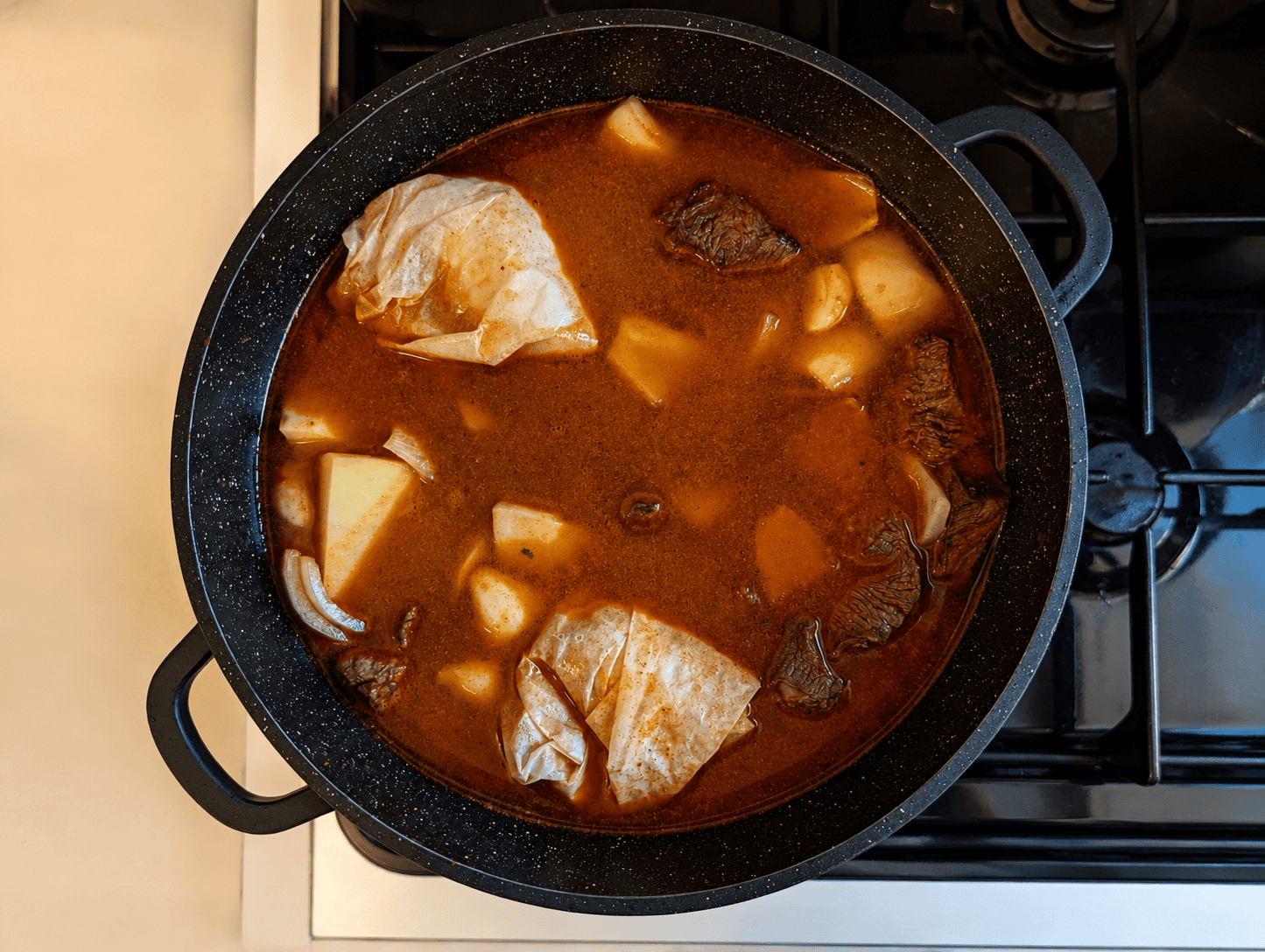
- Wrap the eggs loosely in parchment paper and set them gently on top of the stew, no need to submerge them.
- Cover the pot with a layer of parchment paper, then aluminum foil, then an oven-safe lid, so no steam can escape during cooking.
- Put the sealed pot into a preheated oven set to 100-120°C (210-250°F).
- Leave it for 6-8 hours. I usually put it in before bed and let it go overnight.
- Resist opening the pot during cooking. The seal is what keeps everything submerged and cooking evenly.
- 🍲 Use a genuinely large pot: Beans expand as they cook and the liquid needs room. A pot that looks too big at the start is usually the right size.
- 🔥 Don’t skip the sear: Browning the beef and bones first builds a base flavor that a straight simmer never gets to. Give it the full few minutes on high heat.
- 🧂 Salt while browning, not just at the end: Salting the meat as it browns seasons it from the inside out over the long cook, rather than sitting on the surface.
- 🚪 Keep the lid on: Every time the pot opens, steam and heat escape and the cook time resets a little. Trust the seal and check it only once you’re ready to serve.
How to Serve Libyan Beef and White Bean Stew
Unwrap the eggs and slice or halve them over the top of each bowl. Ladle the beef, beans, potato, and gravy generously, there should be plenty of that thick, rich liquid to go around. A pile of good crusty bread on the side is really all this dish needs, for mopping up the gravy at the end. It also works spooned over rice or couscous if you want something more filling.
Frequently Asked Questions
Drop a comment below and let me know how this Libyan beef and white bean stew turned out for you. If you’re building out a Middle Eastern spread, my stuffed zucchini and chicken bone broth both fit the same slow, comforting mood as this one.