Beef Ragu Spaghetti (Classic Italian Meat Sauce)
(rich, slow-simmered, the kind of sauce that makes the whole kitchen smell like Sunday)
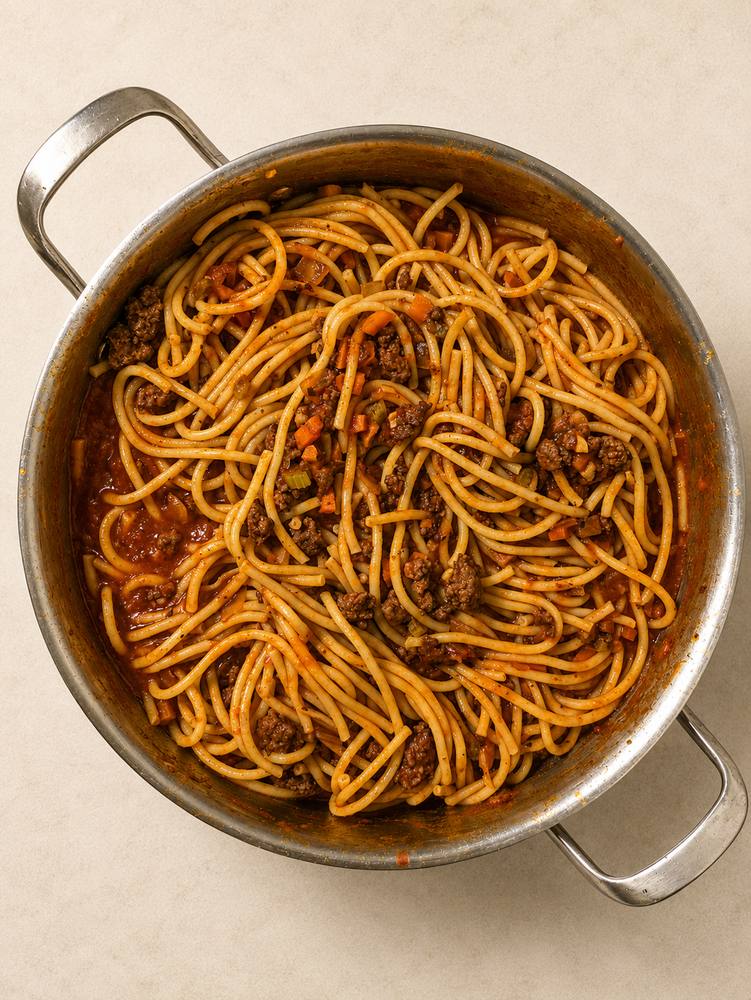
This beef ragu spaghetti recipe is what I make when I want the house to smell like something has been cooking for hours, because it has. Ground beef gets browned hard in a stainless pan until it leaves behind a dark crust, and that crust is where most of the flavor in this sauce actually comes from. A splash of chicken stock scrapes it loose, red wine cooks off its sharp edge, and everything simmers down with tomato and bay leaf until it clings to the spaghetti instead of sitting next to it. It is closer to a true Italian ragù than the thin jarred-sauce version most of us grew up on, and it is not much more work.
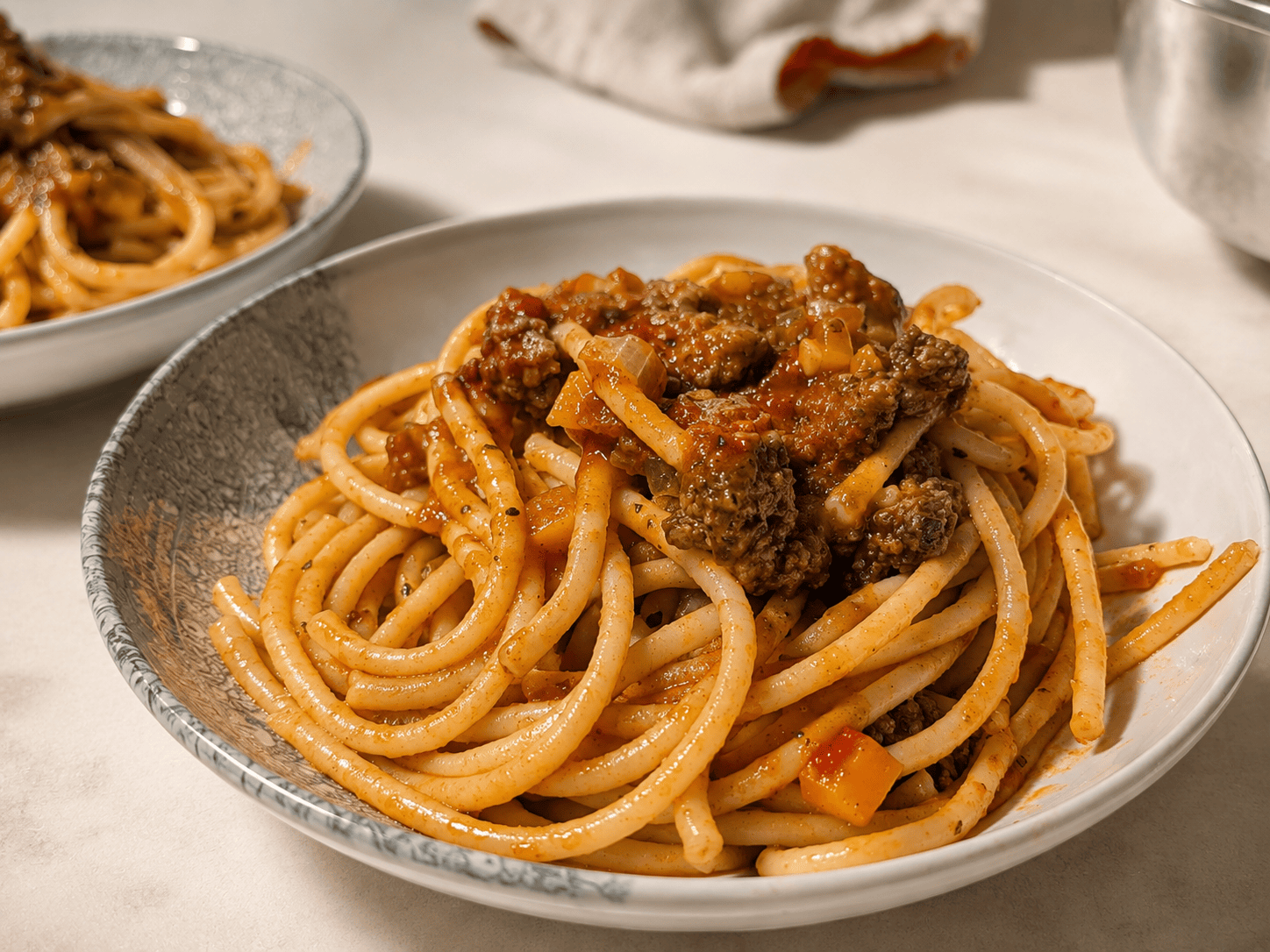
Sauce that clings, not sauce that pools at the bottom of the bowl
Why This Ragu Works
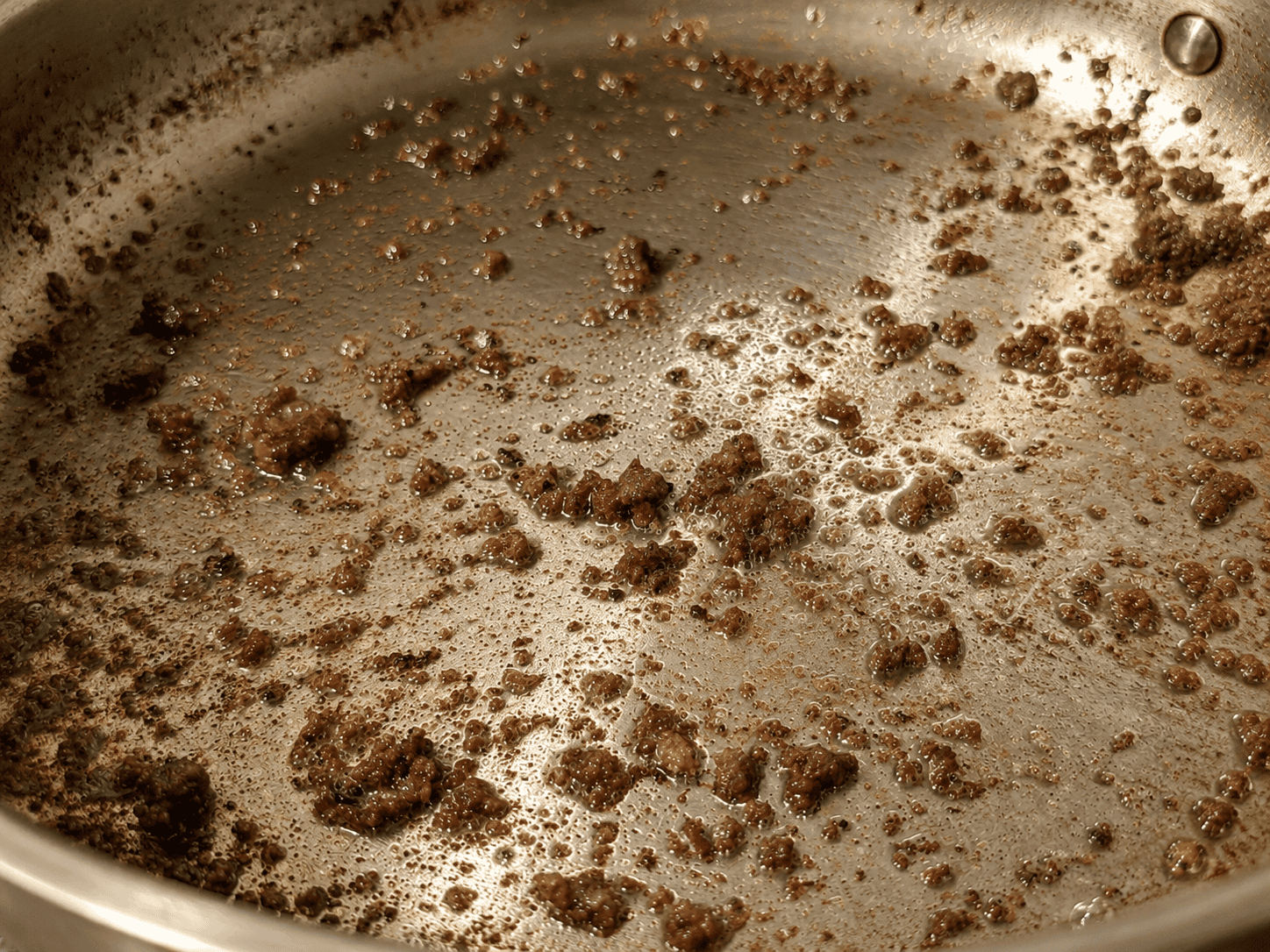
Most weeknight “meat sauce” is really just browned beef dropped into a jar of tomato sauce. What makes this beef ragu spaghetti recipe different is that it treats browning and building fond as the actual flavor base, not a step to rush through. A stainless steel pan matters here more than people expect. The beef leaves behind a dark, stuck-on crust as it fries, and that crust is concentrated flavor. Non-stick pans are built specifically to stop that from happening, which is exactly what you don’t want tonight.
The second thing that makes this version different is the sequence of liquids. Stock loosens the fond first, wine deglazes and cooks off its raw edge next, and only then does the tomato go in. Add the tomato too early and it coats the fond before you can scrape it up, and you lose most of what makes the sauce taste like it simmered all day instead of twenty minutes.
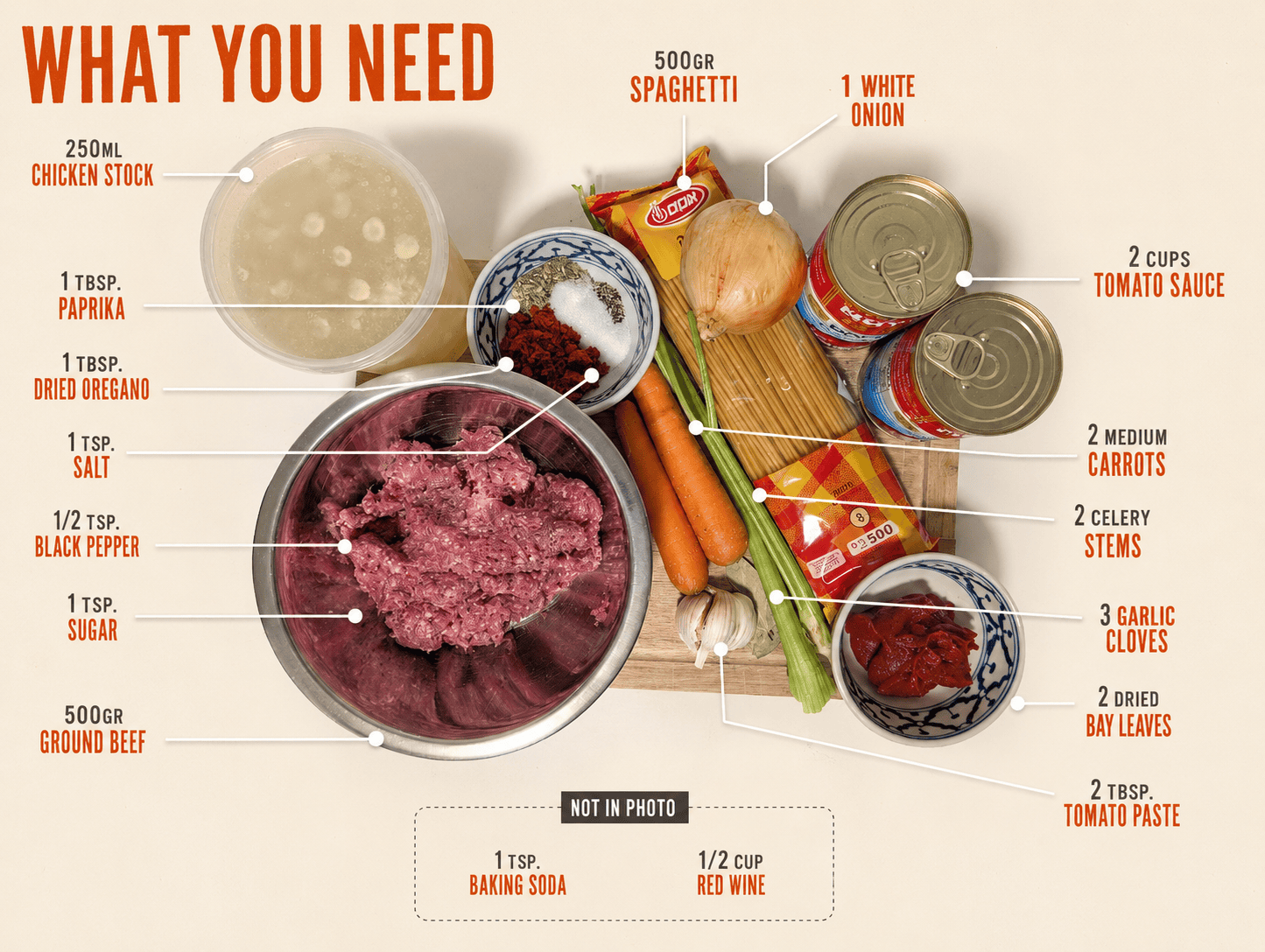
How to Make This Beef Ragu Spaghetti Recipe, Step by Step
- Boil the spaghetti a little less than the package instructs. It should still have real bite, since it finishes cooking in the sauce at the end.
- Before draining, scoop out about a cup of the starchy pasta water and set it aside. You’ll use it to loosen the sauce later.
- Mix the ground beef with the baking soda and a tablespoon of water, combine gently, and let it rest 10 minutes.
- Heat the olive oil in a stainless steel pan over medium-high heat until it shimmers.
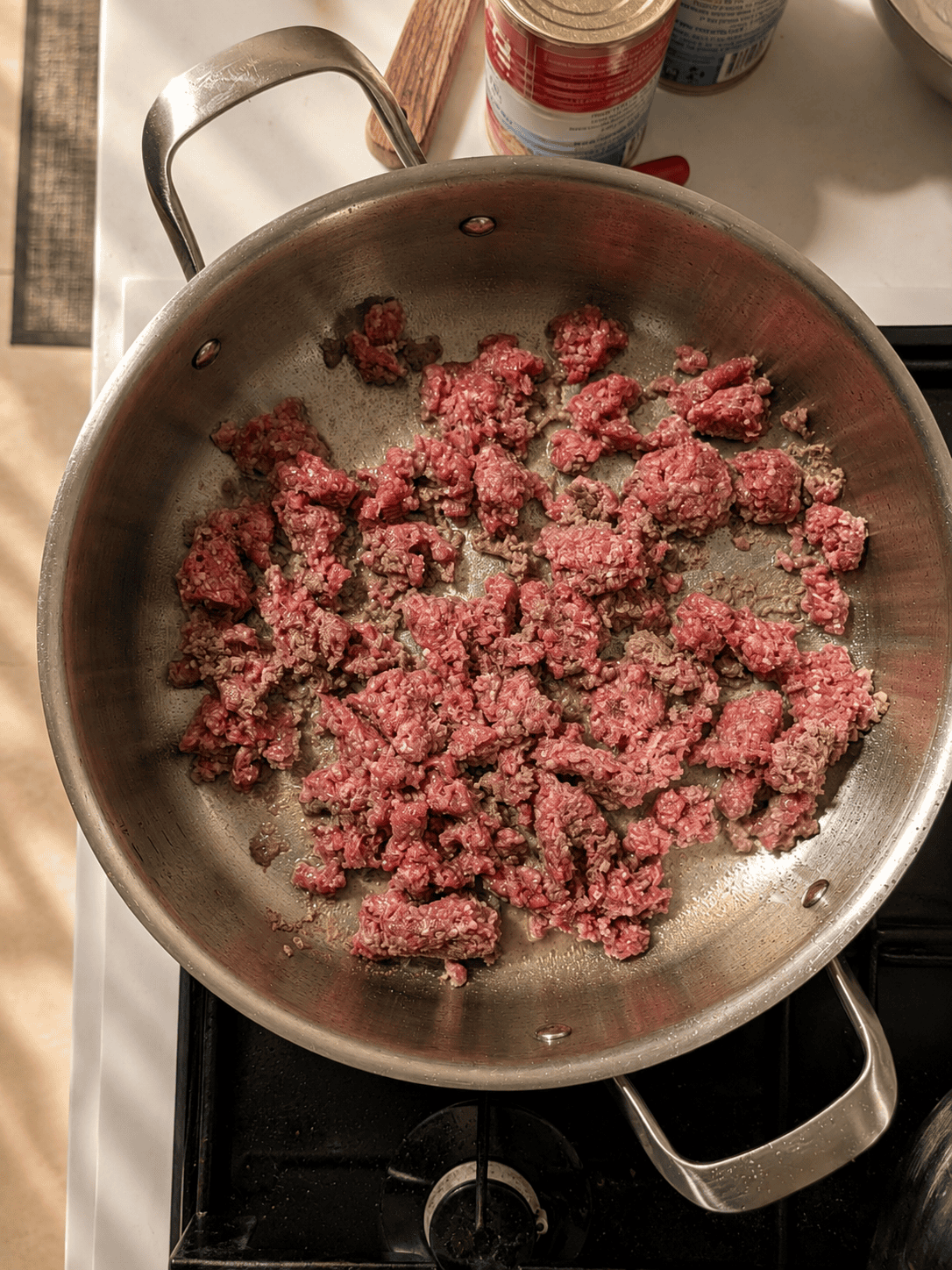
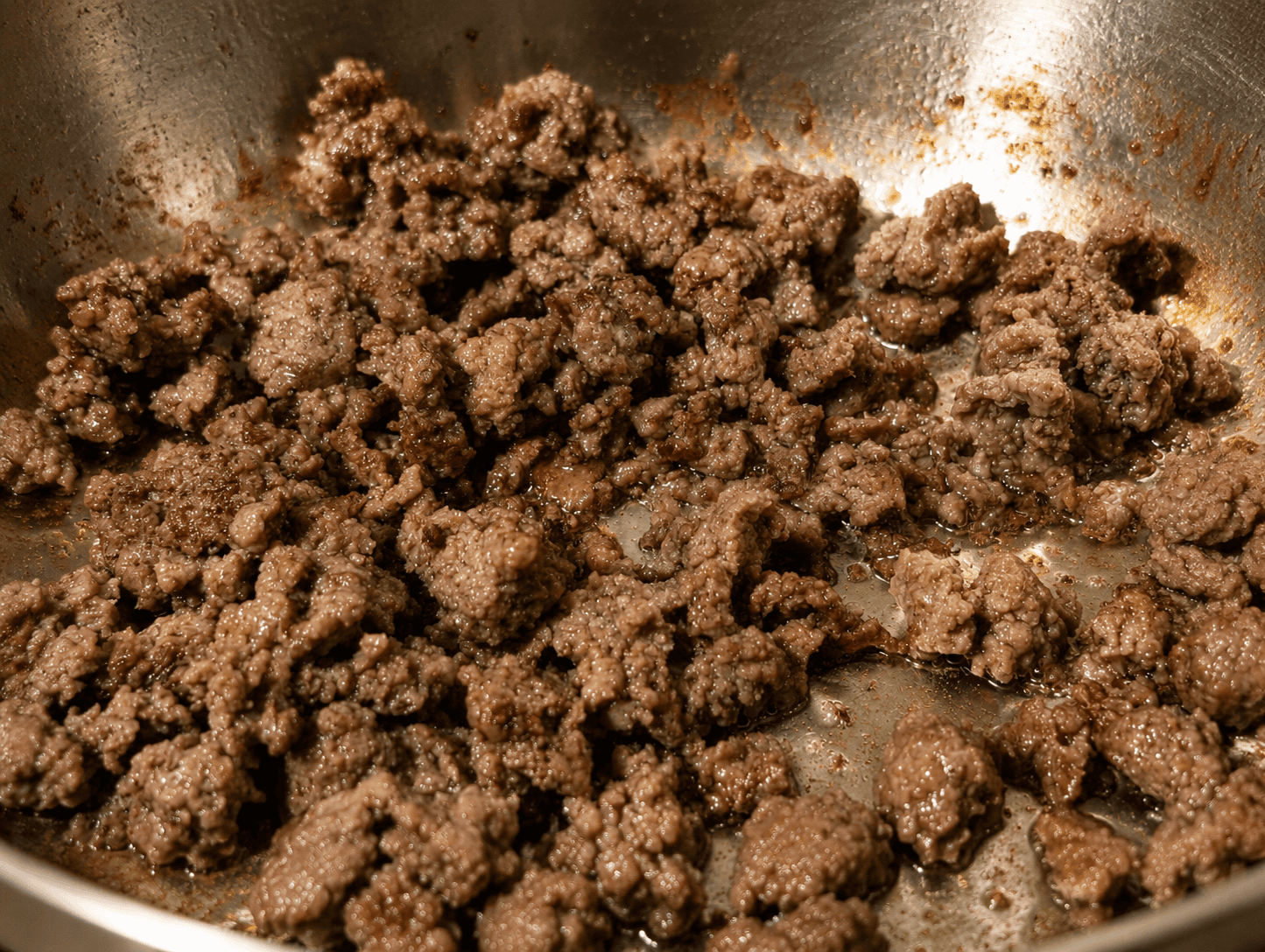
- Season the beef with salt, add it to the pan, and fry for 10 to 15 minutes without stirring too often. You want real browning and a crispy edge, not just grey meat.
- Once it’s deeply browned, remove the beef and set it aside. Don’t scrub the pan, that dark crust on the bottom is the next step’s job.
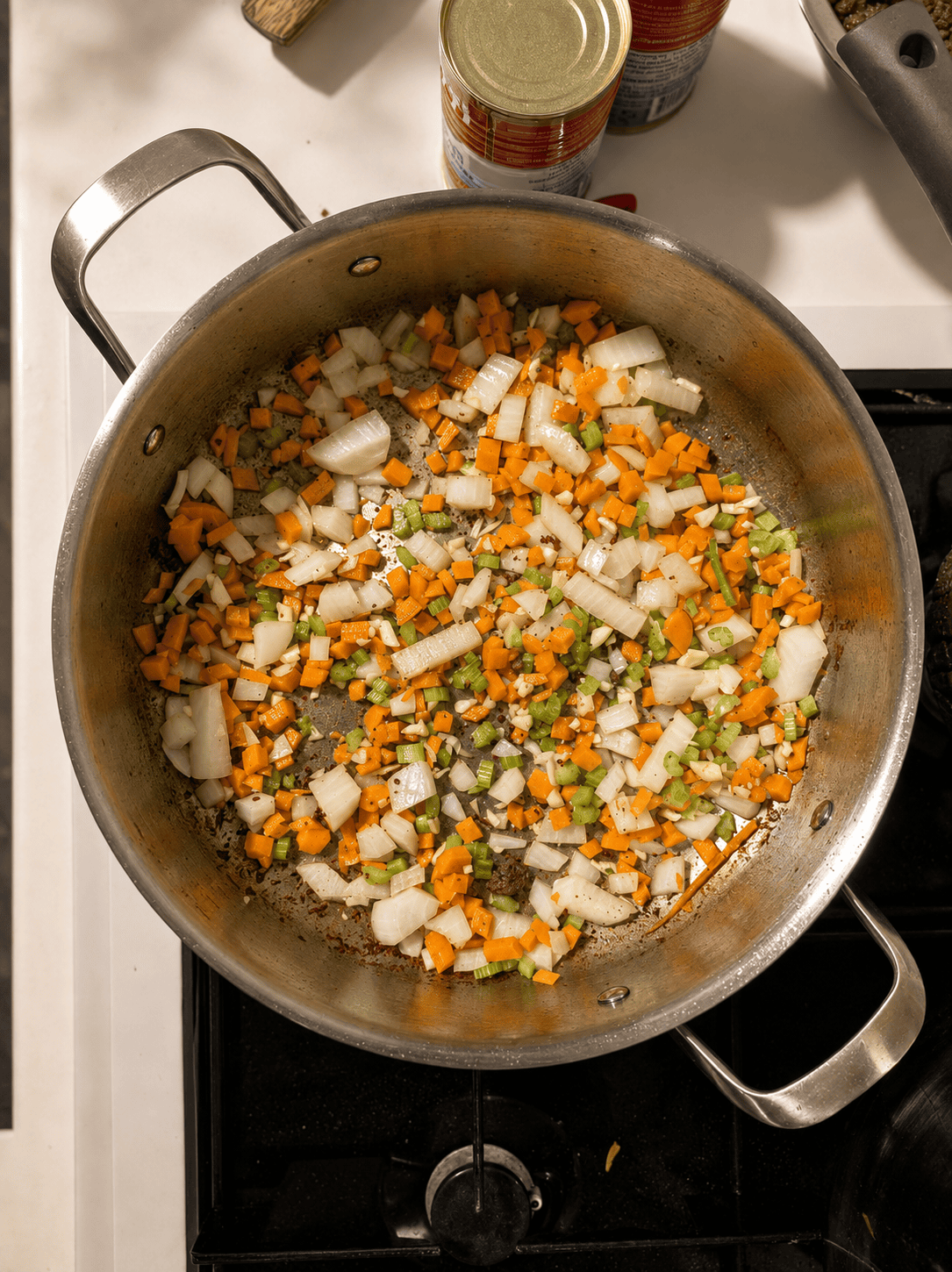
- Dice the onion, carrots, celery, and garlic into small, even pieces.
- Add them all to the same pan the beef cooked in, over the fond, with a pinch of salt.
- Sauté for 5 to 10 minutes, until softened and starting to pick up color from the browned bits underneath.
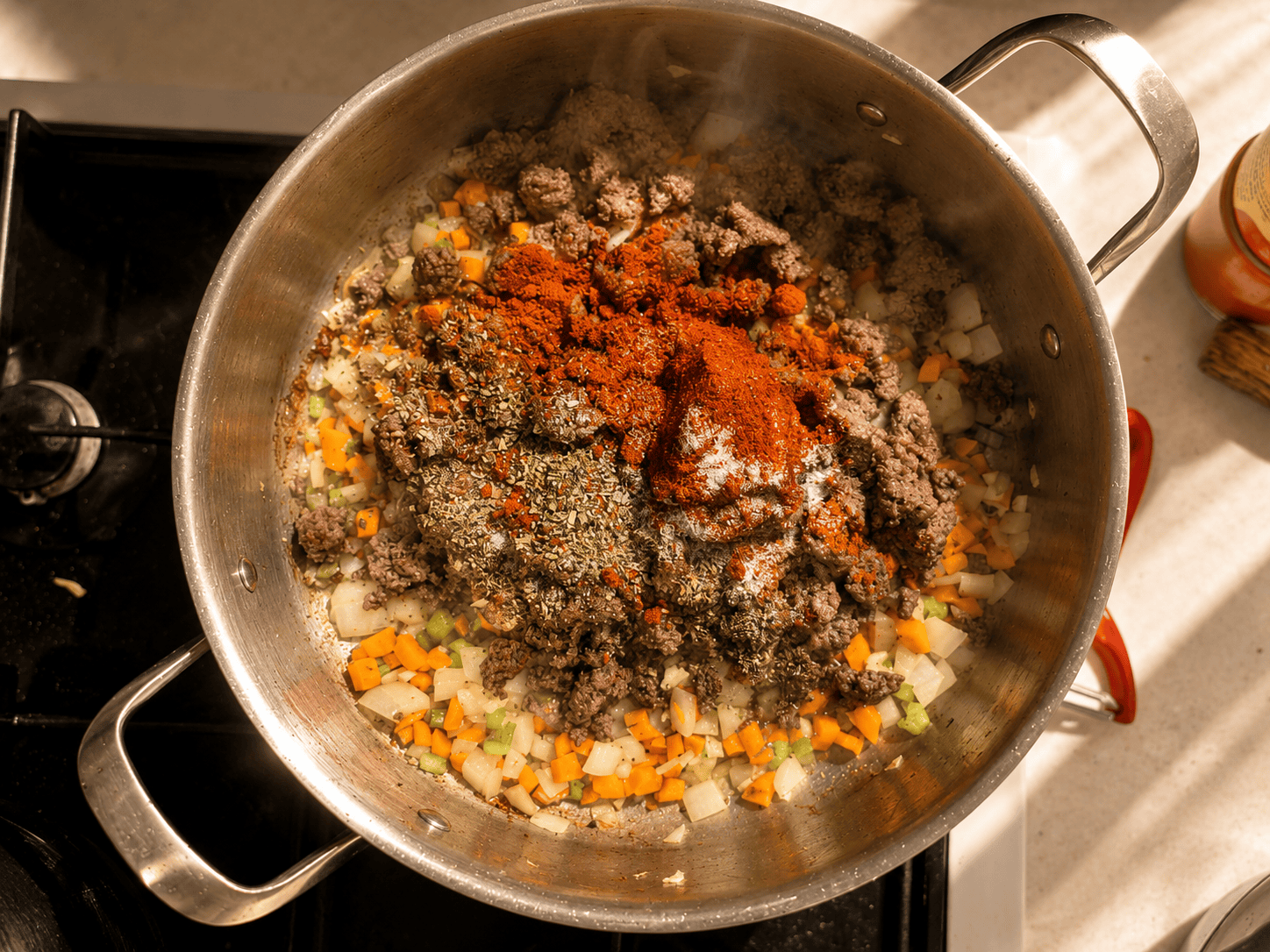
- Return the browned beef to the pan with the vegetables.
- Add the paprika, dried oregano, sugar, and black pepper on top.
- Pour in a splash of the chicken stock, just a few tablespoons, not the whole 250 ml, and use a wooden spoon to scrape up the browned bits from the bottom as it sizzles.
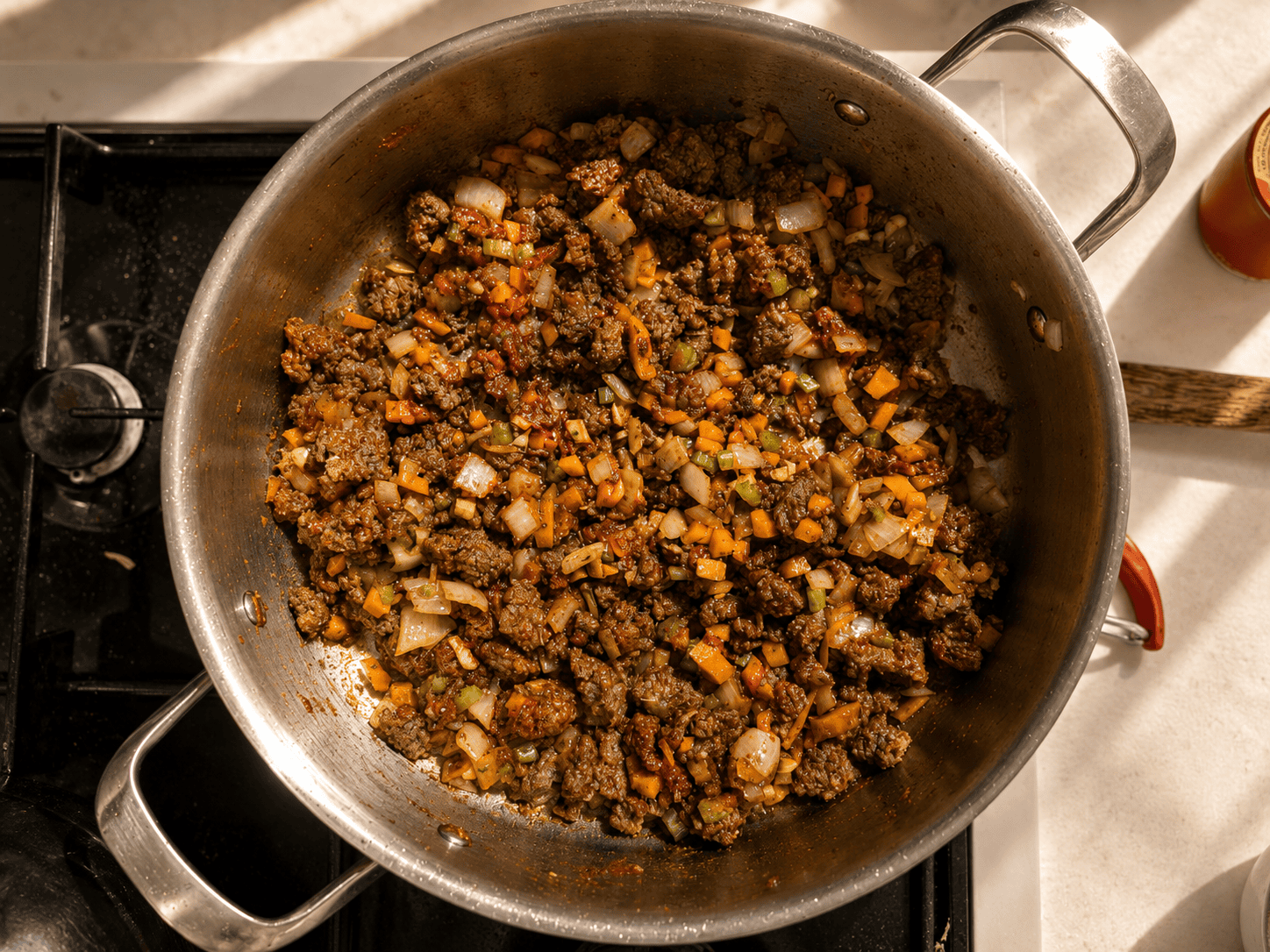
- Add the tomato paste and mix it through the beef and vegetables well.
- Cook it for a minute or two, stirring so it doesn’t catch and burn on the bottom of the pan.
- The mixture should look deeply colored and slightly sticky at this point, everything coated rather than swimming in liquid.
- Pour in the red wine and turn the heat up.
- Let it bubble hard and cook until you can no longer smell alcohol, roughly 2 to 3 minutes. This burns off the sharpness and leaves behind the flavor.
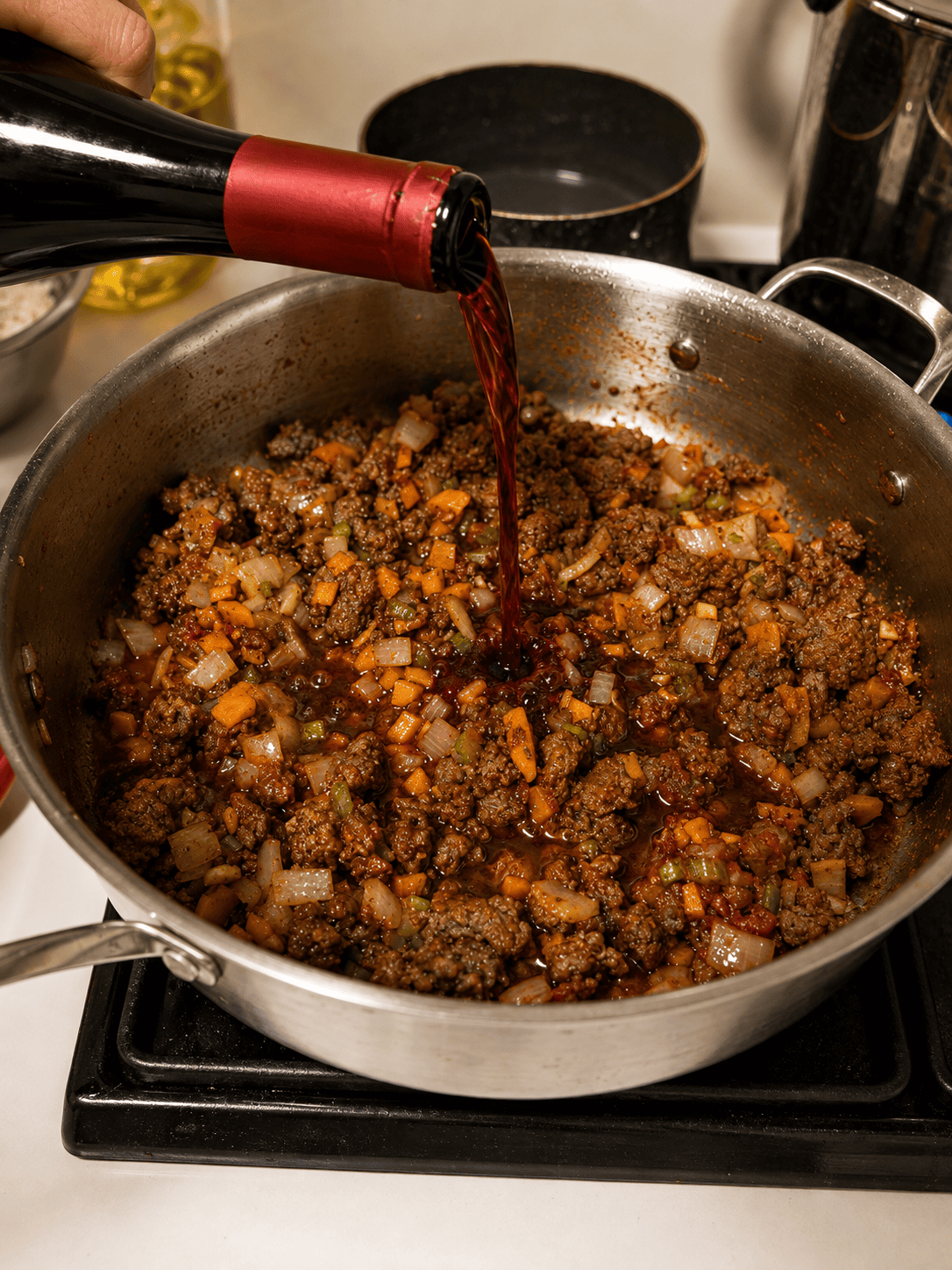
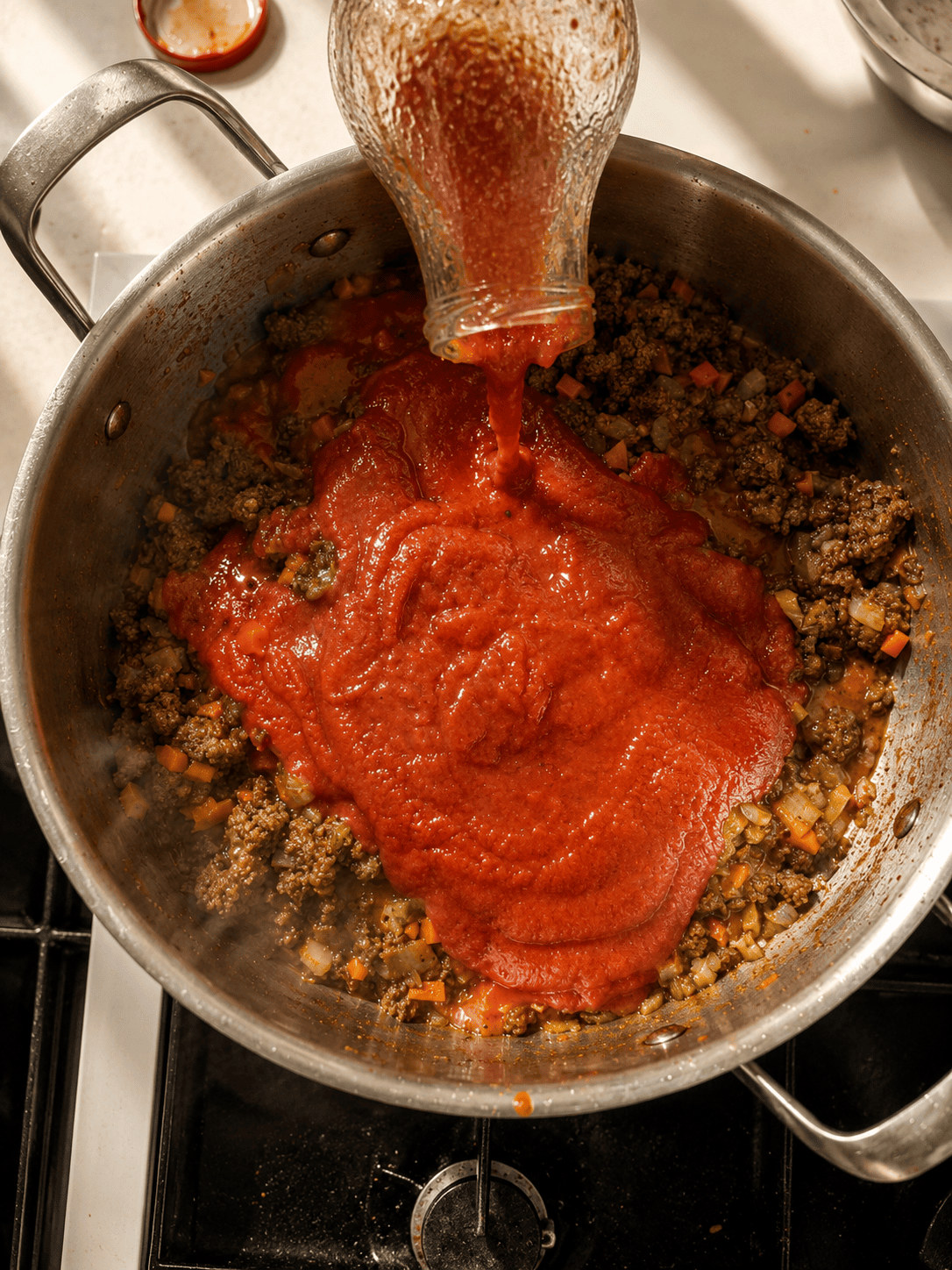
- Pour in the tomato sauce, the rest of the chicken stock, the bay leaves, and the reserved pasta water.
- Bring everything to a boil, then drop the heat to low.
- Simmer uncovered for at least 20 minutes, stirring occasionally, until the sauce has thickened and deepened in color.
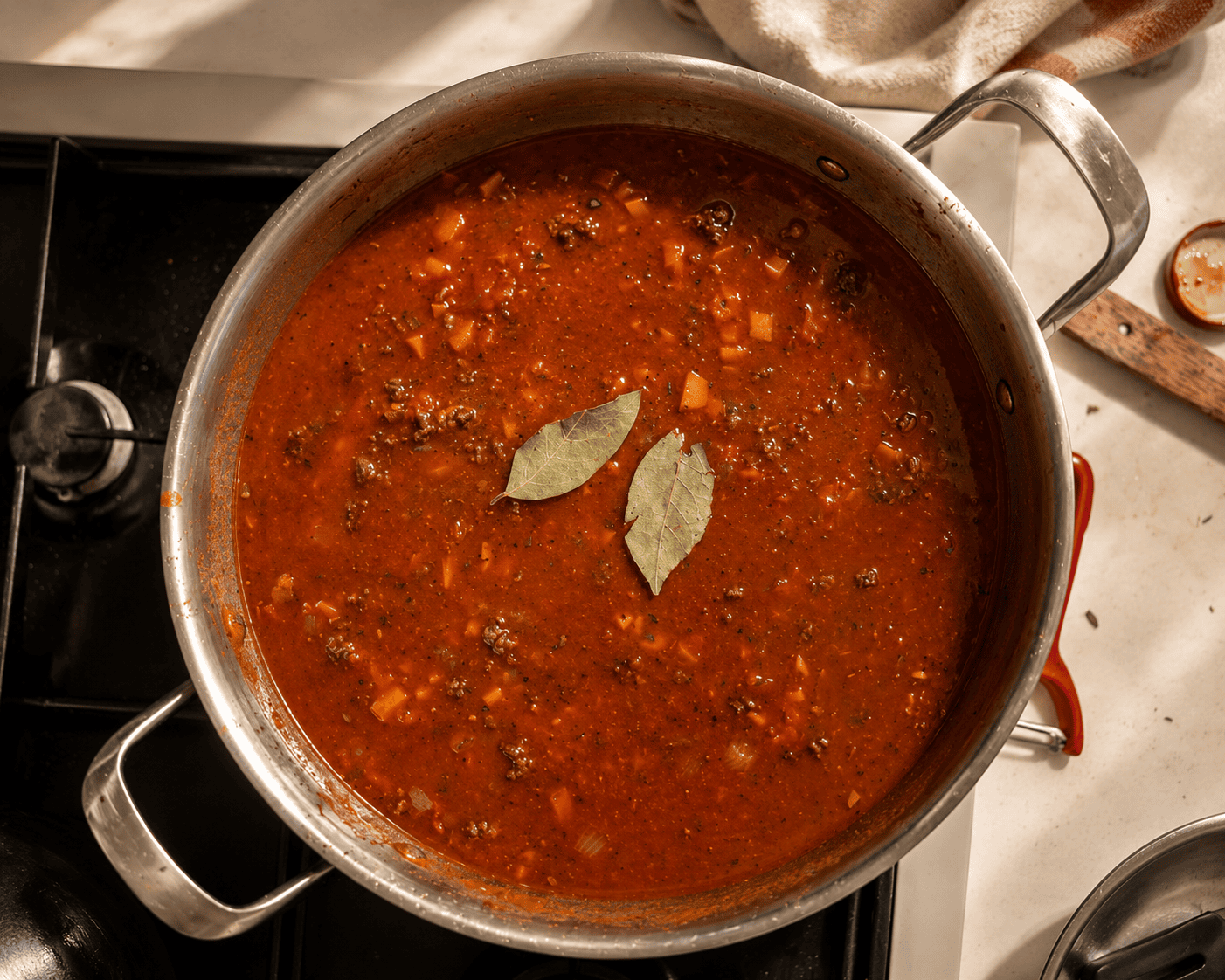
- Fish out the bay leaves and discard them.
- Add the slightly undercooked spaghetti directly into the pot with the sauce.
- Toss and cook together for a couple of minutes so the pasta finishes cooking in the sauce and actually absorbs it, rather than just sitting under a spoonful on top.
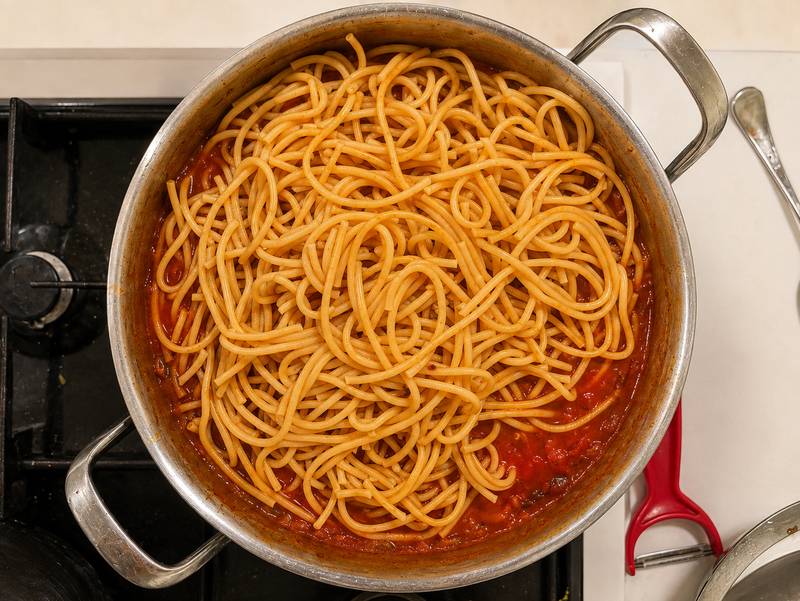
- Divide between bowls and finish with a generous grating of parmesan.
- Serve immediately — this is best straight from the pot.
- 🥩 Use a stainless steel pan, not non-stick: The fond is half the flavor in this recipe. A non-stick surface is designed to prevent exactly the browning you need.
- 🧂 Season in layers: Salt on the beef, salt on the vegetables, don’t wait until the end to fix everything at once.
- 🍝 Undercook the pasta on purpose: It keeps cooking in the sauce, so package-perfect spaghetti at this stage means mushy spaghetti by the time it’s plated.
- 💧 Save the pasta water: The starch in it helps the sauce cling to the noodles instead of pooling at the bottom of the bowl.
- 🍷 Actually wait out the wine: If it still smells sharp and boozy, it needs more time on high heat before the tomato goes in.
- ❄️ This freezes well: Make a double batch of just the sauce and freeze half in a flat bag. Future you gets dinner in the time it takes to boil pasta.
How to Serve
Serve this beef ragu spaghetti recipe hot, straight from the pot, with a generous grating of parmesan over the top. A torn piece of crusty bread on the side is genuinely the best tool for chasing down the last of the sauce, my no-knead dutch oven bread is my usual pick for that job. If you want a lighter option alongside it, my mushroom and zucchini pasta shares the same undercook-and-finish-in-sauce approach if you want to compare the two techniques side by side.
Frequently Asked Questions
Drop a comment below and let me know how this beef ragu spaghetti recipe turned out for you, and whether the fond trick made the difference. If you’re building out a full Italian-night spread, my mushroom and zucchini pasta and no-knead dutch oven bread both pair well with this one.