Israeli Chicken Schnitzel
(crispy, honey-mustard marinated, the family dinner of an entire country)
Israeli chicken schnitzel is hard-coded into the heart of Israeli cuisine. It hits the family dinner table two or three times a week in most households, especially when there are kids in the room, and the version below is the one I grew up with: thin chicken cutlets, a quick honey-mustard egg marinade that turns into the secret weapon, a generous golden-breadcrumb coat, and a hot shallow fry. The result is the crispiest, most flavorful breaded chicken cutlet you can put on a plate. Pair it with rice, pasta, mashed potatoes, or just a piece of bread and you have dinner sorted.
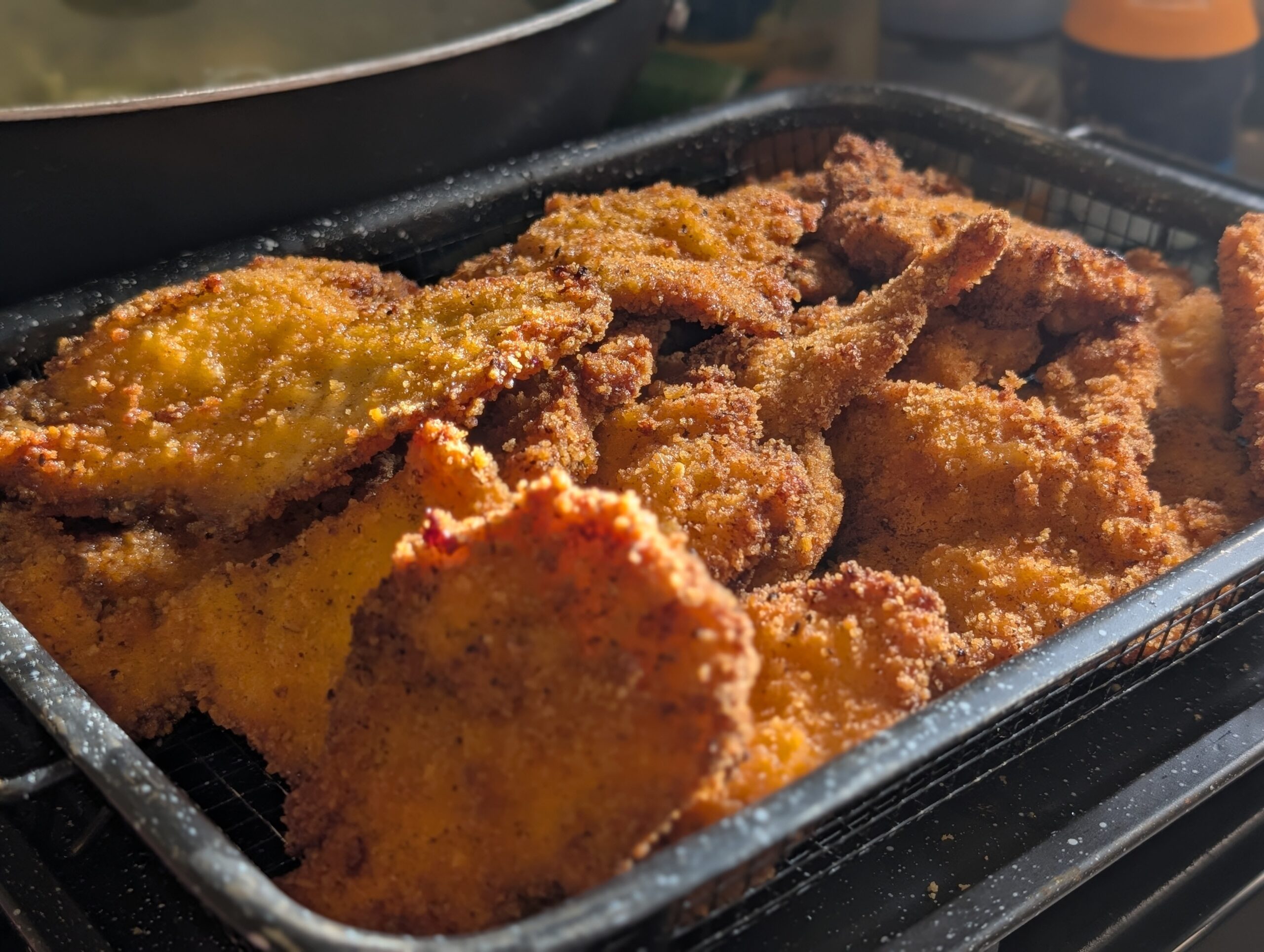
Straight from the oil onto a cooling rack. The secret to keeping every bite crispy.
Why This Israeli Chicken Schnitzel Works
Most schnitzel recipes treat the egg dip as a neutral glue, just a layer of moisture to help the breadcrumbs stick. This Israeli chicken schnitzel does something different. The egg gets a quick blast of mayo, mustard, ketchup, soy sauce, and honey, and the chicken sits in it for thirty minutes to a couple of hours. By the time it goes into the breadcrumbs, the meat has soaked up a real flavor (sweet, savory, slightly tangy) and the egg has thickened just enough to grab the coating like glue. The breadcrumbs are golden, not white panko, which gives you that deeper color and richer crunch that this dish is known for.
The other thing most home recipes get wrong is the finish. A schnitzel that sits on a paper towel ten minutes after frying is a soggy schnitzel. The trick, which is borrowed from every Israeli grandmother who has ever made this, is to salt it the second it leaves the pan (the salt sticks to the residual oil and fuses with the crust) and rest it on a wire rack so air can circulate underneath. Do those two things and the schnitzel stays crunchy for hours.

How to Make It
The whole process is three stages: mix the marinade and soak the chicken, bread the cutlets, fry in shallow oil. The fry is the only part that needs your full attention. Marinating can happen hours ahead, breading takes a minute, and frying is done in about 20 minutes for the whole batch.
- If your chicken breasts aren’t already pre-sliced into cutlets, slice them horizontally into thin sheets, about ½ cm (¼ inch) thick.
- I like mine extra thin because they cook fast and stay tender. Thicker cutlets work, they just take a bit longer in the oil.
- If they’re uneven in thickness, lay each one between two pieces of plastic wrap and gently pound them out with a rolling pin or the back of a heavy pan.
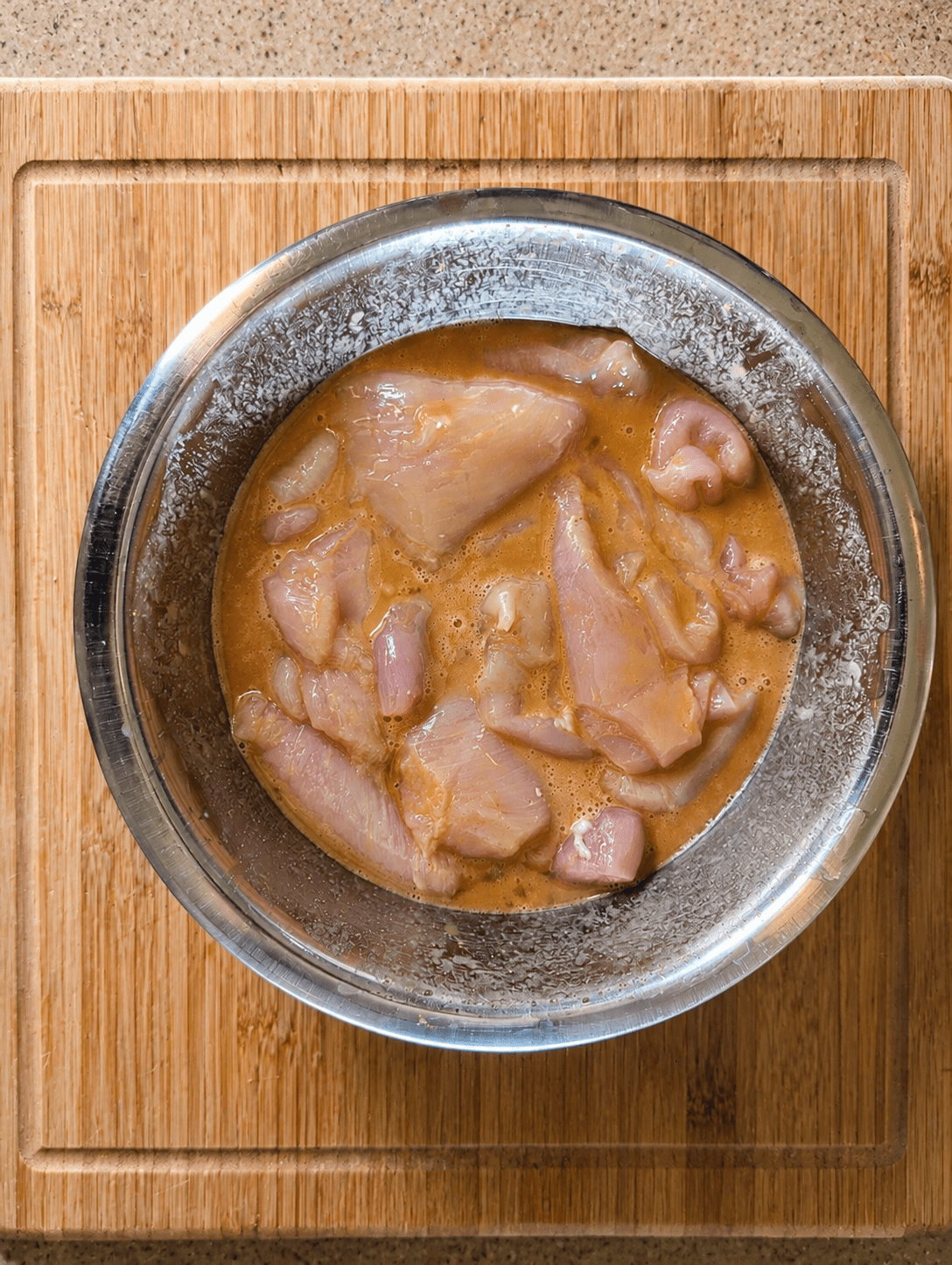
- In a wide bowl, crack the eggs and add the mayonnaise, mustard, ketchup, soy sauce, honey, and a generous pinch of salt.
- Whisk thoroughly until you have a smooth uniform marinade with no streaks of egg white. The honey takes the longest to break down, keep going until it does.
- Drop the chicken cutlets in and turn them over so every piece is fully coated.
- Cover and refrigerate for at least 30 minutes, ideally an hour or two. Even longer is fine.
- Pour the breadcrumbs into a wide shallow bowl or onto a plate.
- Set up an assembly line: marinade bowl → breadcrumbs → cutting board → pan.
- Take one cutlet out of the marinade, let the excess drip off for a second, then drop it into the breadcrumbs. Press the crumbs onto both sides and the edges. Don’t be gentle. You want a thick, even coat.
- Transfer the breaded cutlet to the cutting board. Repeat with the rest, lining them up next to each other.

- Pour about 1 inch (2-3 cm) of vegetable oil into a wide flat-bottomed pan.
- Heat over medium-high until the oil reaches around 180°C (355°F). You can test it by dropping in a tiny piece of the breading. It should bubble vigorously and float to the surface within a couple of seconds.
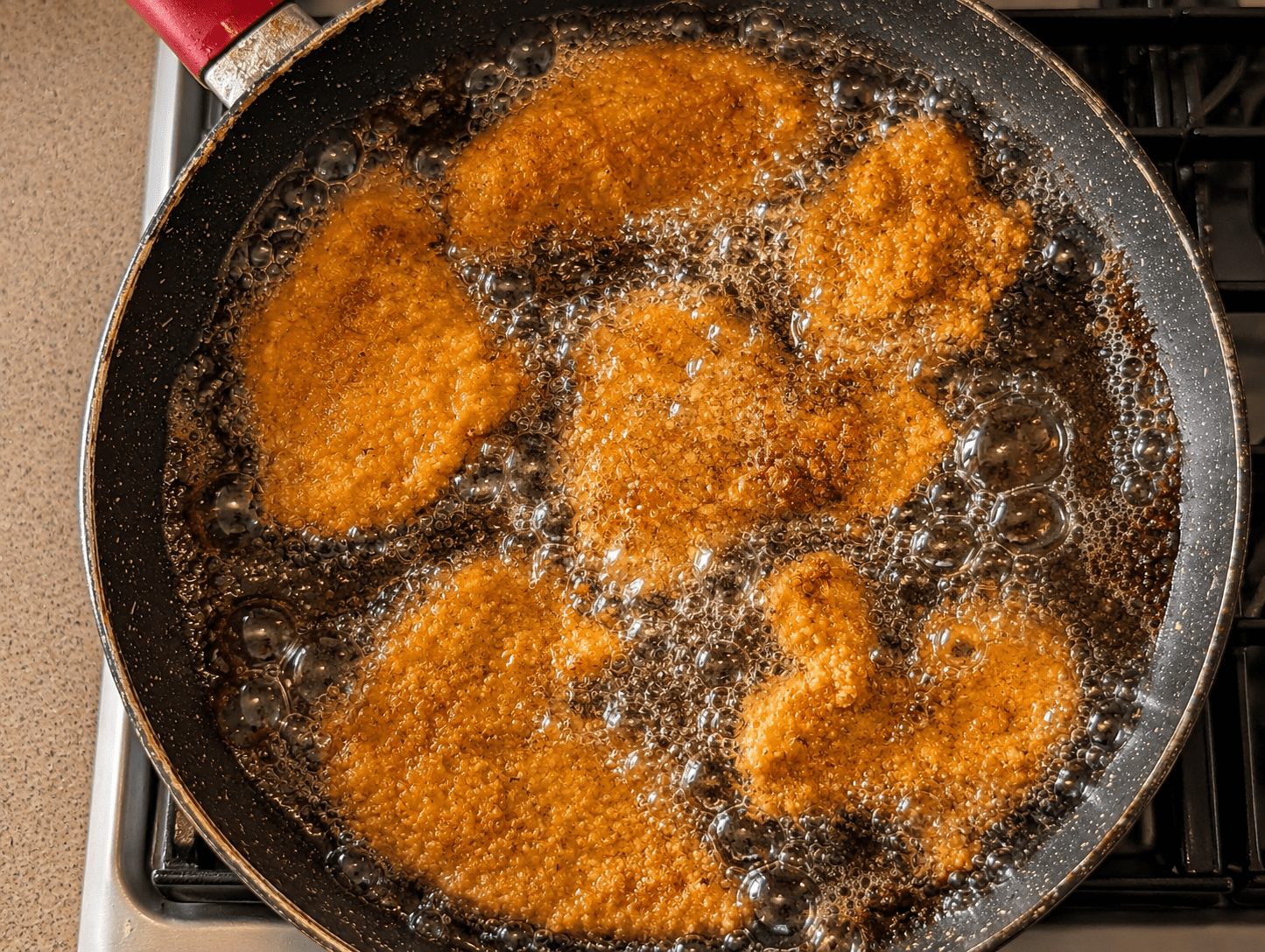
- Carefully lay in 2 to 4 cutlets, depending on the pan size. Don’t crowd the pan. Crowded oil drops in temperature and the cutlets steam instead of crisping.
- Fry for about 1-2 minutes per side, until the edges turn deep golden brown.
- Flip once and fry the second side for another 1-2 minutes.
- Take them out just before you think they’re done. The crust keeps darkening for a few seconds after it leaves the oil.
- Transfer each schnitzel to a wire cooling rack set over a tray, not a paper towel.
- Salt immediately while the oil is still glistening on the surface.
- The rack lets air circulate underneath so the bottom crust stays crispy instead of going soggy from trapped steam.
- Continue frying the rest of the batch. The oil may need a minute to recover its temperature between batches.
How to Serve It
Schnitzel is a blank canvas. The traditional Israeli plate is schnitzel plus white rice plus a fresh chopped salad of cucumber, tomato, parsley and lemon. It also works brilliantly with crispy baked potato wedges and a side of coleslaw with the McDonald’s-style sauce for a more American-feeling dinner. Pasta works too. For sandwiches, slice it into strips and pile it inside a fresh pita with hummus, tahini, pickles and shredded cabbage. There is no wrong way to eat schnitzel.
- 🥩 Pound the chicken thin and even. Thin cutlets cook fast and stay tender. Thick ones overcook on the outside before the middle is done. Half a centimeter (¼ inch) is the sweet spot.
- 🍳 Use a wide flat pan, not a deep pot. A wide flat pan with 1 inch of oil lets you fry several cutlets at once and gives you better heat control than a deep pot full of oil. Save the deep pot for fried chicken.
- 🌡️ Don’t let the oil overheat. Around 180°C (355°F) is the target, well within the standard deep-frying temperature range. Hotter than that and the breadcrumbs burn before the chicken is cooked. If you don’t have a thermometer, the “tiny piece of breading bubbles vigorously within 2 seconds” test is reliable.
- 🥕 The carrot trick for clear oil. An old Israeli kitchen secret: drop a piece of raw carrot into the oil while you fry. The carrot absorbs impurities and keeps the oil from oxidizing as fast, so it stays clear and usable for the whole batch instead of going dark and foamy halfway through.
- 🧂 Salt the second it leaves the pan. Not later. The hot oil on the surface grabs the salt and fuses it into the crust. Wait too long and the salt just sits on top.
- 🪜 Rest on a wire rack. Paper towels trap steam underneath the schnitzel and turn the bottom crust soggy. A wire rack over a tray lets the air circulate so the bottom stays as crispy as the top.
- ♨️ Let the oil recover between batches. Every time you add cold cutlets, the oil temperature drops. Give it 30-60 seconds to come back up to temperature before the next batch, otherwise the second wave will absorb more oil and turn out greasy.
Frequently Asked Questions
Drop a comment below and tell me how you serve your schnitzel: rice and salad, sandwich, with potatoes, or something else. Pair this with my crispy baked potato wedges and coleslaw with McDonald’s-style sauce for a full plate. For something lighter on the side, try the tuna salad recipe or leftover chicken salad if you want to keep the protein theme going.